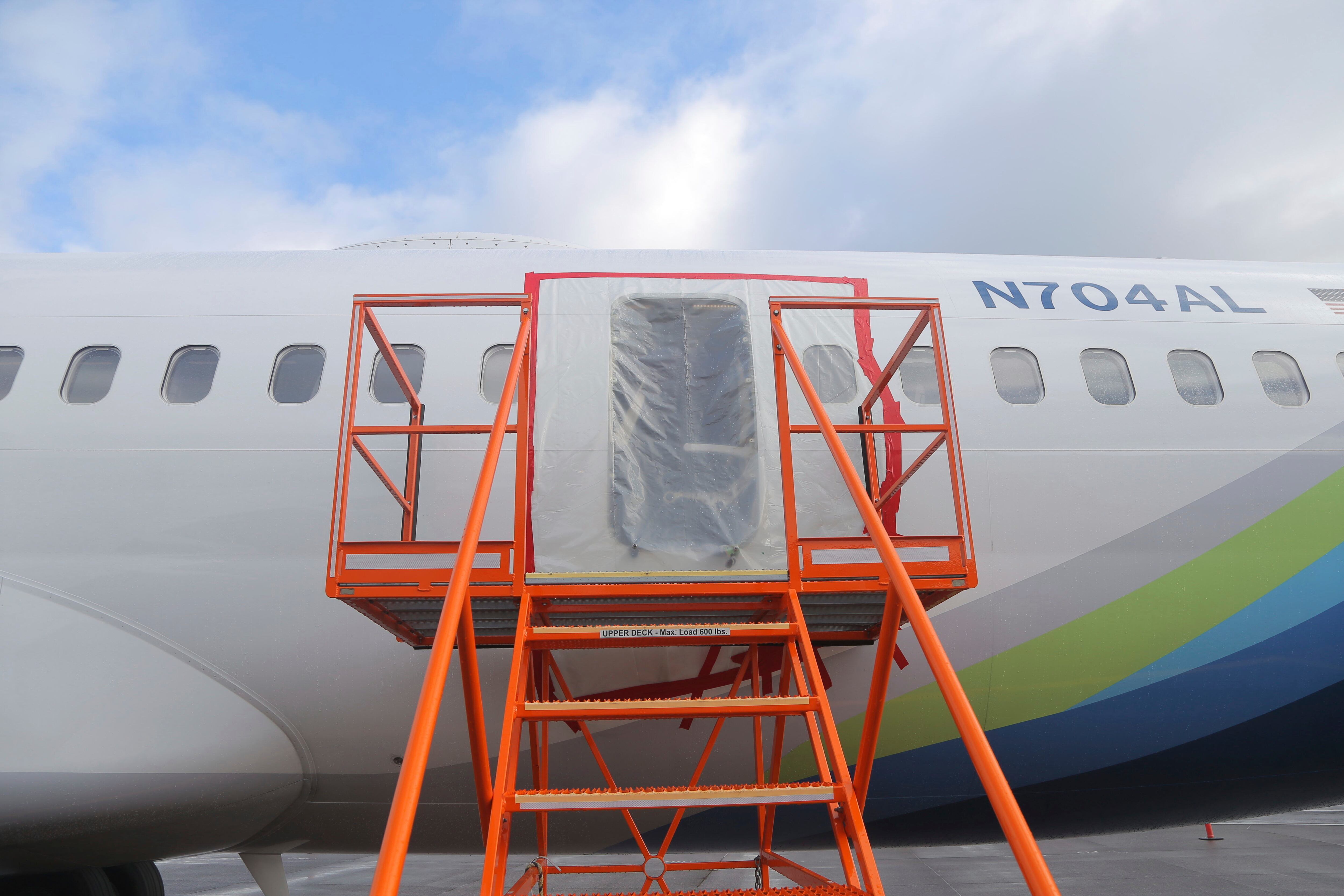
A “whistling sound” was heard on a previous flight of the Boeing 737 Max 9 whose door plug blew out during an Alaska Airlines flight last month, an attorney representing passengers in a lawsuit said in new court documents.
Mark Lindquist is representing 22 passengers of Alaska Airlines flight 1282, which made a harrowing emergency landing in Portland last month after a door plug blew out of the Boeing fuselage just minutes after takeoff. The plane landed safely and there were no serious injuries among the 171 passengers and six crew members.
Lindquist filed a lawsuit against Boeing and Alaska Airlines on behalf of four passengers in Washington state's King County Superior Court last month, accusing the companies of negligence. On Wednesday, he filed an amended complaint that adds 18 additional passenger plaintiffs and includes the new allegations concerning the previous flight.
According to the complaint, passengers on the earlier flight heard the sound "coming from the vicinity of the door plug.” They brought it to the attention of flight attendants, who then “reportedly informed” a pilot, according to the complaint. After the pilot checked cockpit instruments and found readings to be normal, no further action was taken, the complaint says.
In a phone interview with The Associated Press, Lindquist said he became aware of the new claims after “a couple” of people contacted his law firm. He did not specify who they were and declined to confirm whether they were passengers or crew members on the previous flight. He said he did not speak with them directly, but learned of their “whistling sound” allegations through his legal team. He also declined to specify when the previous flight occurred.
When reached by the AP, Boeing declined to comment and Alaska Airlines said it does not comment on pending litigation.
A preliminary report by the National Transportation Safety Board released Tuesday found that four bolts intended to help secure the door plug to the frame of the Max 9 were missing before the plug flew off during last month's flight.
Without the bolts, nothing prevented the plug from sliding upward and detaching from “stop pads” that secured it to the airframe. Door plugs are panels that are inserted where emergency exit doors would be located on Max 9s with more than about 200 seats.
The report did not say who removed the bolts. The NTSB did not declare a probable cause for the detachment — that will come at the end of an investigation that could last a year or longer.
The jetliner was also restricted from long flights over water after a warning light that could have indicated a pressurization problem lit up on three different flights, NTSB chair Jennifer Homendy said last month. She cautioned, however, that the pressurization light might be unrelated to the door plug blowout.
Timothy Loranger, an aviation lawyer and licensed pilot who worked as an aircraft mechanic while serving in the Marine Corps, said airplanes are noisy machines and the whistling sound described in the lawsuit may have been unrelated to the door plug. But he also said it was plausible that passengers on previous flights heard such a noise, given its prior pressurization issues.
“We know that the bolts were missing. ... So this sound makes sense,” Loranger said. “If they heard that whistling noise, that’s very possible to have been an indication that the aircraft had some small leaks around the seal and that it wasn’t keeping pressure properly."
After the incident on the Alaska jet, the Federal Aviation Administration grounded most Max 9s for three weeks until it approved a process for inspecting door plugs. The agency is investigating whether Boeing and its suppliers followed proper safety procedures in manufacturing parts for the Max.
Alaska and United are the only U.S. airlines that fly Max 9s. Both started returning the model to service in late January.
The door plug blowout has added to questions about manufacturing quality at Boeing that started with the deadly crashes of two Max 8 jets in 2018 and 2019, killing 346 people.