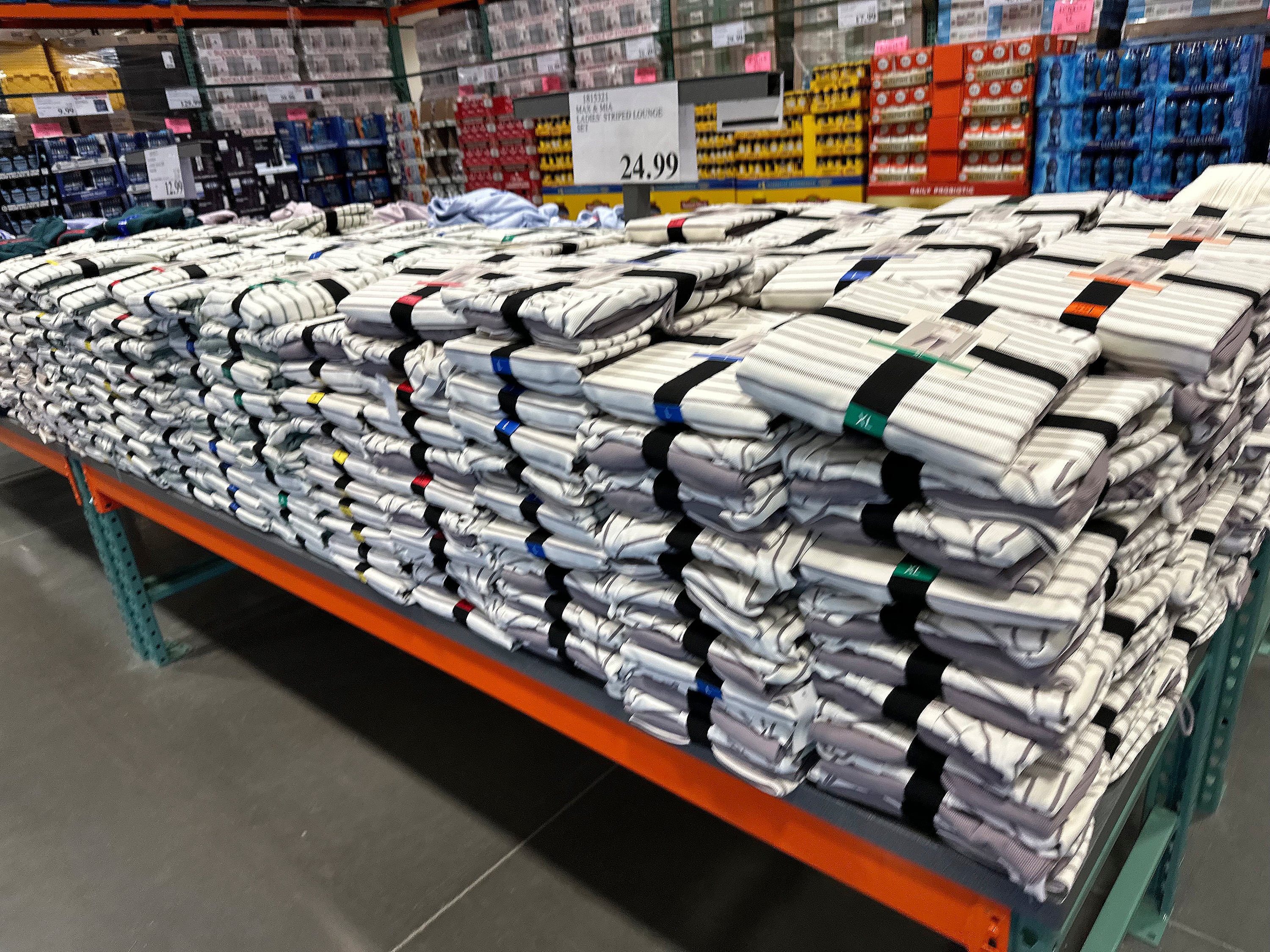
WASHINGTON (AP) — Americans stepped up their spending at retailers last month by the most in a year and a half, easing concerns that the economy might be weakening under the pressure of higher prices and elevated interest rates.
The Commerce Department reported Thursday that retail sales jumped 1% from June to July, the biggest such increase since January 2023, after having declined slightly the previous month. Auto dealers, electronics and appliance stores and grocery stores all reported strong sales gains.
The July retail sales data provided reassurance that the U.S. economy, while slowing under the pressure of high interest rates, remains resilient. It showed that America’s consumers, the primary driver of economic growth, are still willing to spend.
The prospect of a still-growing economy is likely to be promoted by Vice President Kamala Harris' presidential campaign, which is preparing to roll out policies Friday to ban “price gouging" on groceries. On Wednesday, her opponent, former President Donald Trump slammed the economic record of the Biden-Harris administration Wednesday, though he wildly inflated cost increases on food and monthly mortgage payments.
Other economic data released Thursday was also mostly positive, including a report on first-time applications for unemployment benefits. The figures show that businesses are mainly holding onto their workers and not increasing layoffs.
With Americans spending more, economists at Morgan Stanley have boosted their forecast for growth in the July-September quarter to a 2.3% annual rate, from an earlier estimate of 2.1%. The economy expanded at a healthy 2.8% rate in the April-June quarter.
All told, the latest data is consistent with an economy that is headed toward a “soft landing,” in which the Federal Reserve raises interest rates enough to cool inflation but not so much as to cause a recession.
“The ongoing resilience of consumer spending should ease recession fears and reduce the odds markets have placed on a larger (half-point) cut” at the Fed's meeting in mid-September, said Michael Pearce, an economist at Oxford Economics. Instead, economists increasingly expect the Fed to begin cutting interest rates next month with a modest quarter-point reduction in its key rate, which affects many consumer and business loans.
Adjusted for inflation, sales rose about 0.8% last month. And excluding gas station sales, which don't reflect Americans' appetite to spend, retail purchases also rose 1%.
Consumers have been pummeled since the pandemic by high prices and elevated interest rates. Yet at the same time, average wages have also been rising, providing many households with the means to keep spending.
Inflation-adjusted wages have increased slightly from a year ago. Upper-income households have also seen their wealth increase, with stock prices and home values having jumped in the past three years. Increases in wealth can encourage more spending.
Auto sales jumped 3.6% last month, the largest increase since January 2023. It marked a rebound from the previous month, when a cyberattack involving many dealerships slowed sales.
Sales at electronics and appliances stores surged 1.6%. And they rose 0.9% at hardware stores and garden centers. Restaurant sales were up 0.3%, a sign that Americans are still willing to spend on discretionary items, such as eating out.
Financial markets had plunged earlier this month on fears surrounding the economy after the government reported that hiring was much weaker than expected in July and the unemployment rate rose for a fourth straight month.
Yet since then, economic reports have shown that layoffs are still low and that activity and hiring in services industries remains solid. Americans are also still splurging on services, such as travel, entertainment, and health care, which are not included in Thursday’s retail sales report.
Still, some economists worry that much of Americans’ spending now is being fueled by the increased use of credit cards. And the proportion of Americans who are falling behind on their credit card payments, while still relatively low, has been rising.
But cooling inflation may give households a needed boost. Consumer prices rose just 2.9% in July from a year earlier, the government said Wednesday. That was the smallest year-over-year inflation figure since March 2021. And core inflation, which excludes volatile food and energy costs, slipped for the fourth straight month.
While Americans are still willing to spend, they are increasingly searching out bargains. On Thursday, Walmart, the nation's largest retailer, reported strong sales in the three months that ended July 31.
More Americans appear to be shopping at lower-prices outlets like Walmart. The company also boosted its sales outlook for this year and said that it hasn't seen any signs of weakness from the consumer.
Other companies are also starting to offer lower prices to entice consumers, a trend that is helping slow inflation. McDonald’s said its global same-store sales fell for the first time in nearly four years in the second quarter. The company introduced a $5 meal deal at U.S. restaurants in June; most franchisees plan to extend that deal through August.
Arie Kotler, CEO of Arko Corp., a convenience chain based in Richmond, Virginia, said he’s noticed that shoppers have cut back their spending on discretionary items like salty snacks and candy bars since May. He said he thinks people are struggling with high interest rates on credit cards, with many of them maxed out.
___
AP Business Writers Anne D’Innocenzio in New York and Dee-Ann Durbin in Detroit contributed to this report.