The Texas Supreme Court on Friday rejected a closely watched challenge to the state’s restrictive abortion ban, ruling against a group of women who had serious pregnancy complications and became the first in the U.S. to testify in court about being denied abortions since Roe v. Wade was overturned.
In a unanimous ruling, the all-Republican court upheld the Texas law that opponents say is too vague when it comes to when medically necessary exceptions are allowed. The same issue was at the center of a separate lawsuit brought last year by Kate Cox, a mother of two from Dallas, who sought court permission to obtain an abortion after her fetus developed a fatal condition during a pregnancy that resulted in multiple trips to an emergency room.
Abortion rights activists have struggled to stem the tide of restrictions that have taken effect in most Republican-led states since the U.S. Supreme Court in 2022 overturned Roe vs Wade, which for nearly 50 years had affirmed the constitutional right to an abortion.
The court said the law’s exceptions, as written, are broad enough and that doctors would be misinterpreting the law if they declined to perform an abortion when the mother’s life is in danger.
“Texas law permits a life-saving abortion,” the court wrote in the order signed by Justice Jane Bland.
The decision appeared to close, at least for now, another pathway for opponents who have sought to force the state to provide more clarity about when exceptions are allowed. Last year, plaintiffs in the lawsuit gave emotional accounts in an Austin courtroom over how they carried babies they knew would not survive and continued pregnancies that put their health in worsening danger.
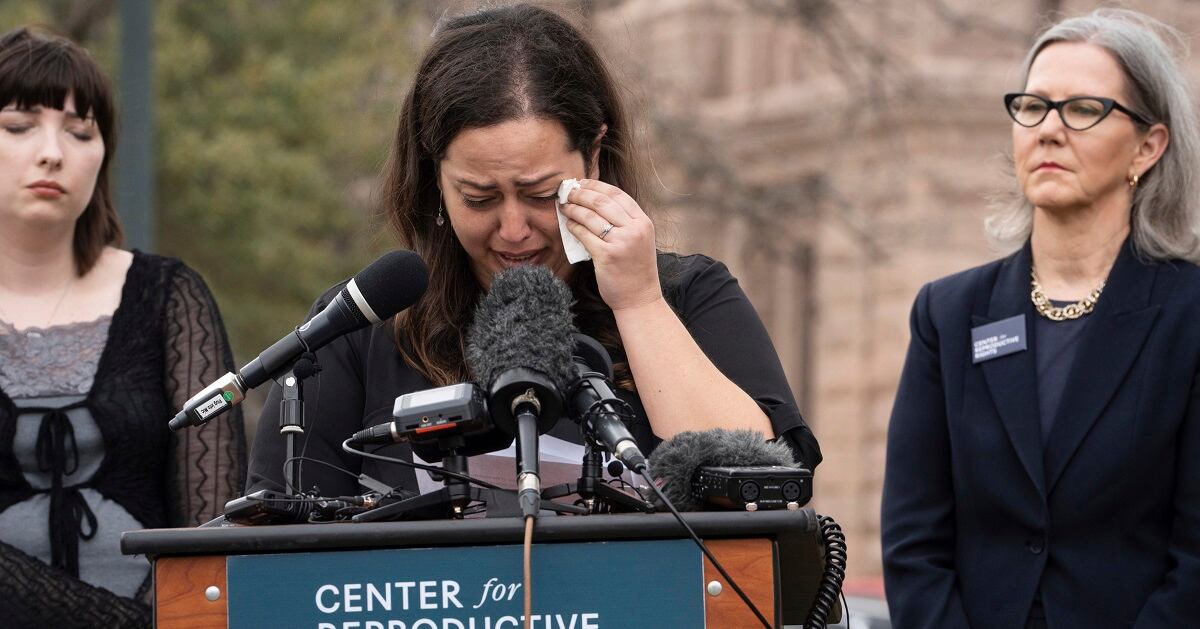
“Now we know the courthouse doors are closed to them,” said Molly Duane, a staff attorney for the Center for Reproductive Rights, which represented the Texas women. “It seems Texans have nowhere to go but the voting booth, in terms of what comes next.”
Under the law in Texas, doctors who perform abortions risk life in prison, fines of up to $100,000 and revocation of their state medical licenses.
A lower court in 2023 had granted a temporary injunction preventing Texas from enforcing the ban against doctors who in their “good faith judgment” ended a pregnancy that they determined was unsafe because of complications. But that was immediately blocked by an appeal from the Texas attorney general’s office to the state’s Supreme Court.
Amanda Zurawski, the lead plaintiff in the lawsuit, had been told that she had a condition that meant her baby would not survive. The Austin woman said she was forced to wait until she was diagnosed with a life-threatening case of sepsis before being provided an abortion.
She spent three days in intensive care and was left with a permanently closed fallopian tube from an infection, affecting her ability to have more children.
The court ruled that state law does not require that a woman’s death or serious impairment be “imminent” when being evaluated by a doctor for an abortion.
“Ms. Zurawski’s agonizing wait to be ill ‘enough’ for induction, her development of sepsis, and her permanent physical injury are not the results the law commands,” the court wrote.
Zurawski called the ruling “heartbreaking.”
“I am outraged on behalf of my fellow plaintiffs who the Court deemed not sick enough,” Zurawski said. “We all deserve bodily autonomy. Every day, people in Texas are being told that they have no options. It’s sickening and wrong.”
Republican Texas Attorney General Ken Paxton, whose office defended the law in the case, applauded the ruling.
“I will continue to defend the laws enacted by the Legislature and uphold the values of the people of Texas by doing everything in my power to protect mothers and babies,” Paxton posted on X.
Earlier this month, two University of Texas professors signed onto Paxton’s federal lawsuit against the Biden administration over regulations that expand protections for pregnant students in federally funded education programs. Those include accommodations for students who need to miss class for abortion care.
Philosophy professor Daniel Bonevac and business professor John Hatfield said they would accommodate students only in cases of “medically necessary” abortions when a mother’s life or health is threatened.
The state lawsuit decided Friday argued that exemptions under the Texas law, which allow an abortion to save a mother’s life or prevent the impairment of a major bodily function, create confusion among doctors, who were turning away some pregnant women experiencing health complications because they feared repercussions.
The plaintiffs said the abortion ban has made medical professionals wary of facing liability if the state does not consider the situation a medical emergency.
Last year, Cox ended up leaving the state for an abortion before the court ruled that she hadn’t shown her life was in danger. In the ruling, the court also called on the state medical board to offer more guidance.
New guidelines proposed by the medical board earlier this year, though, offered little beyond advising doctors to meticulously document their decision-making. And Texas’ Republican-led Legislature is not expected to make any changes to the law’s language.
Plaintiff Kaitlyn Kash, whose fetus developed severe skeletal dysplasia, was told even the simplest movements could break its bones in utero. While her life was not threatened, she chose to leave Texas to get an abortion.
“I wanted to end my child’s pain before it could begin,” Kash said. “The state just told me that as a mother, I don’t have the right to make those decisions for my child. ... If you want to grow your family, if you want to have children, you should get out of Texas.”