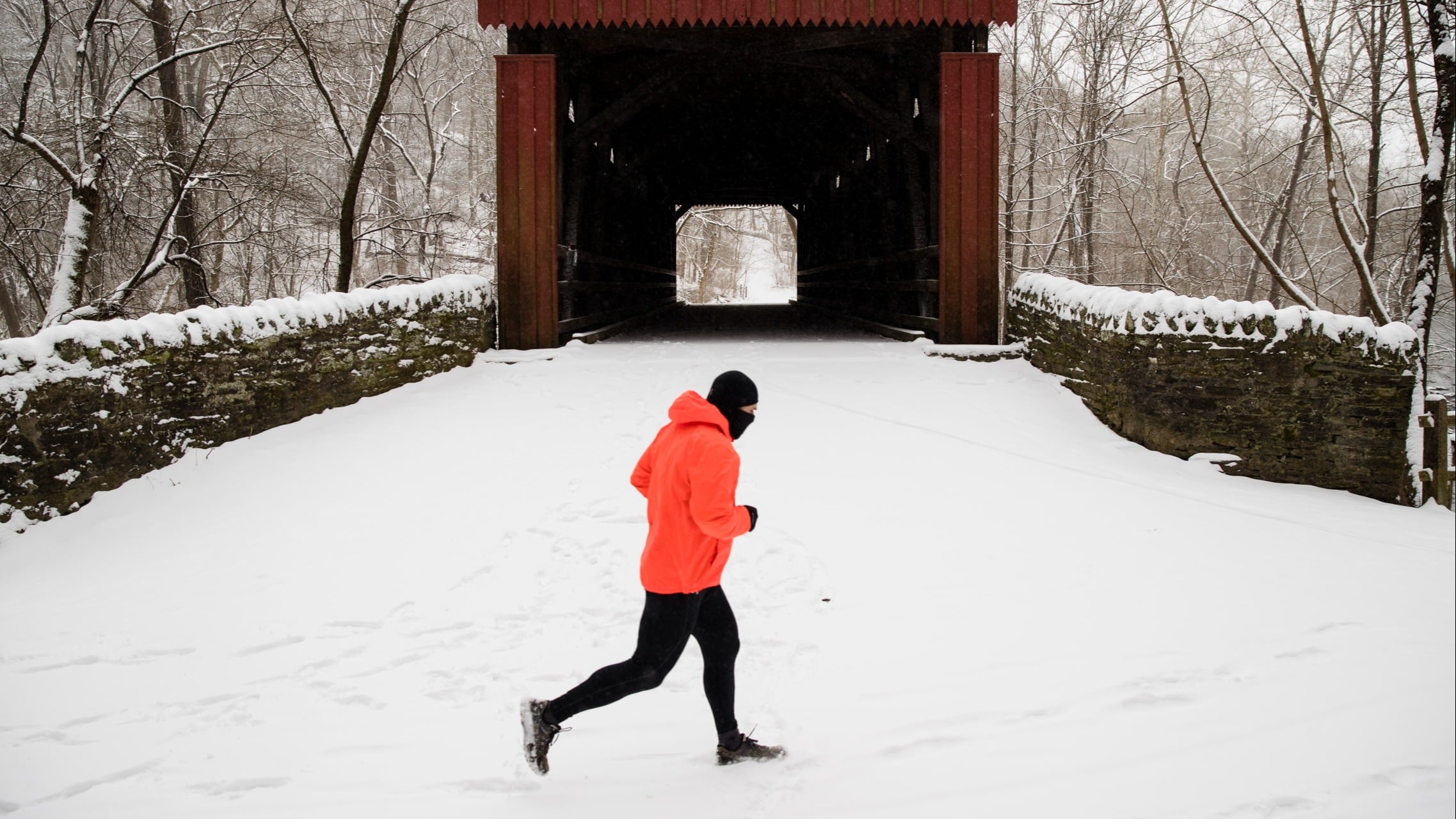
A jogger runs by to the Thomas Mill Covered Bridge at Fairmount Park as snow falls, Wednesday, Feb. 20, 2019, in Philadelphia. (AP Photo/Matt Rourke)
Philadelphia City Council passed legislation to ban ski masks in some public spaces, a measure supporters say will increase public safety amid high violent crime, but opponents argue it will unfairly target people without proof of any wrongdoing.
The legislation passed on Thursday with a 13-2 vote, and now goes to Democratic Mayor Jim Kenney. A spokesperson said he would review the legislation and "looks forward to our ongoing work with City Council on the urgent matter of ensuring public safety.”
The measure would ban ski masks, or balaclavas, in public spaces like schools, recreation centers, parks, city-owned buildings and on public transportation. It defines the garment as a close-fitting covering over the whole head, with holes only for the eyes, nose, or mouth.
A $250 fine would be imposed against anyone who violates the law. It has exceptions for religious garb and protests.
The legislation comes as the nation’s sixth-largest city has been beleaguered by violent crime, tallying a record number of homicides in 2021, most of them gun-related. That number fell from 562 to 516 in 2022 but was still higher than pre-pandemic levels, and advocates have said they are on track to decrease further this year.
Big cities across the nation experienced spikes in crime as social supports were upended during the pandemic, though crime has started to decrease to pre-pandemic levels.
Philadelphia's move goes in the opposite direction to New York City, which relaxed a law that prohibited masks, during the COVID-19 pandemic.
In 2020, New York City repealed a more than century-old law that prohibited face coverings in public. It was meant to permit mask-wearing during the coronavirus outbreak. Supporters of the repeal said the former law also exposed men of color to police harassment and was used against protesters during demonstrations.
Concerns about theft, even as crime decreases in the city, pushed Mayor Eric Adams, a former police officer, to suggest storeowners should refuse to admit anyone wearing a mask unless it was lowered to be picked up by store cameras.
Philadelphia’s ban cites an increase in those casually wearing ski masks in 2020 — during the beginning of the pandemic — alongside a rise in individuals sought by Philadelphia police. The ski masks conceal people’s identities, making it harder for the police to identify them, supporters say. Messages were left for the bill’s sponsor, Councilman Anthony Phillips.
But it drew sharp opposition from some progressive members of Council and the ACLU of Pennsylvania, which said there was no evidence to support that ski masks cause or encourage crime.
“Giving police the authority to stop civilians without suspicion of unlawful activity is unconstitutional,” Solomon Furious Worlds, an attorney for the ACLU, said in a statement.
The ban is part of a larger puzzle the Democrats are grappling with: balancing accountability after protests against police brutality, while trying to address community concerns about safety.
Mayor-elect Cherelle Parker won election with a tough-on-crime approach, vowing to put hundreds of officers on the street, embedded within communities.
She’s drawn criticism for her stance that officers should use “reasonable suspicion” to stop people — which opponents feel comes uncomfortably close to the controversial stop-and-frisk tactic. She recently tapped longtime police official Kevin Bethel as her police commissioner, saying he had the experience to restore order while holding police accountable.
The January 6 committee has asked Ivanka Trump to give voluntary testimony, saying there's evidence she was in "direct contact" with her father on the day of the capitol insurrection. I's unclear whether she will comply with the invitation, but it marks the first time the House committee has sought testimony from a member of the former president's family. Bradley Moss, national security attorney, joined Cheddar News to discuss what the committee hopes to learn from Ivanka and what the Supreme Court's decision on Trump's Jan. 6 materials means for the investigation.
Terrell Jermaine Starr, senior fellow with the Atlantic Council and host of the Black Diplomats podcast joins Cheddar News to discuss Russia's attempt to invade Ukraine.
With an increasing number of teachers and staff calling out sick by the day, the state of Oklahoma is turning to an unusual solution. Republican Governor Kevin Stitt has issued an executive order that permits state employees to work as substitute teachers. Shaily Baranwal, founder and CEO of Elevate K-12, joins Cheddar News to discuss.
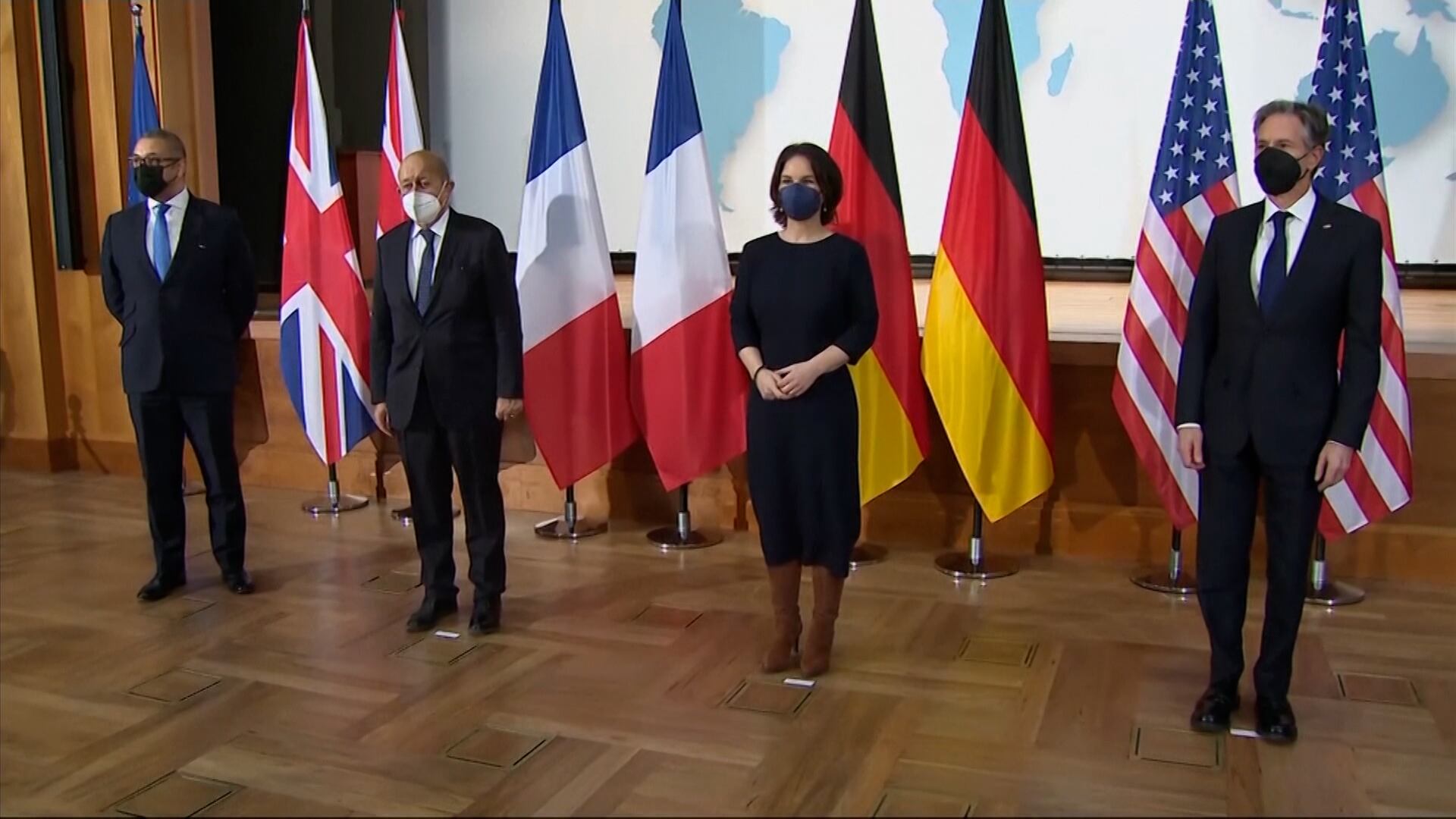
On Thursday, Secretary of State Antony Blinken addressed the stance of the U.S. and its allies should Russia make any forays into Ukraine, a seeming response to President Biden's remarks that should Putin engage in something short of a full invasion, there might be some indecision among allied nations regarding what to do. Ariel Cohen, a senior fellow at the think tank Atlantic Council, joined Cheddar to discuss the difficulty faced by Blinken wrangling unity as tensions run high in the region. "There'll be a smaller incursion, and the president implied, there'll be a weaker response because our European allies have created this horrible situation where they are dependent on Moscow for their gas supply," Cohen explained.
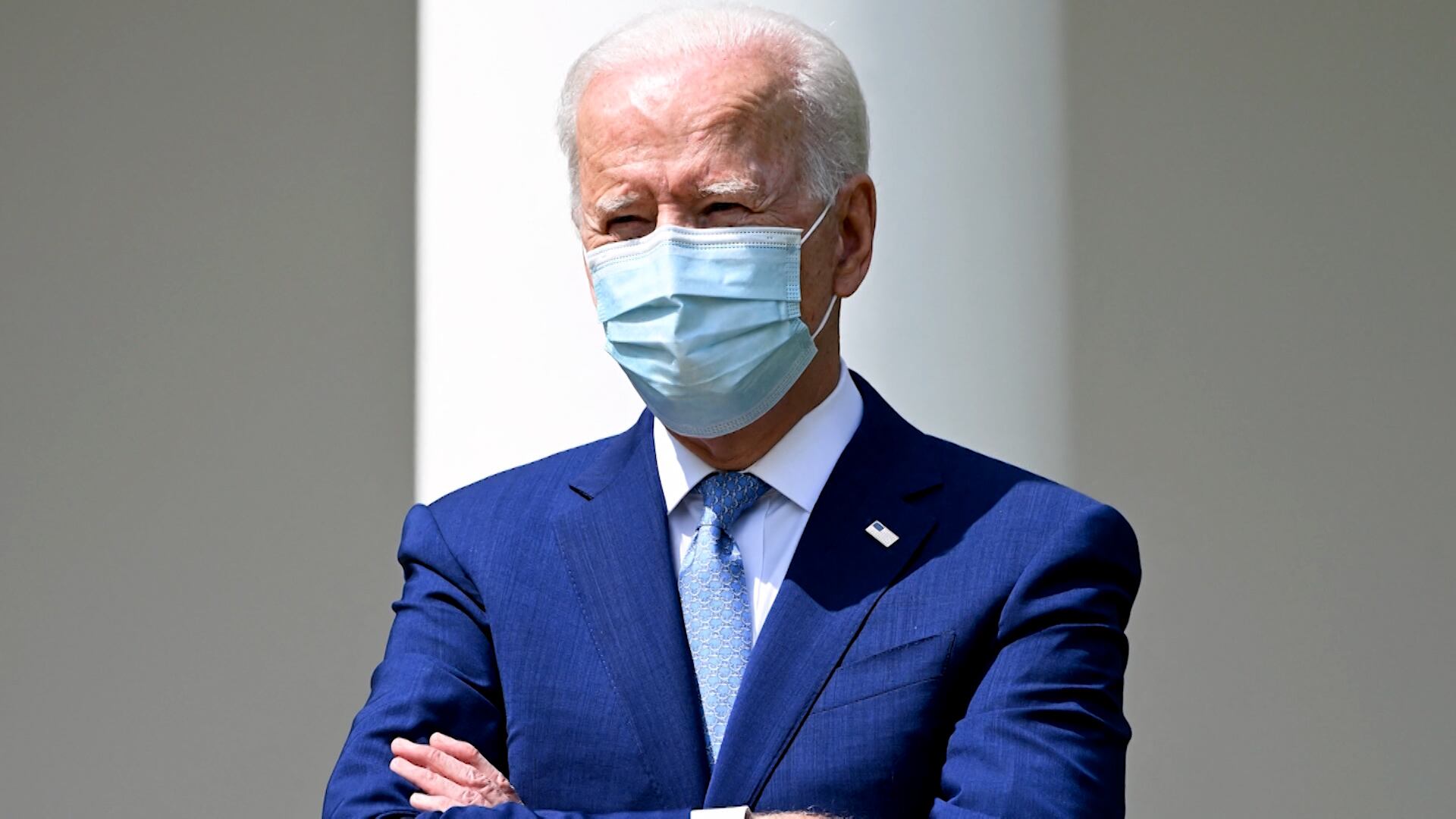
During a nearly two-hour press conference on Wednesday, President Biden spoke on his accomplishments and challenges from the first year of his presidency, and what his administration hopes to accomplish in the coming year. However, his approval ratings are underwater as COVID remains a big concern for voters — as does inflation, noted Tom Bevan, co-founder and president of polling aggregator RealClearPolitics. "The public thinks [inflation] is priority number one, and the administration is concerned about it, they talk about it, but they're not spending enough time on it as far as the public is concerned," said Bevan.
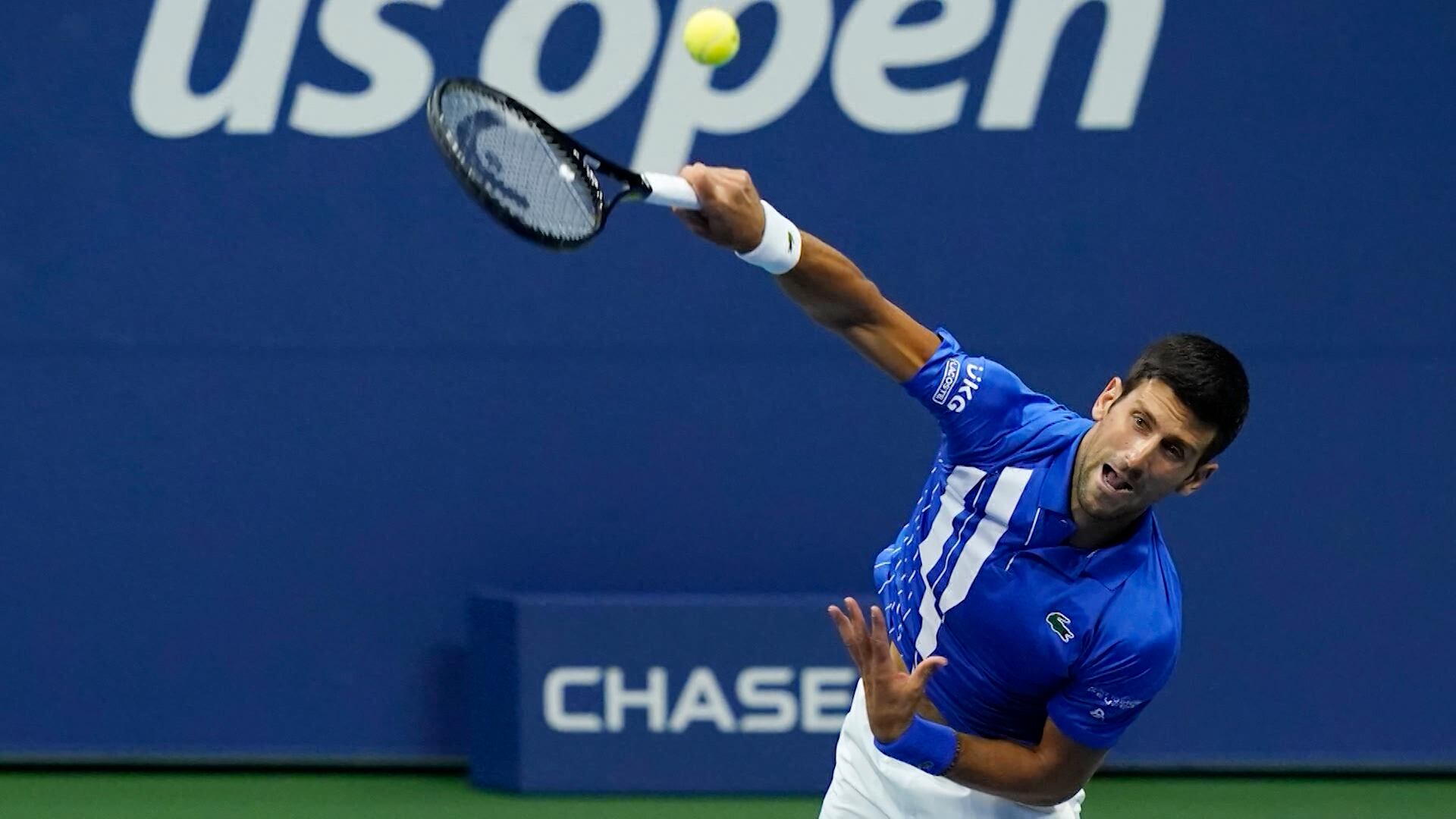
The drama surrounding tennis star Novak Djokovic continues after he was deported from Australia over the weekend due to the nation's COVID-19 vaccine requirements. Djokovic was forced to leave the country on the eve of what was to be his first match in defense of his Australian Open title after three judges ruled in favor of his removal and revealed their reasoning for doing so. Adding to his woes, a law recently passed in France is putting his chances of defending his French Open title in jeopardy. The director of Marist's Center for Sports Communication, Jane McManus, joined Cheddar to discuss the ongoing fallout.
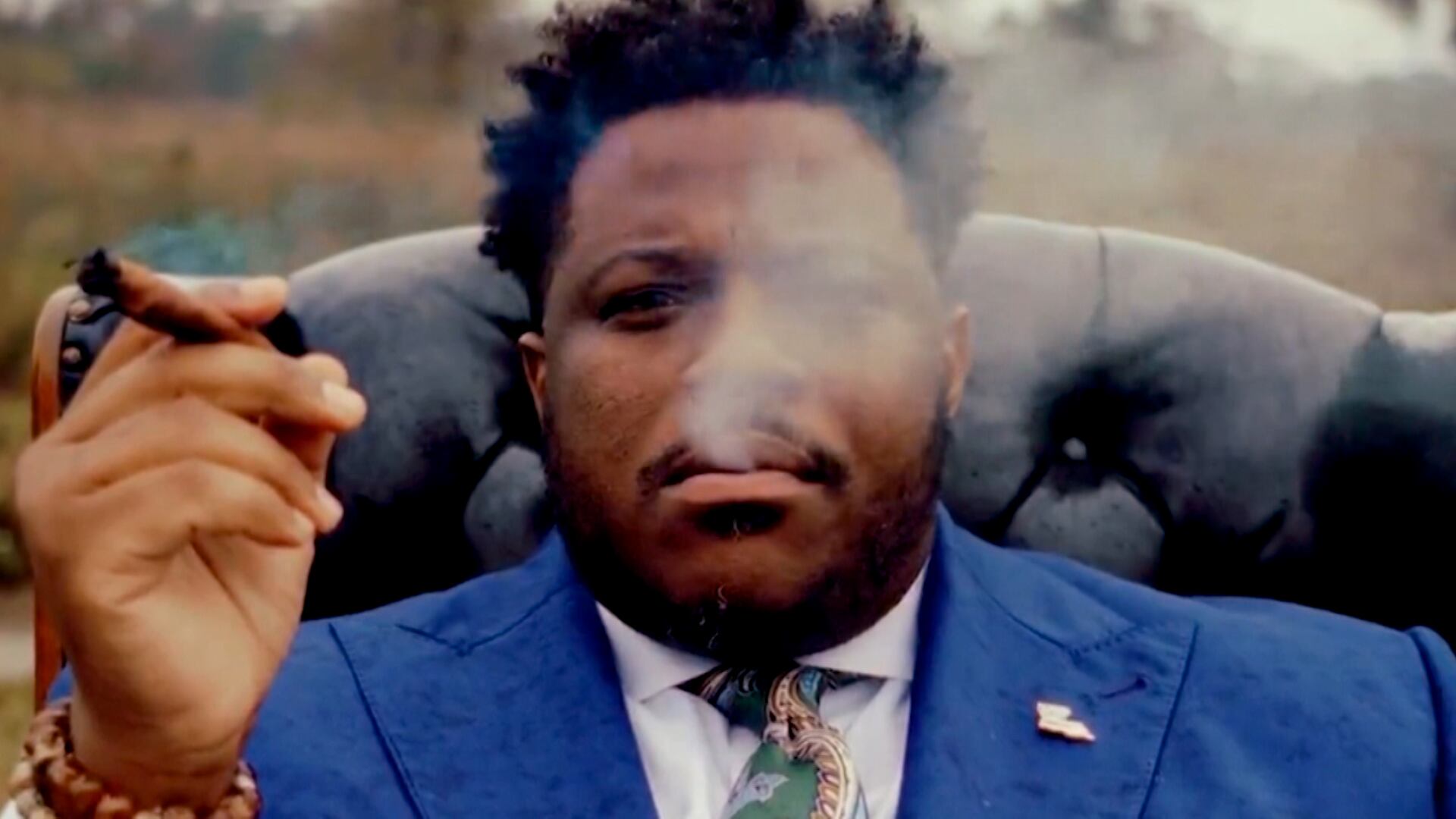
As the midterm elections get ever closer, candidates have been getting creative with their campaigns to stick out and to connect with voters. Gary Chambers, a Democratic candidate for the U.S. Senate from Louisiana, has definitely attracted attention with an advertisement featuring him smoking a blunt, making a point about the inequity of anti-cannabis laws. "We wanted to bring the seriousness of the moment," he said of the ad. "But we also wanted to make sure that people understand that there are 19 states that are legal right now but Black people and brown people are being over-incarcerated in mostly Southern and Midwestern states in America for cannabis possession."
If some members of Congress have their way, there might finally be a 'TLDR' on sites' terms of service, introduced by the terms-of-service labeling, design, and readability act – or TLDR for short. With this act, users will actually understand what they're agreeing to or the many ways in which their data is being used before pressing 'accept.' J.D. sat down with co-sponsor of the bill and Senator Bill Cassidy, to discuss.
President Joe Biden's first year in office is wrapping up. What has he achieved, and what else remains on the table while the Democrats have control of Washington? Amid an ongoing pandemic and rising inflation, Biden's approval rating is at an all-time low and his party is plagued by infighting. Will he be able to continue pushing key parts of his agenda? Paul Glastris, former Bill Clinton speechwriter & Editor-in-chief of 'Washington Monthly,' joins Cheddar News' Closing Bell to discuss the president's achievements in his first year, where he's fallen short, and what he must do in order to get more of his agenda signed into law.