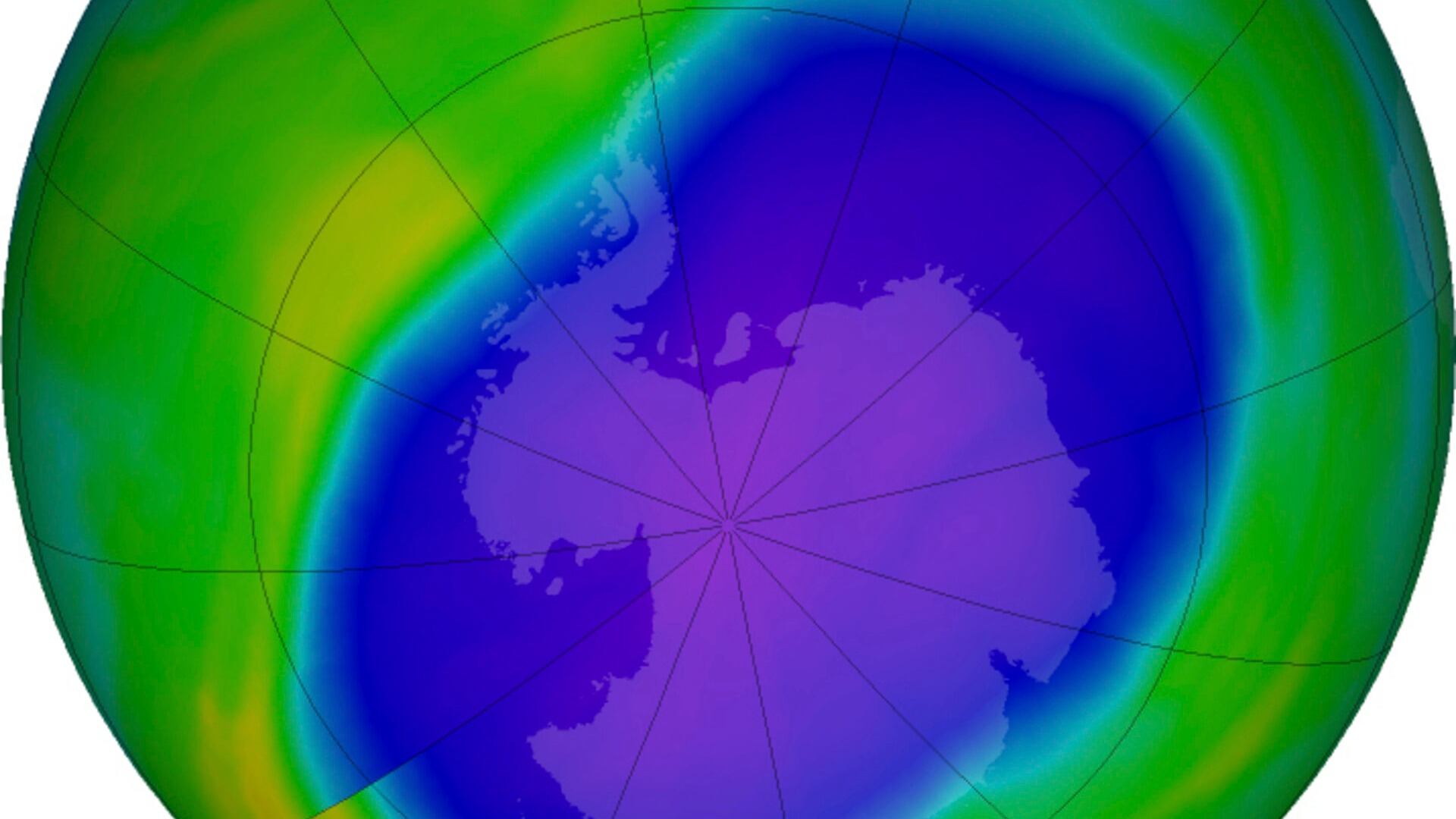
In this NASA false-color image, the blue and purple shows the hole in Earth's protective ozone layer over Antarctica on Oct. 5, 2022. Earth’s protective ozone layer is slowly but noticeably healing at a pace that would fully mend the hole over Antarctica in about 43 years, a new United Nations report says. (NASA via AP, File)
Hope for the global environment has been detected after the United Nations found that Earth's protective ozone layer is recovering from years of human-induced damage.
The hole, which was discovered in 1985 by British scientists, is assessed every four years. On the latest check-in, scientists reported significant healing of the hole that sits over Antarctica.
"In the upper stratosphere and in the ozone hole we see things getting better," said Paul Newman, co-chair of the scientific assessment, according to the Associated Press.
In 1987, the nations of the world came together to sign off on the Montreal Protocol, which assigned each country with tasks to do their part in scaling back the use and production of ozone depleting substances.
In a previous assessment of the hole four years ago, scientists found that the hole was recovering then too, but the findings were preliminary and not as aggressive.
Factors like remitting the use of chlorine and bromine in products across industries, which at times had various uses such as in dry cleaning and anesthesia, have played a substantial role in the shrinking of the ozone's hole.
At the current rate, scientists predict that it could be fully repaired by 2066.
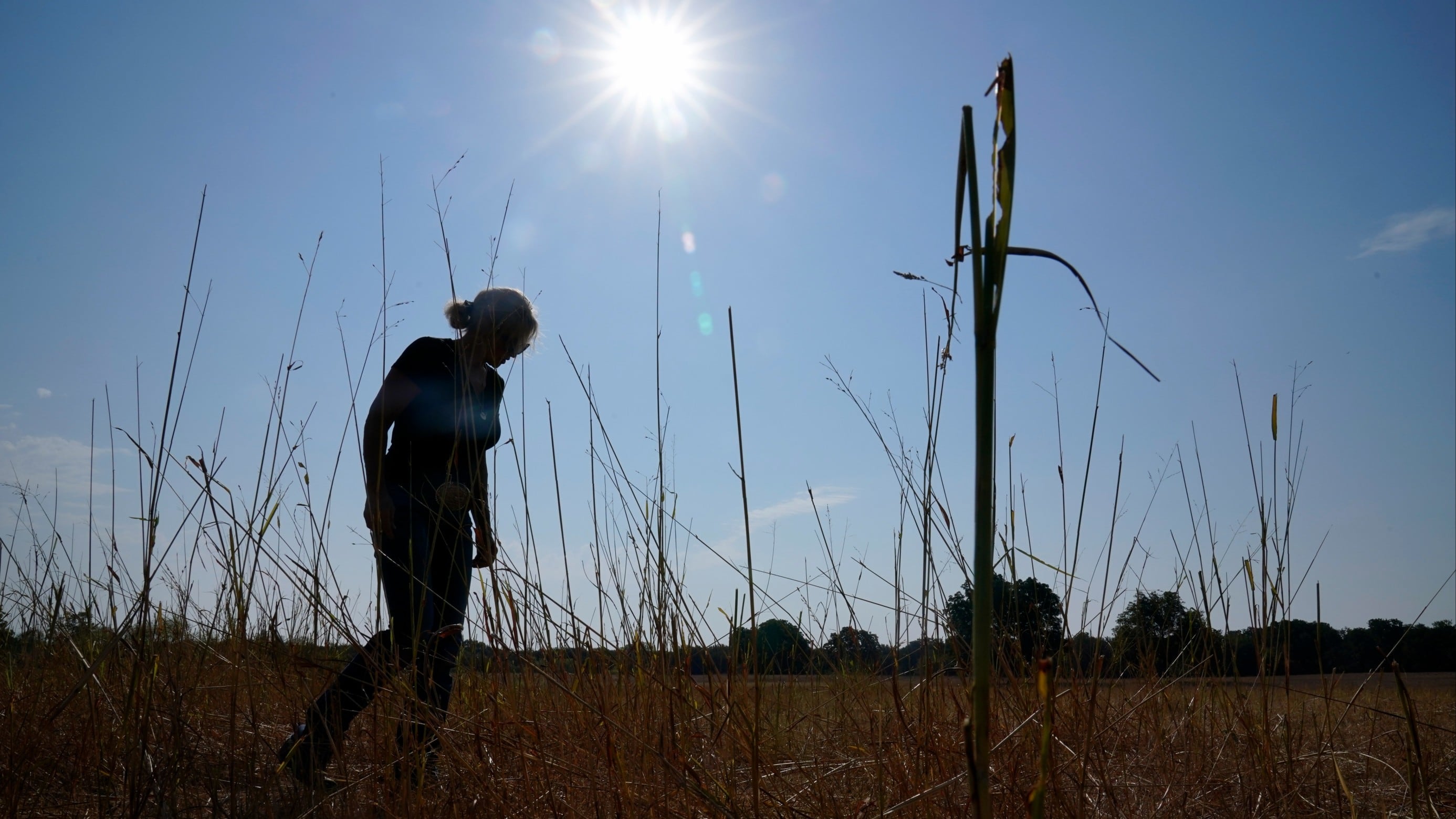
Irrigation might have saved Jackson's hay, but she and her husband rejected the idea about 10 years ago over the cost: as much as $75,000 for a new well and all the equipment. But now — with an extended drought and another U.S. heat wave this week that will broil her land about an hour northwest of Dallas for days in 100-degree-plus temperatures — Jackson said she is “kind of rethinking.”
India became the first country to land a spacecraft near the moon’s south pole on Wednesday — a historic voyage to uncharted territory that scientists believe could hold vital reserves of frozen water, and a technological triumph for the world’s most populous nation.