By Summer Ballentine and Heather Hollingsworth
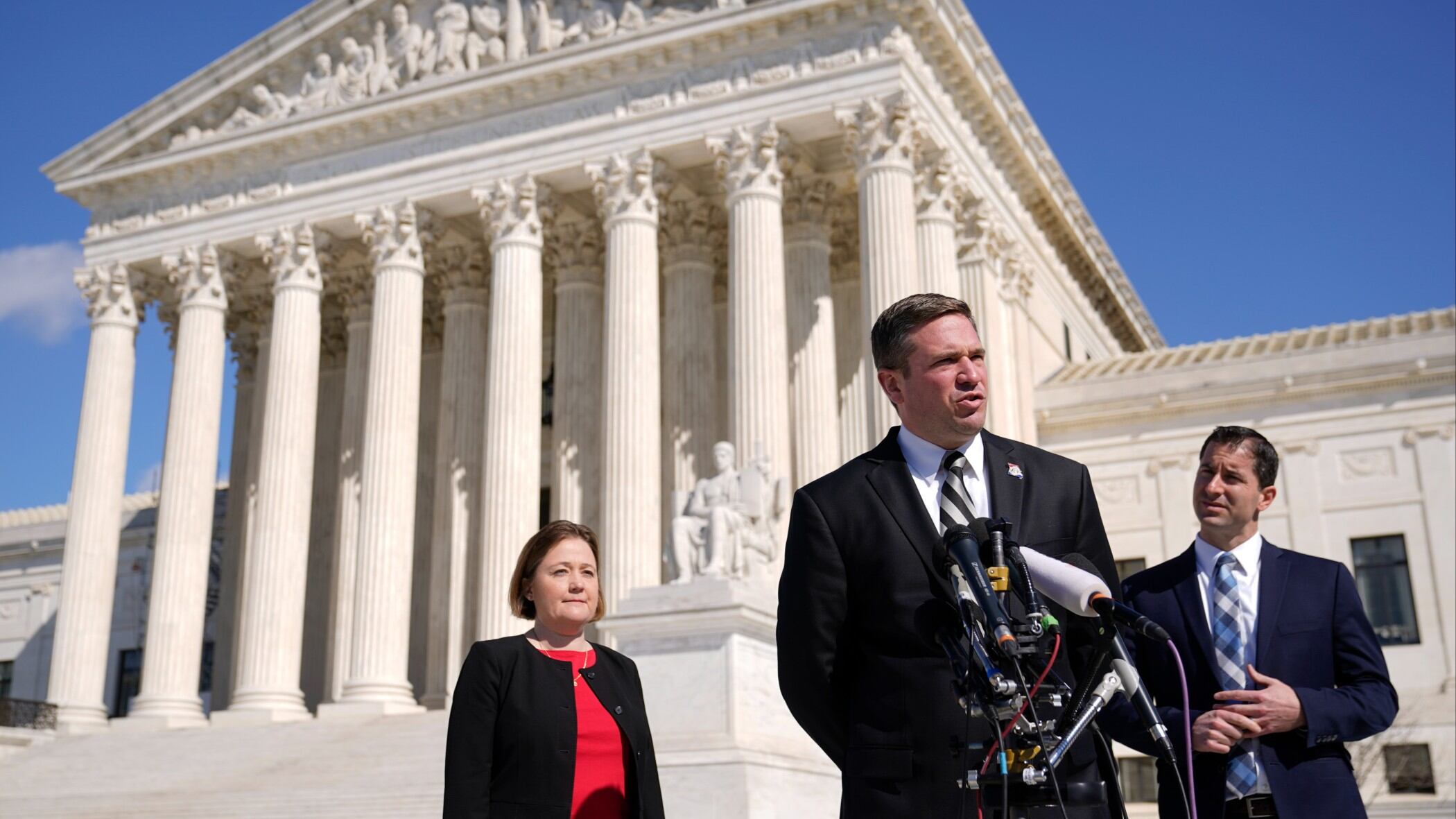
Missouri's attorney general announced new restrictions Thursday on gender-affirming care for adults in addition to minors in a move that is believed to be a first nationally and has advocacy groups threatening to sue.
Attorney General Andrew Bailey announced plans to restrict health care for transgender people weeks ago, when protesters rallied at the Capitol to urge lawmakers to pass a law banning puberty blockers, hormones and surgeries for children. But the discussion was focused on minors, not adults.
Missouri Attorney General spokeswoman Madeline Sieren clarified in a statement later in the day that adults also would be covered.
“We have serious concerns about how children are being treated throughout the state, but we believe everyone is entitled to evidence-based medicine and adequate mental health care,” Sieren said.
The rule, which incudes a required 18 months of therapy before receiving gender-affirming health care, is set to take effect April 27 and expire next February.
The ACLU and Lambda Legal said in a joint statement that they would “take any necessary legal action” and urged those affected to call.
“The Attorney General’s so-called emergency rule is based on distorted, misleading, and debunked claims and ignores the overwhelming body of scientific and medical evidence supporting this care,” the statement said.
Robert Fischer, the spokesman for the LGBT rights groups PROMO, said he was not aware of similar restrictions elsewhere.
“He’s essentially attacking the entire trans community at this point,” Fischer said of Bailey. “It’s no longer just about children.”
The National Center for Transgender Equality called the order “deeply wrong” in a tweet, adding that “trans people of all ages across the state of Missouri deserve access to health care.”
The restrictions are in response to a former employee's allegations of mistreatment at a transgender youth clinic in St. Louis run by Washington University. Bailey is investigating the center.
“My office is stepping up to protect children throughout the state while we investigate the allegations and how they are harming children,” Bailey said in a statement.
University spokespeople didn’t immediately respond to phone or email messages from The Associated Press seeking comment.
Moving forward, doctors who provide gender-affirming health care must first provide them a lengthy list of potential negative side effects and information warning against those treatments, according to a copy of the rule released Thursday.
Health care providers will need to ensure “any psychiatric symptoms from existing mental health comorbidities of the patient have been treated and resolved” before providing gender-affirming treatments under the new rule. Physicians also must screen patients for social media addiction, autism and signs of “social contagion with respect to the patient’s gender identity.”
The FDA approved puberty blockers 30 years ago to treat children with precocious puberty — a condition that causes sexual development to begin much earlier than usual. Sex hormones — synthetic forms of estrogen and testosterone — were approved decades ago to treat hormone disorders or as birth control pills.
The FDA has not approved the medications specifically to treat gender-questioning youth, but they have been used for many years for that purpose “off label,” a common and accepted practice for many medical conditions. Doctors who treat transgender patients say those decades of use are proof the treatments are not experimental.
Critics have raise concerns about children changing their minds. Yet the evidence suggests detransitioning is not as common as opponents of transgender medical treatment for youth contend, though few studies exist and they have their weaknesses.
Bailey's rule was released the same day Missouri's Republican-led House voted to ban access to transgender-related health care for minors.
The House voted 103-52 along mostly party lines in favor of the ban, although the bill’s passage seems uncertain in the Senate.
The House proposal is stricter than what was passed by the GOP-led Senate, where Democrats have more influence through the use of stall tactics.
Senators compromised to exempt care for minors whose treatment is already underway. The Senate bill also would expire after four years.
The House version includes no exceptions for current treatments and would remain in effect indefinitely.
Republican Senate leaders said it’s unlikely that the House version will make it through the Senate.
“We’ve already passed legislation on this issue out of the Senate,” Senate President Pro Tem Caleb Rowden said. “We would expect the House to appreciate how hard and difficult it was and to take up our bill and pass it.”
Both the House and Senate proposals would ban inmates and prisoners from accessing gender-affirming surgeries and would end coverage of any gender-affirming treatments for Missouri patients on Medicaid, the federal health insurance program.
The Human Rights Campaign have condemned the legislation in a statement, describing gender-affirming care as medically necessary.
At least 13 states have now enacted laws restricting or banning gender-affirming care for minors: Alabama, Arkansas, Arizona, Georgia, Idaho, Indiana, Iowa, Kentucky, Mississippi, Tennessee, Utah, South Dakota and West Virginia. Bills are awaiingt action from governors in Kansas, Montana and North Dakota. Federal judges have blocked enforcement of laws in Alabama and Arkansas, and nearly two dozen states are considering bills this year to restrict or ban care.
House debate on the bill became emotional as some Democrats argued the ban on health care will hurt transgender children.
“You are erasing my grandchild,” said St. Louis Democratic Rep. Barbara Phifer, whose grandson is transgender.
Republican sponsor Rep. Brad Hudson, of Cape Fair, criticized Democrats for threatening to end political partnerships and friendships with Republicans over the bill.
Hudson said his bill “seeks to protect kids” and that it's unfair that Democrats are describing it as hateful towards transgender children.
“A yes vote is a vote to protect kids from sex-change drugs and surgeries,” Hudson said.
Associated Press writer David A. Lieb contributed to this report from Jefferson City, Missouri.