Lawmakers in several states are embracing legislation to let children work in more hazardous occupations, longer hours on school nights and in expanded roles including serving alcohol in bars and restaurants as young as 14.
The efforts to significantly roll back labor rules are largely led by Republican lawmakers to address worker shortages and in some cases run afoul of federal regulations.
Child welfare advocates worry the measures represent a coordinated push to scale back hard-won protections for minors.
“The consequences are potentially disastrous,” said Reid Maki, director of the Child Labor Coalition, which advocates against exploitative labor policies. “You can't balance a perceived labor shortage on the backs of teen workers.”
Lawmakers proposed loosening child labor laws in at least 10 states over the past two years, according to a report published last month by the left-leaning Economic Policy Institute. Some bills became law, while others were withdrawn or vetoed.
Legislators in Wisconsin, Ohio and Iowa are actively considering relaxing child labor laws to address worker shortages, which are driving up wages and contributing to inflation. Employers have struggled to fill open positions after a spike in retirements, deaths and illnesses from COVID-19, decreases in legal immigration and other factors.
The job market is one of the tightest since World War II, with the unemployment rate at 3.4% — the lowest in 54 years.
Bringing more children into the labor market is, of course, not the only way to solve the problem. Economists point to several other strategies the country can employ to alleviate the labor crunch without asking kids to work more hours or in dangerous settings.
The most obvious is encouraging immigration, which is politically divisive, but which has been a cornerstone of the country’s ability to grow for years in the face of an aging population. Other strategies could include incentivizing older workers to delay retirement, expanding opportunities for formerly incarcerated people and making child-care more affordable, so that parents have greater flexibility to work.
In Wisconsin, lawmakers are backing a proposal to allow 14-year-olds to serve alcohol in bars and restaurants. If passed, Wisconsin would have the lowest such limit nationwide, according to the National Institute on Alcohol Abuse and Alcoholism.
The Ohio Legislature is on track to pass a bill allowing students ages 14 and 15 to work until 9 p.m. during the school year with their parents’ permission. That's later than federal law allows, so a companion measure asks the U.S. Congress to amend its own laws.
Under the federal Fair Labor Standards Act, students that age can only work until 7 p.m. during the school year. Congress passed the law in 1938 to stop children from being exposed to dangerous conditions and abusive practices in mines, factories, farms and street trades.
Republican Arkansas Gov. Sarah Huckabee Sanders signed a law in March eliminating permits that required employers to verify a child’s age and their parent's consent. Without work permit requirements, companies caught violating child labor laws can more easily claim ignorance. Other measures to loosen child labor laws have been passed into law in New Jersey, New Hampshire and Iowa.
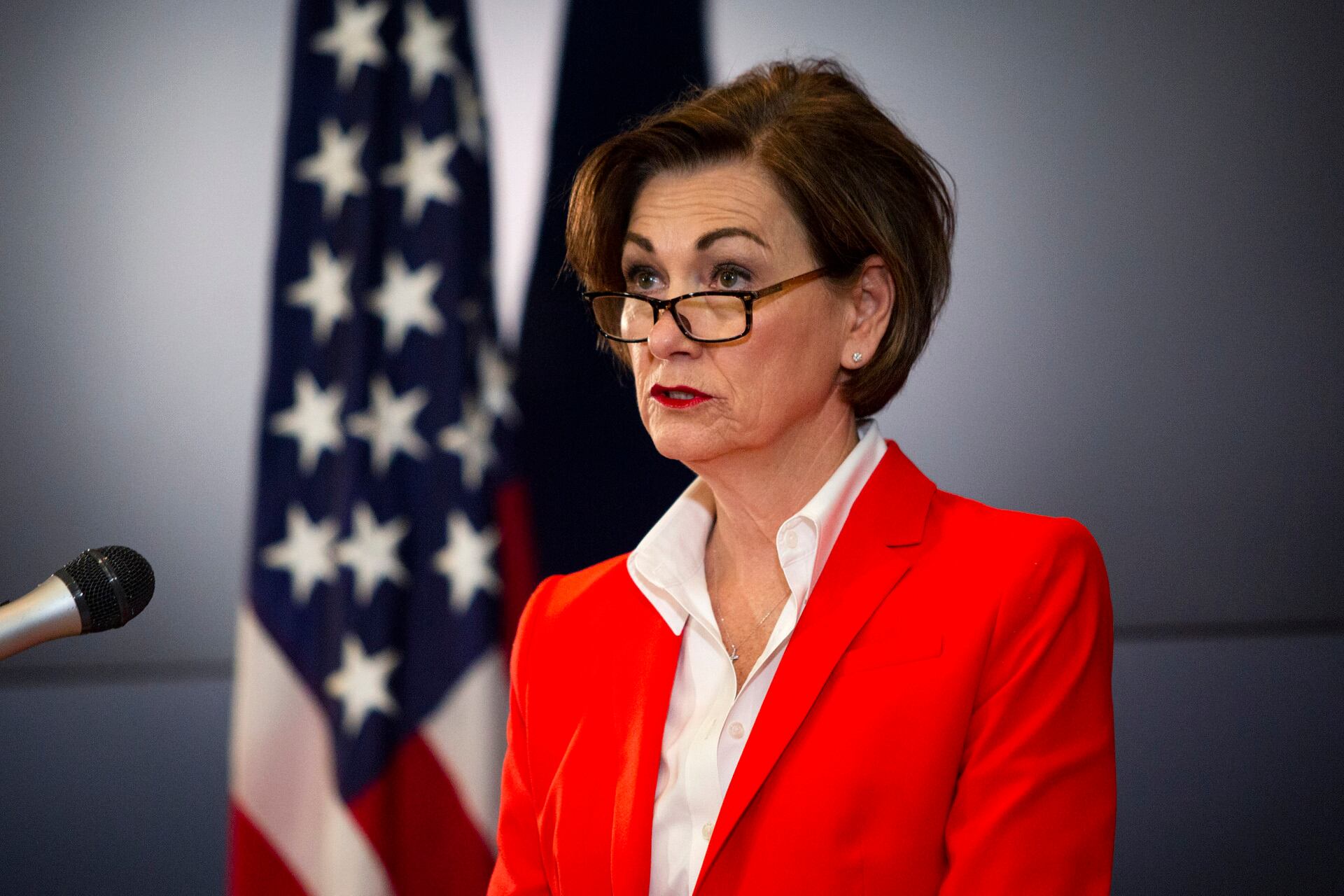
Iowa Republican Gov. Kim Reynolds signed a law last year allowing teens aged 16 and 17 to work unsupervised in child care centers. The state Legislature approved a bill this month to allow teens of that age to serve alcohol in restaurants. It would also expand the hours minors can work. Reynolds, who said in April she supports more youth employment, has until June 3 to sign or veto the measure.
Republicans dropped provisions from a version of the bill allowing children aged 14 and 15 to work in dangerous fields including mining, logging and meatpacking. But it kept some provisions that the Labor Department say violate federal law, including allowing children as young as 14 to briefly work in freezers and meat coolers, and extending work hours in industrial laundries and assembly lines.
Teen workers are more likely to accept low pay and less likely to unionize or push for better working conditions, said Maki, of the Child Labor Coalition, a Washington-based advocacy network.
“There are employers that benefit from having kind of docile teen workers,” Maki said, adding that teens are easy targets for industries that rely on vulnerable populations such as immigrants and the formerly incarcerated to fill dangerous jobs.
The Department of Labor reported in February that child labor violations had increased by nearly 70% since 2018. The agency is increasing enforcement and asking Congress to allow larger fines against violators.
It fined one of the nation's largest meatpacking sanitation contractors $1.5 million in February after investigators found the company illegally employed more than 100 children at locations in eight states. The child workers cleaned bone saws and other dangerous equipment in meatpacking plants, often using hazardous chemicals.
National business lobbyists, chambers of commerce and well-funded conservative groups are backing the state bills to increase teen participation in the workforce, including Americans for Prosperity, a conservative political network and the National Federation of Independent Business, which typically aligns with Republicans.
The conservative Opportunity Solutions Project and its parent organization, Florida-based think tank Foundation for Government Accountability, helped lawmakers in Arkansas and Missouri draft bills to roll back child labor protections, The Washington Post reported. The groups, and allied lawmakers, often say their efforts are about expanding parental rights and giving teenagers more work experience.
“There’s no reason why anyone should have to get the government’s permission to get a job,” Republican Arkansas Rep. Rebecca Burkes, who sponsored the bill to eliminate child work permits, said on the House floor. “This is simply about eliminating the bureaucracy that is required and taking away the parent’s decision about whether their child can work.”
Margaret Wurth, a children's rights researcher with Human Rights Watch, a member of the Child Labor Coalition, described bills like the one passed in Arkansas as “attempts to undermine safe and important workplace protections and to reduce workers’ power.”
Current laws fail to protect many child workers, Wurth said.
She wants lawmakers to end exceptions for child labor in agriculture. Federal law allows children 12 and older to work on farms for any amount of time outside of school hours, with parental permission. Farm workers over 16 can work at dangerous heights or operate heavy machinery, hazardous tasks reserved for adult workers in other industries.
Twenty-four children died from work injuries in in 2021, according to the Bureau of Labor Statistics. Around half of deadly work incidents happened on farms, according to a report from the Government Accountability Office covering child deaths between 2003 and 2016.
“More children die working in agriculture than in any other sector,” Wurth said. “Enforcement isn’t going to help much for child farm workers unless the standards improve.”
___
Harm Venhuizen is a corps member for the Associated Press/Report for America Statehouse News Initiative. Report for America is a nonprofit national service program that places journalists in local newsrooms to report on undercovered issues. Follow Venhuizen on Twitter.