By Claudia Lauer and Alanna Durkin Richer
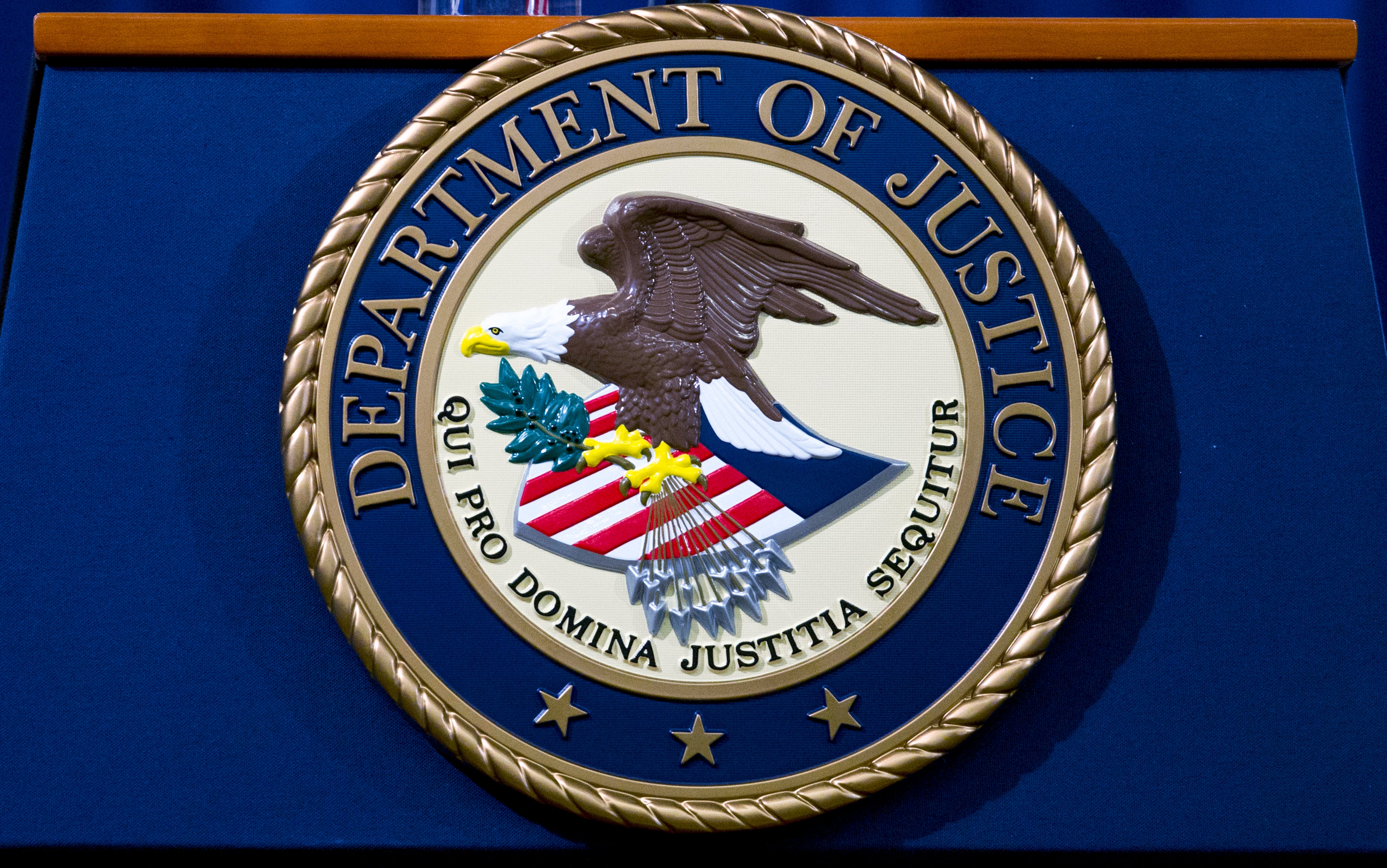
The U.S. Justice Department has created a database to track records of misconduct by federal law enforcement officers that is aimed at preventing agencies from unknowingly hiring problem officers, officials said on Monday.
The federal move is a step toward accountability amid growing calls to close loopholes that allow law enforcement officers to be rehired by other agencies after losing their jobs or resigning after misconduct allegations.
But the database, which will only contain records for federal officers and not be open to the public, falls short of the national misconduct database called for by some police reform advocates.
The National Law Enforcement Accountability Database currently includes only former and current Justice Department officers who have records of serious misconduct over the last seven years. It will be expanded to capture other federal law enforcement agencies such as the Secret Service and United States Park Police, a Justice Department official said.
Attorney General Merrick Garland said it will give federal agencies “an important new tool for vetting and hiring officers and agents that will help strengthen our efforts” to build and retain the public's trust.
“No law enforcement agency — including the Justice Department — can effectively do its work without the trust of the public,” Garland said in an emailed statement.
Federal agencies will be responsible for reporting and updating records for six types of misconduct including criminal convictions, civil judgments, terminations, suspensions, resigning or retiring while under investigation and sustained complaints or disciplinary actions for serious misconduct, officials said.
It is currently only accessible by Justice Department employees and will eventually be expanded to allow access by users in other federal law enforcement agencies, as well as state and local law enforcement agencies, a Justice Department official said.
Several state legislatures have created statewide databases in recent years to track disciplinary misconduct and officer decertification, which happens when a state licensing body revokes the certification or license required to be a law enforcement officer in that state. But few of those state databases are open to the public, and few are shared between states.
Richer reported from Boston, Lauer from Philadelphia.

Many U.S. consumers say they’ve noticed higher than usual prices for holiday gifts in recent months, according to a a December poll from The Associated Press-NORC Center for Public Affairs Research. A contributing factor is the unusually high import taxes the Trump administration put on foreign goods. While the worst-case consumer impact that many economists foresaw from the administration’s trade policies hasn’t materialized, some popular gift items have been affected more than others. Most toys and electronics sold in the U.S. come from China. So do most holiday decorations. Jewelry prices have risen due to the cost of gold.
Serbia’s prosecutor for organized crime has charged a government minister and three others with abuse of position and falsifying of documents related to a luxury real estate project linked to U.S. President Donald Trump’s son-in-law Jared Kushner. The charges came on Monday. The investigation centers on a controversy over a a bombed-out military complex in central Belgrade that was a protected cultural heritage zone but that is facing redevelopment as a luxury compound by a company linked to Kushner. The $500 million proposal to build a high-rise hotel, offices and shops at the site has met fierce opposition from experts at home and abroad. Selakovic and others allegedly illegally lifted the protection status for the site by falsifying documentation.
President Donald Trump has signed an executive order to block states from regulating artificial intelligence. He argues that heavy regulations could stifle the industry, especially given competition from China. Trump says the U.S. needs a unified approach to AI regulation to avoid complications from state-by-state rules. The order directs the administration to draw up a list of problematic regulations for the Attorney General to challenge. States with laws could lose access to broadband funding, according to the text of the order. Some states have already passed AI laws focusing on transparency and limiting data collection.
The New York Times and President Donald Trump are fighting again. The news outlet said Wednesday it won't be deterred by Trump's “false and inflammatory language” from writing about the 79-year-old president's health. The Times has done a handful of stories on that topic recently, including an opinion column that said Trump is “starting to give President Joe Biden vibes.” In a Truth Social post, Trump said it might be treasonous for outlets like the Times to do “FAKE” reports about his health and "we should do something about it.” The Republican president already has a pending lawsuit against the newspaper for its past reports on his finances.
President Donald Trump says he will allow Nvidia to sell its H200 computer chip used in the development of artificial intelligence to “approved customers” in China. Trump said Monday on his social media site that he had informed China’s leader Xi Jinping and “President Xi responded positively!” There had been concerns about allowing advanced computer chips into China as it could help them to compete against the U.S. in building out AI capabilities. But there has also been a desire to develop the AI ecosystem with American companies such as chipmaker Nvidia.
House Republicans in key battleground districts are working to contain the political fallout expected when thousands of their constituents face higher bills for health insurance coverage obtained through the Affordable Care Act. For a critical sliver of the GOP majority, the impending expiration of the enhanced premium tax credits after Dec. 31 could be a major political liability as they potentially face midterm headwinds in a 2026 election critical to President Donald Trump’s agenda. For Democrats, the party’s strategy for capturing the House majority revolves around pinning higher bills for groceries, health insurance and utilities on Republicans.
Load More