How DC is bringing the box office success of its films to its comics
By Grant Keller
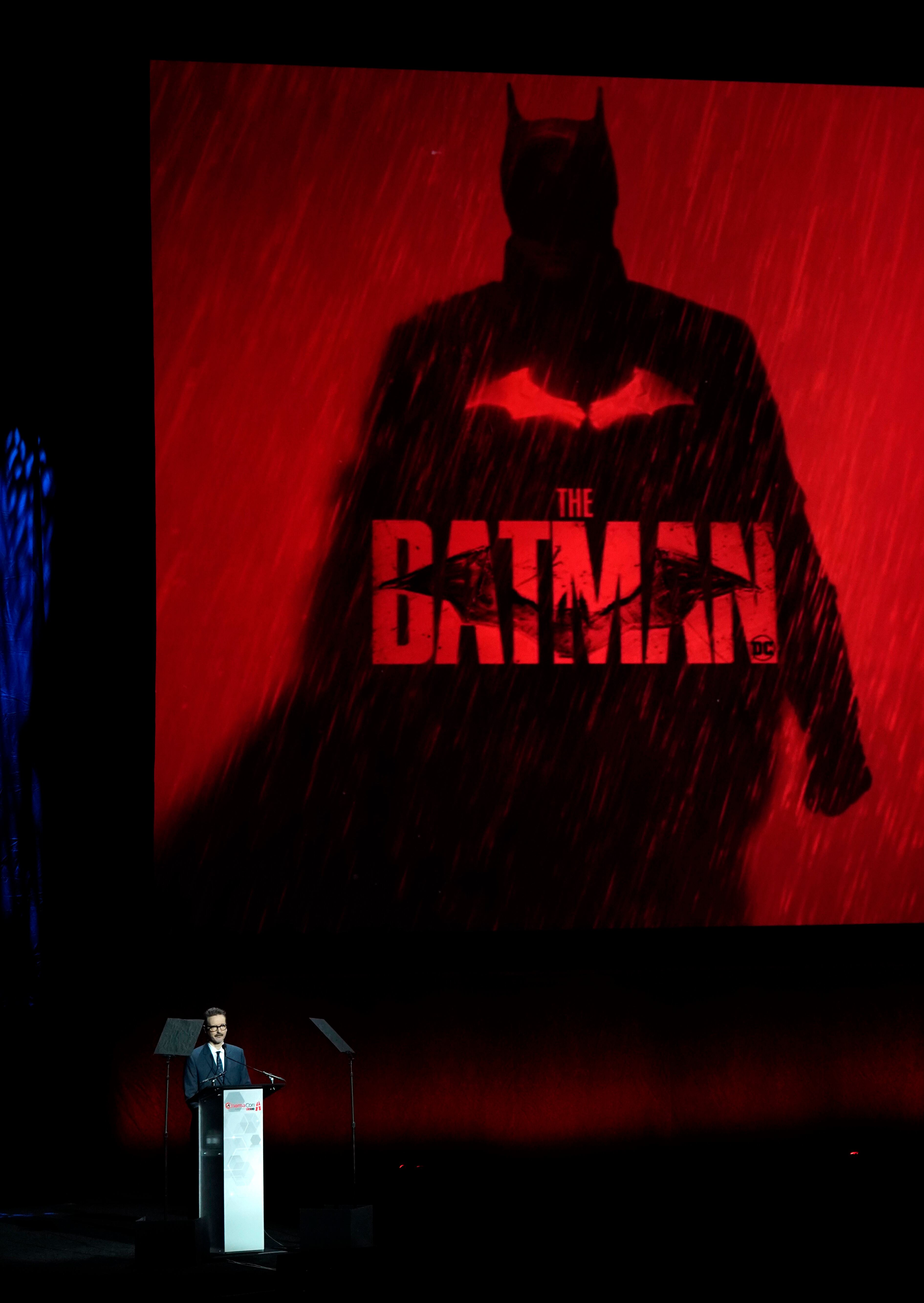
Matt Reeves, director of "The Batman," addresses the audience during the "State of the Industry" presentation at CinemaCon 2022, the official convention of the National Association of Theatre Owners (NATO) at Caesars Palace, Tuesday, April 26, 2022, in Las Vegas. (AP Photo/Chris Pizzello)
In the bottom right corner of the poster for James Gunn’s 2021 The Suicide Squad, it says “get DC comics at comics shops”. That was the first time any comic book movie has explicitly stated this to its viewers.
Despite superheroes dominating 21st century cinema, earning hundreds of millions upon hundreds of millions at the box office, that success hasn’t blown back on the comic book industry. Movie studios are comfortable digging through comic bins for hot new intellectual property, but they are not comfortable returning the favor and sharing their success.
In addition to that, the end of the YouTube version of trailers for then upcoming films beginning with “The Batman” and continuing with “Blue Beetle,” “Black Adam,” and all releases going forward feature recommended reading if you wanted to get to know the character before you met them on the big screen. This program isn’t exclusive to the theatrical films with these graphics also appearing on the trailers for animated films and video games.
When James Gunn was instated as co-CEO of DC Studios and announced his initial film slate, he blew the doors open. His announcement of a film based on Tom King and Bilquis Everly’s “Supergirl: Woman of Tomorrow” turned that comic that barely sold in periodicals into a graphic novel that couldn’t stay on shelves.
DC has been working overtime to help film fans transfer to the comics. Batman comics are once again popping up in grocery stores, and it’s also started selling compact comics, which are smaller and cheaper graphic novels that are easy to carry around.
Orangetheory Fitness is redefining the future of workouts with smarter tech, strength-based programming, and community-driven studios built for what’s next.
Spain's government has fined Airbnb 64 million euros or $75 million for advertising unlicensed tourist rentals. The consumer rights ministry announced the fine on Monday. The ministry stated that many listings lacked proper license numbers or included incorrect information. The move is part of Spain's ongoing efforts to regulate short-term rental companies amid a housing affordability crisis especially in popular urban areas. The ministry ordered Airbnb in May to remove around 65,000 listings for similar violations. The government's consumer rights minister emphasized the impact on families struggling with housing. Airbnb said it plans to challenge the fine in court.
Roomba maker iRobot has filed for Chapter 11 bankruptcy protection, but says that it doesn’t expect any disruptions to devices as the more than 30-year-old company is taken private under a restructuring process. iRobot said that it is being acquired by Picea through a court-supervised process. Picea is the company's primary contract manufacturer. The Bedford, Massachusetts-based anticipates completing the prepackaged chapter 11 process by February.
Serbia’s prosecutor for organized crime has charged a government minister and three others with abuse of position and falsifying of documents related to a luxury real estate project linked to U.S. President Donald Trump’s son-in-law Jared Kushner. The charges came on Monday. The investigation centers on a controversy over a a bombed-out military complex in central Belgrade that was a protected cultural heritage zone but that is facing redevelopment as a luxury compound by a company linked to Kushner. The $500 million proposal to build a high-rise hotel, offices and shops at the site has met fierce opposition from experts at home and abroad. Selakovic and others allegedly illegally lifted the protection status for the site by falsifying documentation.