By Meg Kinnard and Adriana Gomez Licon
Republican presidential hopefuls have largely shunned TikTok, the hugely popular video-sharing app that some in both parties allege is a potential spy mechanism for China.
But entrepreneur Vivek Ramaswamy recently became the first 2024 candidate to join the platform, which says it has over 150 million U.S. users. That’s even as he’s accused Beijing of pushing TikTok as “digital fentanyl” to Americans and wants the app banned entirely.
“We’re in this to reach young people, to energize young people, and to do that, we can’t just hide,” Ramaswamy said in his first post earlier this month. “You can’t play in the game, and then not play in the game, so we’re here.”
His competitors face the same conundrum. With U.S.-China tensions already running high, the Republicans running for president have all called for new economic and political measures to punish Beijing. Several major GOP candidates have said they want to ban TikTok. But they also want to reach the younger audiences that don’t watch television ads but consume videos on TikTok or similar apps.
Many campaigns produce short video clips that can be shared between apps, a workaround to not being on TikTok directly. Or they work with conservative influencers on the app who argue Republicans need to engage on it.
About three in 10 U.S. adults (29%) have a TikTok account, according to an Ipsos study conducted in July, with 20% saying they use it at least from time to time. TikTok usage is much higher among younger adults, with half of 18- to 34-year-olds saying they have a TikTok account and 37% using the app often. Overall, Republicans (22%) are slightly less likely than Democrats (35%) to have a TikTok account.
A spokeswoman for Ramaswamy’s campaign defended both the decision to join TikTok and Ramaswamy’s criticisms that the app is dangerous.
“You have to reach young people where they are,” said Tricia McLaughlin, the spokeswoman. “TikTok does collect user data. This data collection should not be happening. It is tailored to promote toxic behaviors.”
TikTok in a statement defended its efforts to safeguard U.S. user data and “protect our platform from outside influence.” The company argued a ban would unlawfully restrict the free speech of Americans using the app.
“Censoring their voices is contrary to conservative values and principles enshrined in our constitution,” the company said in its statement. “If candidates are truly concerned about protecting data, a better approach is a national privacy law that applies to all technology companies equally.”
Ramaswamy’s approach to TikTok is in some ways indicative of his campaign. While he is trying to make himself attractive to younger voters, Ramaswamy has promoted policy ideas that would directly target them.
He has called for raising the voting age for Americans from 18 to 25, something that would require a constitutional amendment. He would carve out exceptions for people who serve at least six months in the military or as a first responder, or for people who could pass the test given to people seeking to become naturalized citizens.
TikTok has split Washington since its launch in 2016.
U.S. officials have for years expressed concerns that the app — a wholly owned subsidiary of Chinese technology firm ByteDance Ltd., which appoints its executives — has data security lapses that can mean vulnerabilities for both personal users and national security. Some current and former U.S. intelligence officials also worry that under Chinese laws, Beijing could force ByteDance to hand over user data or influence what Americans see around an election. Authorities have never presented evidence that the Chinese government exerts direct control over TikTok.
Congress last year banned TikTok on government devices and some conservative-led states have passed or considered their own bans.
During his presidency, Donald Trump issued executive orders targeting TikTok and other Chinese-owned apps, but courts stopped those orders from taking effect. President Joe Biden revoked the executive orders in 2021 but his administration has considered going after TikTok as well.
Although Biden’s reelection campaign does not have a TikTok account, the Democratic National Committee is active on the platform with an account followed by more than 400,000 users. It creates short clips criticizing and mocking Republicans and recycles Biden clips originally posted on other social media networks such as Instagram.
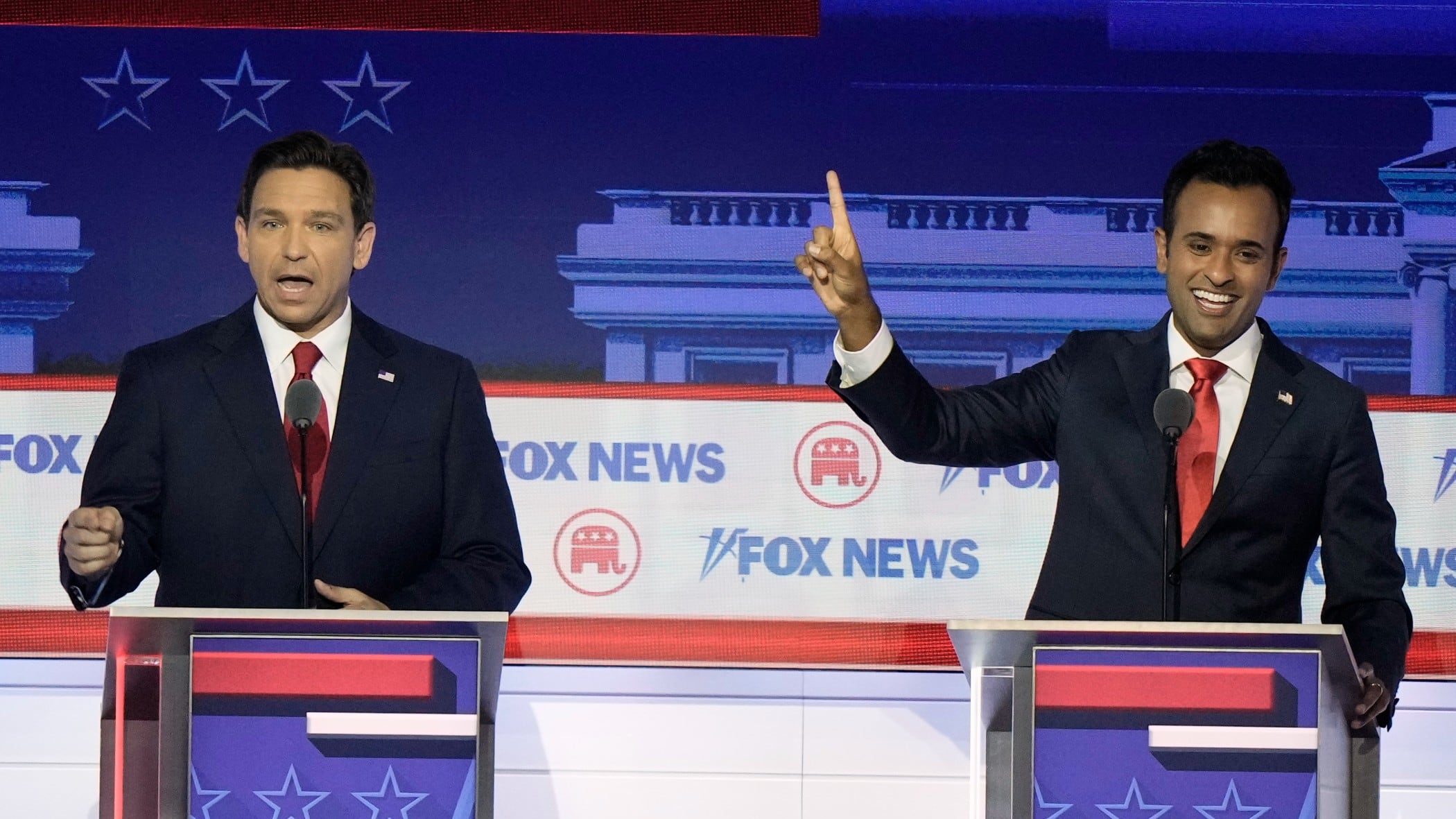
During last month’s first Republican debate among GOP presidential hopefuls, viewers saw TikTok spots featuring individual users who have used the platform for outwardly benevolent means, like raising money to help veterans or expanding small businesses.
Ryan Calo, a professor of law and information science at the University of Washington, says proposals to ban TikTok would infringe on the First Amendment by not allowing people to speak or listen to content.
While he acknowledges the privacy concerns associated with ByteDance, Calo likened proposals to ban TikTok to Congress renaming French fries as “freedom fries” after France opposed the 2003 U.S. invasion of Iraq.
“It’s political theater,” Calo said. “It wouldn’t accomplish what anyone wanted, other than scoring political points.”
The faraway GOP front-runner for 2024, Trump does not have a TikTok account and often rails against China. But his campaign recognizes the appeal of video especially to voters under 30, said John Brabender, a media consultant for the Trump campaign.
“Video is extremely important to them in everything they do,” Brabender said. “Our goal is to make sure content is created in an interesting enough way that it does get shared.”
Brabender said TikTok is still useful for Trump, citing his July appearance at a Las Vegas mixed marital arts fight as an example of a video that was widely shared, particularly by younger social media influencers.
“We go to influencers in general because almost in every case, they’re on multiple platforms,” he said.
Some conservatives on TikTok argue that it provides a good space for voters and candidates alike to be heard.
“You have to weigh out the cost-benefit ratio,” said Clarkson Lawson, a 25-year-old gay conservative from Florida who posts TikToks about politics to his more than 300,000 followers. “What’s more of a concern? Everybody’s already on it. Are you going to have your message represented or not?
Lawson encouraged conservatives skeptical of the platform to see its political possibilities.
“A lot of times when something is new, especially technology, conservatives can be a little bit apprehensive to embrace it, which is understandable. I think we need that balance,” said Lawson, whose following has grown so profitably that he’s in the process of becoming a professional content creator. “But I think staying off of it isn’t the best idea. We should definitely make sure that it’s secure for our citizens, but in that same breath, we need to make sure that our values and our speech is being represented on that platform, given how large it is.”
Erica Choinka, who describes herself as “a Midwest mom in my late twenties with nearly a decade of experience working in politics,” said she came to TikTok with the goal of getting more conservative women involved in political conversations. Saying she understands safety concerns about the platform, Choinka called it “a bit naive” — and perhaps a generational disconnect — to think that TikTok is alone in collecting its users’ data.
“Most of that perception comes from older conservatives,” said Choinka, who has around 14,000 followers. “Us younger ones grew up with smartphones and social media, so we’ve always been wary of the risks of posting online.”
Ramaswamy, Choinka said, appears to be using the platform to meet younger voters where they are, something she said she’d like to see more conservatives do.
“I’m hopeful that as more younger conservative candidates run for office, they’ll embrace social media more and be more comfortable with it,” she said. “When the only voices that young voters are exposed to on social media are coming from the left, we’re doing them a disservice by not sharing our perspective and giving them a choice.”