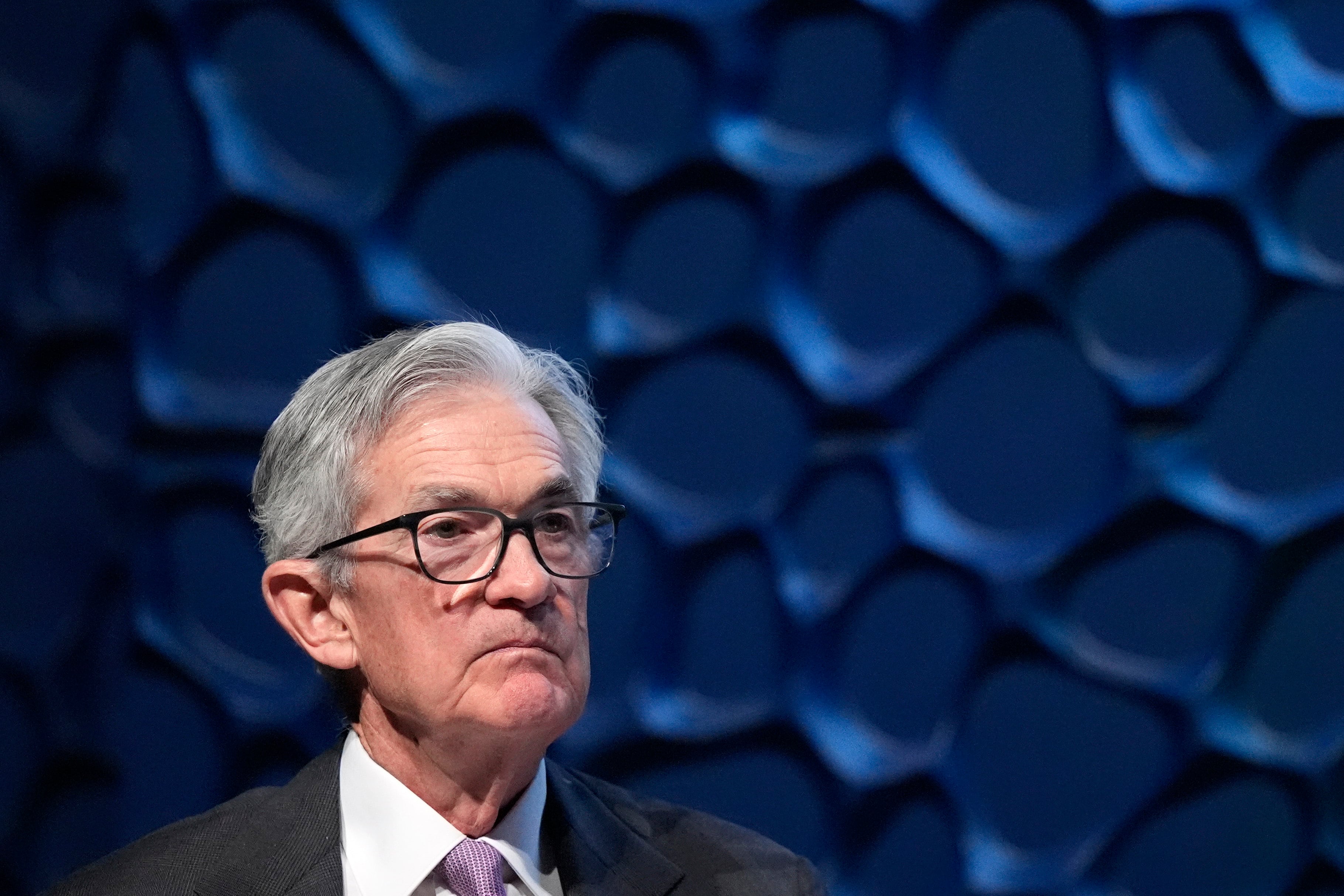
WASHINGTON (AP) — With inflation still elevated, Federal Reserve officials expressed caution at their last meeting about cutting interest rates too quickly, adding to uncertainty about their next moves.
Even if inflation continued declining to the Fed's 2% target, officials said, “it would likely be appropriate to move gradually” in lowering rates, according to minutes of the November 6-7 meeting.
The minutes don't provide much guidance about what the Fed will do at its next meeting Dec. 17-18. Wall Street investors see the odds of another quarter-point reduction in the Fed's key rate at that meeting as nearly even, according to CME Fedwatch. Most economists think officials will probably cut rates next month for the third time this year, but could then skip cutting at following meetings.
Kathy Bostjancic, chief economist at Nationwide, said she expects the Fed will cut its key rate by a quarter-point next month, to about 4.3%. But officials will “likely pause" early next year “to assess prospective policy changes under the second Trump administration as well as the current landscape of economic activity and inflation,” she added in a client note.
In September, the Fed signaled it would reduce its key rate as many as four times next year, but since then investors and economists have come to expect fewer cuts. The economy is growing at a solid pace, inflation is showing signs of getting stuck above the Fed's target, and President-elect Donald Trump's proposals, particularly higher tariffs, could also accelerate inflation.
Inflation fell to 2.1% in September, down from a peak of 7% in mid-2022, providing Fed officials with the confidence to implement a steep half-point reduction in its key rate that month.
But excluding the volatile food and energy categories, so-called “core” prices are more elevated, rising 2.7% from a year earlier in September. And they are expected to have risen again last month, when that data is reported Wednesday, to 2.8%.
Most officials at last month's meeting expressed confidence that inflation is steadily falling back to target, the minutes said. Yet they also said that it “remained somewhat elevated” and a couple of officials “noted the possibility that the process could take longer than previously expected.” Nineteen people participate in the Fed's interest rate policy discussions, though only 12 have a vote.
Many of the policymakers also noted that it was uncertain how far the Fed would have to cut its rate. There is broad disagreement among officials about what level of the Fed's rate would neither restrain nor stimulate growth. As a result, the minutes said, that “made it appropriate to reduce (interest rates) gradually.”
The Fed is trying to calibrate its policies so that it doesn't cut rates too quickly and allow inflation to surge again. At the same time, it doesn't want to reduce them too slowly, which could drag down hiring and growth.
If inflation stayed too high, Fed officials could “pause” their rate cuts, the minutes said, while if the economy slowed and unemployment rose, they could reduce rates more quickly.

The U.S. stock market is drifting lower following mixed data on the economy’s strength. The S&P 500 fell 0.4% Tuesday and remains a bit below its all-time high set last week. The Dow Jones Industrial Average dropped 271 points, and the Nasdaq composite was mostly unchanged. Treasury yields eased a bit after the reports on the U.S. job market, retail sales and business activity did little to clear uncertainty about where the Federal Reserve may take interest rates next year. AI stocks, which have been under heavy pressure recently, were mixed. Stock indexes fell across much of Europe and Asia.
Many U.S. consumers say they’ve noticed higher than usual prices for holiday gifts in recent months, according to a a December poll from The Associated Press-NORC Center for Public Affairs Research. A contributing factor is the unusually high import taxes the Trump administration put on foreign goods. While the worst-case consumer impact that many economists foresaw from the administration’s trade policies hasn’t materialized, some popular gift items have been affected more than others. Most toys and electronics sold in the U.S. come from China. So do most holiday decorations. Jewelry prices have risen due to the cost of gold.
A sell-off for Oracle is weighing on Wall Street as investors question whether its big spending on artificial-intelligence technology will pay off. The S&P 500 was mostly unchanged Thursday and hovering around its all-time high set in October. Drops for AI-related stocks dragged the Nasdaq composite down 0.6%. Oracle at one point was heading toward its worst loss since 2001 on worries about how much it plans to spend on AI infrastructure. But most stocks on Wall Street rose, and the Dow Jones Industrial Average jumped 600 points. Treasury yields slipped after a report showed more U.S. workers applied for unemployment benefits.
The U.S. stock market is flirting with its all-time high after the Federal Reserve cut its main interest rate to bolster the job market. The S&P 500 rose 0.8% Wednesday and was on track to squeak past its all-time closing high, which was set in October. The Dow Jones Industrial Average climbed 559 points, and the Nasdaq composite rose 0.4%. Wall Street loves lower interest rates because they can boost the economy and goose prices for investments, even if they have the potential of making inflation worse. Treasury yields eased in the bond market.
The U.S. stock market is drifting near its record levels following reactions to profit reports from Macy’s, Marvell Technologies and other companies. The S&P 500 added 0.4% Wednesday and climbed within 0.5% of its all-time high set in late October. The Dow Jones Industrial Average added 428 points, and the Nasdaq composite rose 0.2%. Treasury yields eased in the bond market following some mixed reports on the U.S. economy. One suggested hiring was much weaker in November than economists expected, while a second said growth for U.S. services businesses was better than expected.
The Enhanced Games is going public in two ways — with a new listing on the Nadsaq stock exchange and also by offering a direct-to-consumer business focused on performance products.
Load More