By Alfredo Peña and Matthew Barakat
CIUDAD VICTORIA, Mexico — Four Americans who traveled to Mexico last week to seek health care got caught in a deadly shootout and were kidnapped by heavily armed men who threw them in the back of a pickup truck, officials from both countries said Monday.
The four were traveling Friday in a white minivan with North Carolina license plates. They came under fire shortly after entering the city of Matamoros from Brownsville, at the southernmost tip of Texas near the Gulf coast, the FBI said in a statement Sunday.
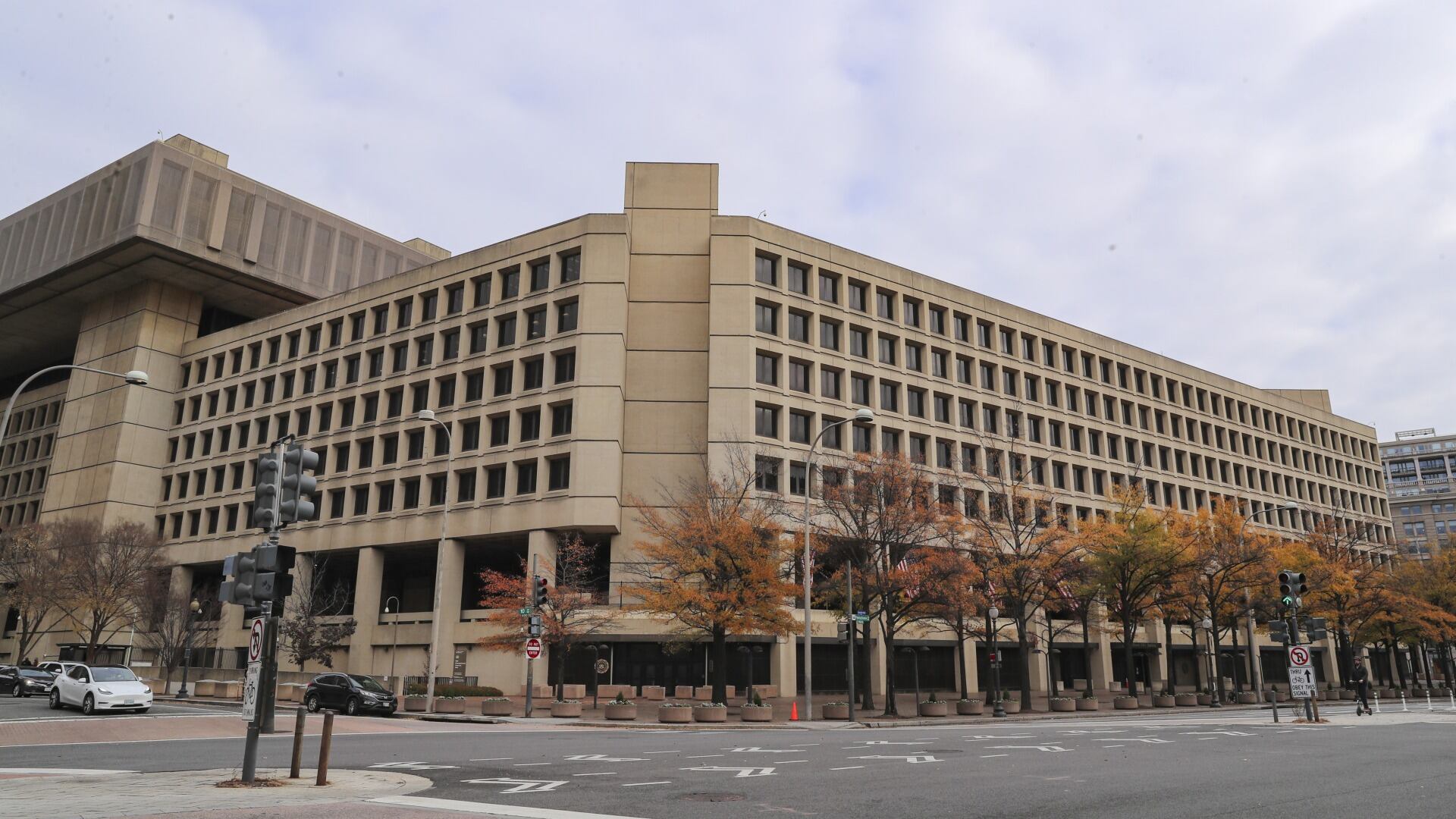
“All four Americans were placed in a vehicle and taken from the scene by armed men,” the FBI said. The bureau is offering a $50,000 reward for the victims' return and the arrest of the kidnappers.
Zalandria Brown of Florence, South Carolina, said she has been in contact with the FBI and local officials after learning that her younger brother, Zindell Brown, is one of the four victims.
“This is like a bad dream you wish you could wake up from,” she said in a phone interview. “To see a member of your family thrown in the back of a truck and dragged, it is just unbelievable.”
Zalandria Brown said her brother, who lives in Myrtle Beach, and two friends had accompanied a third friend who was going to Mexico for a tummy tuck surgery. A doctor who advertises such surgeries in Matamoros did not answer calls seeking comment.
Brown said the group was extremely close and they all made the trip in part to help split up the driving duties. They were aware of the dangers in Mexico, she added, and her brother had expressed some misgivings.
“Zindell kept saying, ‘We shouldn’t go down,’” Brown said.
A video posted to social media Friday showed men with assault rifles and tan body armor loading the four people into the bed of a white pickup in broad daylight. One was alive and sitting up, but the others seemed either dead or wounded. At least one person appeared to lift his head from the pavement before being dragged to the truck.
The scene illustrates the terror that has prevailed for years in Matamoros, a city dominated by factions of the powerful Gulf drug cartel who often fight among themselves. Amid the violence, thousands of Mexicans have disappeared in Tamaulipas state alone.
Mexican President Andrés Manuel López Obrador said Monday that “there was a confrontation between groups, and they were detained,” without offering details. He originally said the four Americans came to Mexico to buy medications.
Tamaulipas’ chief prosecutor, Irving Barrios, told reporters that a Mexican woman died in Friday’s shootings. He did not specify whether she was killed in the same gunfight where the kidnapping took place.
A woman driving in Matamoros who asked not to be identified for fear of reprisal said she witnessed what appeared to be the shooting and abduction.
The white minivan was hit by another vehicle near an intersection, then gunfire rang out, the woman said. Another SUV rolled up, and several armed men hopped out.
“All of a sudden they (the gunmen) were in front of us,” she said. “I entered a state of shock, nobody honked their horn, nobody moved. Everybody must have been thinking the same thing, ‘If we move they will see us, or they might shoot us.’”
She said the gunmen forced a woman, who was able to walk, into the back of a pickup. Another person was carried to the truck but could still move his head.
“The other two they dragged across the pavement, we don't know if they were alive or dead,” she said.
Mexican authorities arrived minutes later.
Zindell Brown’s family asked people to share any relevant information with local authorities. O’dell William Brown, his father, said the family is still searching for answers.
“I don’t know which way to go right now,” he said. “We don’t know what’s what.”
Shootouts in Matamoros were so bad on Friday that the U.S. Consulate issued an alert about the danger and local authorities warned people to shelter in place. It was not immediately clear how the abductions may have been connected to that violence.
U.S. Ambassador to Mexico Ken Salazar said in a statement Monday the Americans were kidnapped at gunpoint and an “innocent” Mexican citizen died in the attack. He said various U.S. justice agencies were working with their Mexican counterparts to recover the missing persons.
Authorities have provided no other details about the victims.
President Joe Biden had been informed of the situation, White House press secretary Karine Jean-Pierre said Monday. She declined to answer other questions, citing privacy concerns.
Victims of violence in Matamoros and other large border cities of Tamaulipas often go uncounted because the cartels have a history taking bodies of their own with them. Local media often avoid reporting on such episodes out of safety concerns, creating an information vacuum.
The State Department warns U.S. citizens not to travel to Tamaulipas. However U.S. citizens who live in Brownsville or elsewhere in Texas frequently cross to visit family, attend medical appointments or shop. It's also a crossing point for people traveling deeper into Mexico.
As the headquarters of the Gulf cartel, Matamoros was once relatively calm. For years, a night out in the city was part of the “two-nation vacation” for spring breakers flocking to Texas’ South Padre Island.
But increased cartel violence over the past 10 to 15 years frightened away much of that business. Sometimes U.S. citizens are swept up in the fighting.
Three U.S. siblings disappeared near Matamoros in October 2014 while visiting their father and were later found shot to death and burned. Their parents said they had been abducted by men dressed in police gear identifying themselves as “Hercules,” a tactical security unit in the city.
Barakat reported from Falls Church, Virginia. Associated Press writer James Pollard in Columbia, South Carolina, contributed to this report.
Updated with the latest information.