By Paul J. Weber and Jessica Gresko
A federal appeals court ruled that the abortion pill mifepristone can still be used for now but reduced the period of pregnancy when the drug can be taken and said it could not be dispensed by mail.
The decision late Wednesday temporarily narrowed a ruling by a lower court judge in Texas that had completely blocked the Food and Drug Administration’s approval of the nation’s most commonly used method of abortion. Still, preventing the pill from being sent by mail amounts to another significant curtailing of abortion access, less than a year after the reversal of Roe v. Wade resulted in more than a dozen states effectively banning abortion outright.
The case is likely to go to the U.S. Supreme Court.
“We are going to continue to fight in the courts, we believe the law is on our side, and we will prevail," White House Press Secretary Karine Jean-Pierre said Thursday, speaking to reporters from Dublin during a visit by President Joe Biden.
Mifepristone was approved for use by the FDA more than two decades ago and is used in combination with a second drug, misoprostol.
In a far-reaching ruling last week, a federal judge blocked the FDA’s approval of the pill following a lawsuit by the drug's opponents. There is virtually no precedent for a lone judge overturning the regulator's medical decisions.
The ruling was put on pause to allow an appeal.
Just before midnight Wednesday, the 5th U.S. Circuit Court of Appeals in New Orleans ruled that the FDA’s initial approval of mifepristone in 2000 could remain in effect.
But in the 2-1 vote, the panel of judges put on hold changes made by the regulator since 2016 that relaxed the rules for prescribing and dispensing mifepristone. Those included extending the period of pregnancy when the drug can be used from seven weeks to 10, and also allowing it to be dispensed by mail, without any need to visit a doctor’s office.
The two judges who voted to tighten restrictions, Kurt Engelhardt and Andrew Oldham, are both appointees of former President Donald Trump. The third judge, Catharina Haynes, is an appointee of former President George W. Bush. She said she would have put the lower court ruling on hold entirely for now to allow oral arguments in the case.
Either side, or both, could take the case to the Supreme Court. Opponents of the drug could seek to keep the full lower court ruling in effect. The Biden administration, meanwhile, could ask the high court to allow all the FDA changes to remain in place while the case continues to play out.
Adding to the uncertainty, a separate federal judge in Washington last week ordered the FDA not to do anything that might block mifepristone’s availability in 17 Democrat-led states suing to keep it on the market. The judge in that case has not yet to responded to the Justice Department seeking additional clarity this week.
The appeals court judges in the majority in Wednesday's decision noted that the Biden administration and mifepristone’s manufacturer “warn us of significant public consequences” that would result if mifepristone were withdrawn entirely from the market under the lower court ruling.
But the judges suggested changes the FDA made making mifepristone easier to obtain since 2016 were less consequential than its initial approval of the drug in 2000. It would be “difficult” to argue the changes were “so critical to the public given that the nation operated — and mifepristone was administered to millions of women — without them for sixteen years” the judges wrote.
When the drug was initially approved in 2000, the FDA limited its use to up to seven weeks of pregnancy. It also required three in-person office visits: the first to administer mifepristone, the next to administer the second drug misoprostol and the third to address any complications. It also required a doctor’s supervision and a reporting system for any serious consequences associated with the drug.
If the appeals court's action stands, those would again be the terms under which mifepristone could be dispensed for now.
Democratic leaders in states where abortion remains legal since the Supreme Court overturned Roe v. Wade last year say they are preparing in case mifepristone becomes restricted.
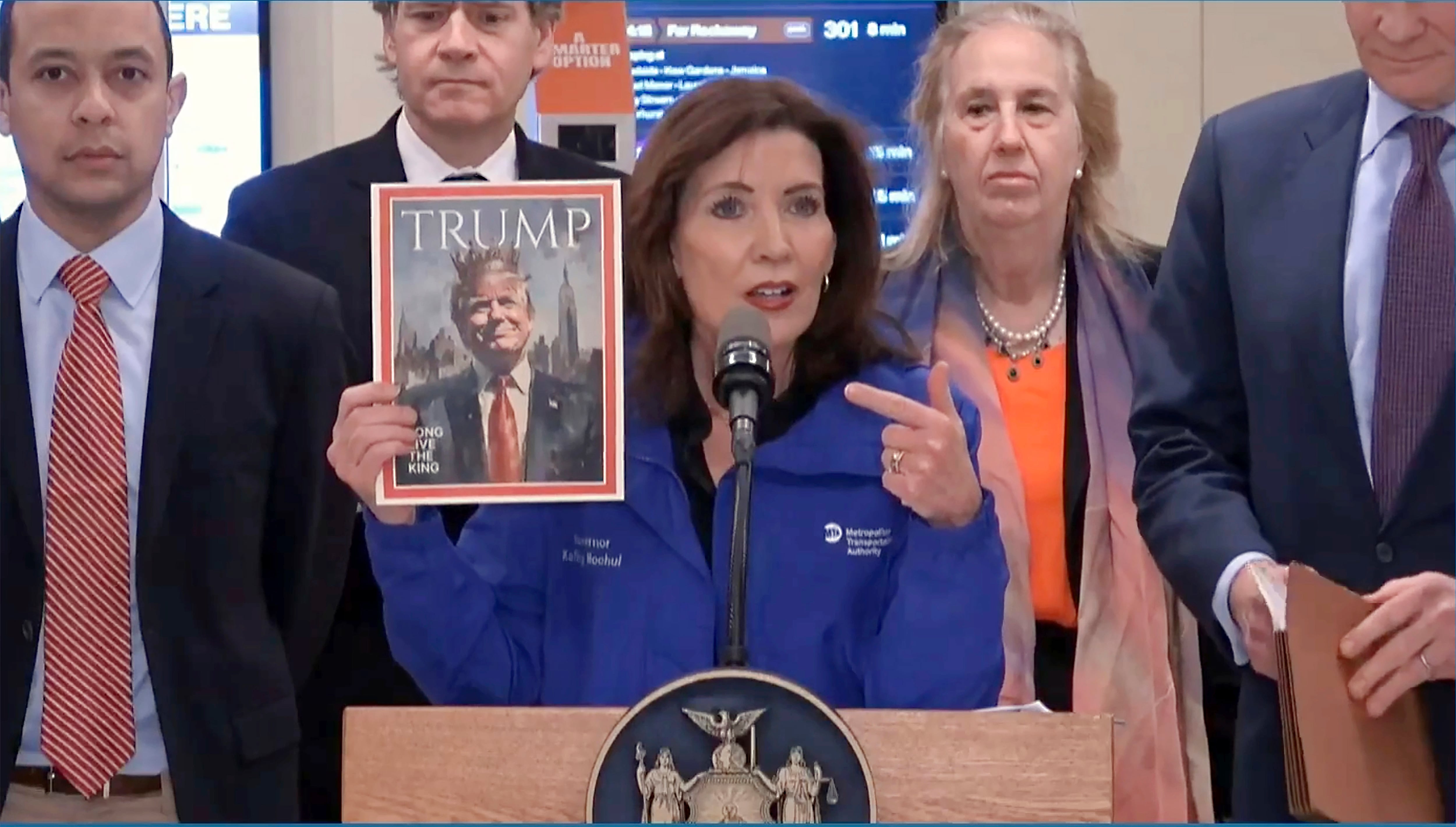
New York Gov. Kathy Hochul said Tuesday that her state would stockpile 150,000 doses of misoprostol.
The White House also has contingency plans in place, but Jean-Pierre held off on detailing them while the legal action continued. Instead, she detailed a proposed a new federal rule to limit how law enforcement and state officials collect medical records if they investigate women who flee their home states to seek abortions elsewhere.
Pharmaceutical executives this week also signed a letter that condemned the Texas ruling and warned that FDA approval of other drugs could be at risk if U.S. District Judge Matthew Kacsmaryk’s decision stands.
The lawsuit challenging mifepristone's approval was brought by the Alliance Defending Freedom, which was also involved in the Mississippi case that led to Roe v. Wade being overturned. At the core of the lawsuit is the allegation that the FDA’s initial approval of mifepristone was flawed because the agency did not adequately review safety risks.
A spokesperson for the Alliance Defending Freedom did not immediately return a message Thursday morning asking what steps it might take next.
Mifepristone has been used by millions of women over the past 23 years, and complications from mifepristone occur at a lower rate than problems in wisdom teeth removal, colonoscopies and other routine procedures, medical groups have recently noted.
___
Gresko reported from Washington. Associated Press writer Mark Sherman in Washington and Colleen Long in Dublin contributed to this report.