By Stephen Groves
Ending the threat of a government shutdown until after the holidays, Congress gave final approval Wednesday night to a temporary government funding package that pushes a confrontation over the federal budget into the new year.
The Senate met into the night to pass the bill with an 87-11 tally and send it to President Joe Biden for his signature one day after it passed the House on an overwhelming bipartisan vote. It provides a funding patch into next year, when the House and Senate will be forced to confront — and somehow overcome — their considerable differences over what funding levels should be.
In the meantime, the bill removes the threat of a government shutdown days before funding would have expired.
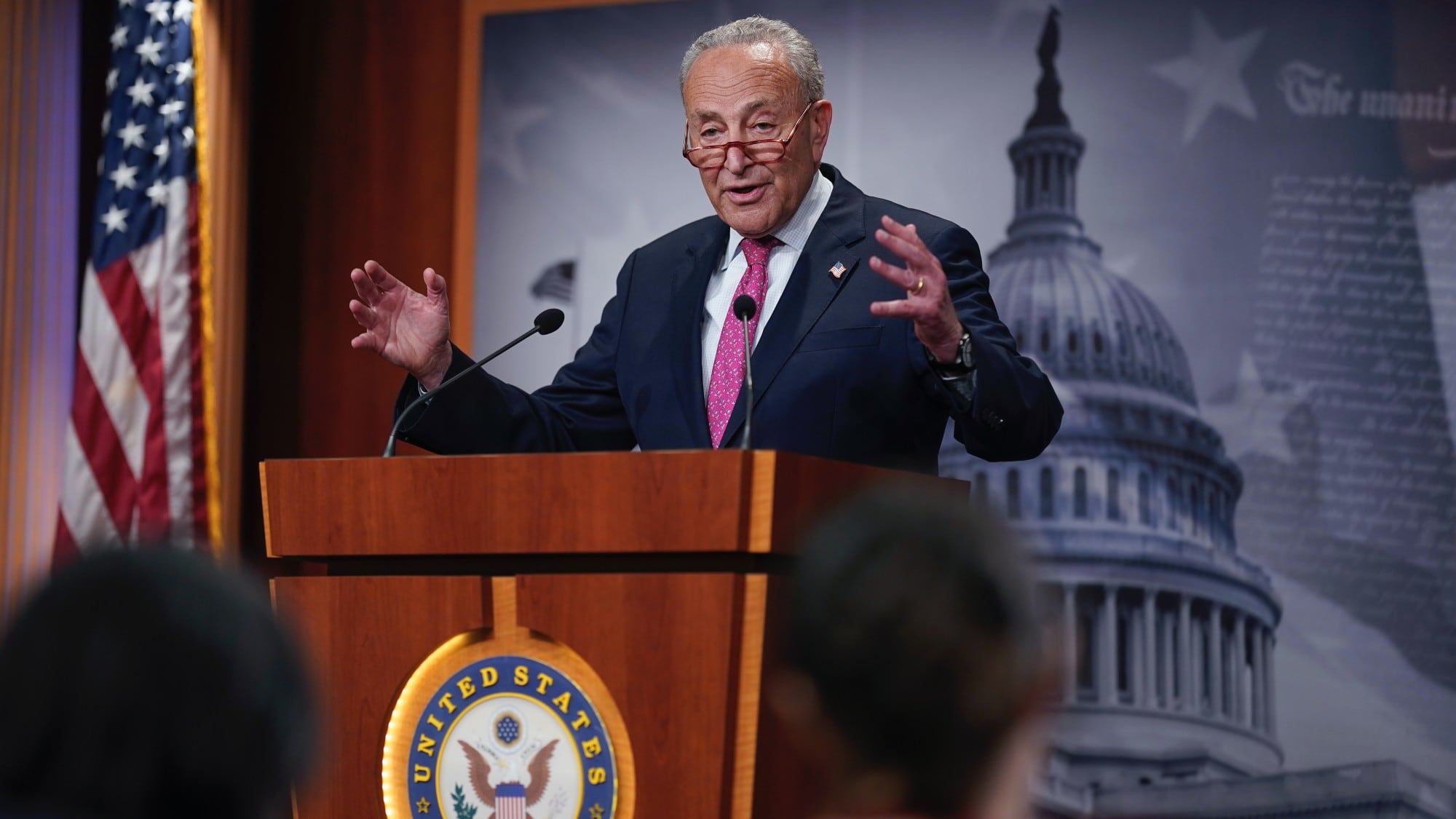
“This year, there will be no government shutdown,” Senate Majority Leader Chuck Schumer said at a news conference after the bill's passage.
The spending package keeps government funding at current levels for roughly two more months while a long-term package is negotiated. It splits the deadlines for passing full-year appropriations bills into two dates: Jan. 19 for some federal agencies and Feb. 2 for others, creating two deadlines where there will be a risk of a partial government shutdown.
“Everybody is really kind of ready to vote and fight another day,” Republican Whip John Thune, the No. 2 Republican, said earlier Wednesday.
The two-step approach was not favored by many in the Senate, though all but one Democrat and 10 Republicans supported it because it ensured the government would not shut down for now. Sen. Patty Murray, the Washington Democrat who chairs the Senate Appropriations Committee, voted for the bill but said it would eventually “double the shutdown risk.”
The spending bill also does not include the White House’s nearly $106 billion request for wartime aid for Israel and Ukraine, as well as humanitarian funding for Palestinians and other supplemental requests. Lawmakers are likely to turn their attention more fully to that request after the Thanksgiving holiday in hopes of negotiating a deal.
House Speaker Mike Johnson, who crafted the plan, has vowed that he will not support any further stopgap funding measures, known as continuing resolutions. He portrayed the temporary funding bill as setting the ground for a spending “fight” with the Senate next year.
The new speaker, who told reporters this week that he counted himself among the “arch-conservatives” of the House, is pushing for deeper spending cuts. He wanted to avoid lawmakers being forced to consider a massive government funding package before the December holidays — a tactic that incenses conservatives in particular.
But Johnson is also facing pushback from other hardline conservatives who wanted to leverage the prospect of a government shutdown to extract steep cuts and policy demands.
Many of those conservatives were among a group of 19 Republicans who defied Johnson Wednesday to prevent floor consideration of an appropriations bill to fund several government agencies.
GOP leaders called off the week's work after the vote, sending lawmakers home early for Thanksgiving. It capped a period of intense bickering among lawmakers.
“This place is a pressure cooker,” Johnson said Tuesday, noting that the House had been in Washington for 10 weeks straight.
The House GOP's inability to present a united front on funding legislation could undercut the Louisiana congressman's ability to negotiate spending bills with the Senate.
Republicans are demanding that Congress work out government funding through 12 separate bills, as the budgetary process requires, but House leadership has so far been forced to pull two of those bills from the floor, seen another rejected on a procedural vote and struggled to win support for others.
When it returns in two weeks, Congress is expected to focus on the Biden administration's requests for Ukraine and Israel funding. Republican senators have demanded that Congress pass immigration and border legislation alongside additional Ukraine aid, but a bipartisan Senate group working on a possible compromise has struggled to find consensus.
Senate Republican Leader Mitch McConnell in a floor speech pledged that Republicans would continue to push for policy changes on the U.S. border with Mexico, saying it is “impossible to ignore the crisis at our southern border that’s erupted on Washington Democrats’ watch.”
One idea floating among Republicans is directly tying Ukraine funding levels with decreases in the number of illegal border crossings. It showed how even longtime supporters of Ukraine’s defense against Russia are willing to hold up the funding to force Congress to tackle an issue that has flummoxed generations of lawmakers: U.S. border policy.
Most Senate Republicans support the Ukraine funding, said Sen. Kevin Cramer, R-N.D., but he added, “It is secondary to securing our own border."
But the U.S. is already trimming some of the wartime aid packages it is sending Ukraine as funds run low, National Security Council spokesperson John Kirby said from San Francisco, where he accompanied President Joe Biden for a summit of Asia-Pacific leaders.
He said the pot of money available for Ukraine is “withering away, and with it will be a deleterious effect on Ukraine’s ability to continue to defend itself."
Sen. Michael Bennet, D-Colo., said in a statement that he voted against Wednesday's funding package because it did not include aid for Ukraine.
Schumer said the Senate would try to move forward on both the funding and border legislation in the coming weeks, but warned it would require a compromise and implored the House speaker, Johnson, to once again work with Democrats.
“I hope the new speaker continues to choose the bipartisan approach,” Schumer said.
Associated Press writers Mary Clare Jalonick, Darlene Superville and Farnoush Amiri contributed to this report.