By Ashraf Khalil and Adriana Morga
Raised on welfare by his grandmother, Joseph Sais relied so much on food stamps as a college student that he thought about quitting school when his eligibility was revoked.
In the midst of the COVID-19 pandemic, Sais said, he missed an “important letter” and temporarily lost his eligibility in SNAP, the foundational anti-poverty program commonly known as food stamps. "There were times when I was taking a test and instead of focusing on the test, I’m focused on what I’m going to be able to eat tonight,” said Sais, who graduated from Sacramento State University with a degree in political science and journalism and is now a first-year graduate student at the same school.
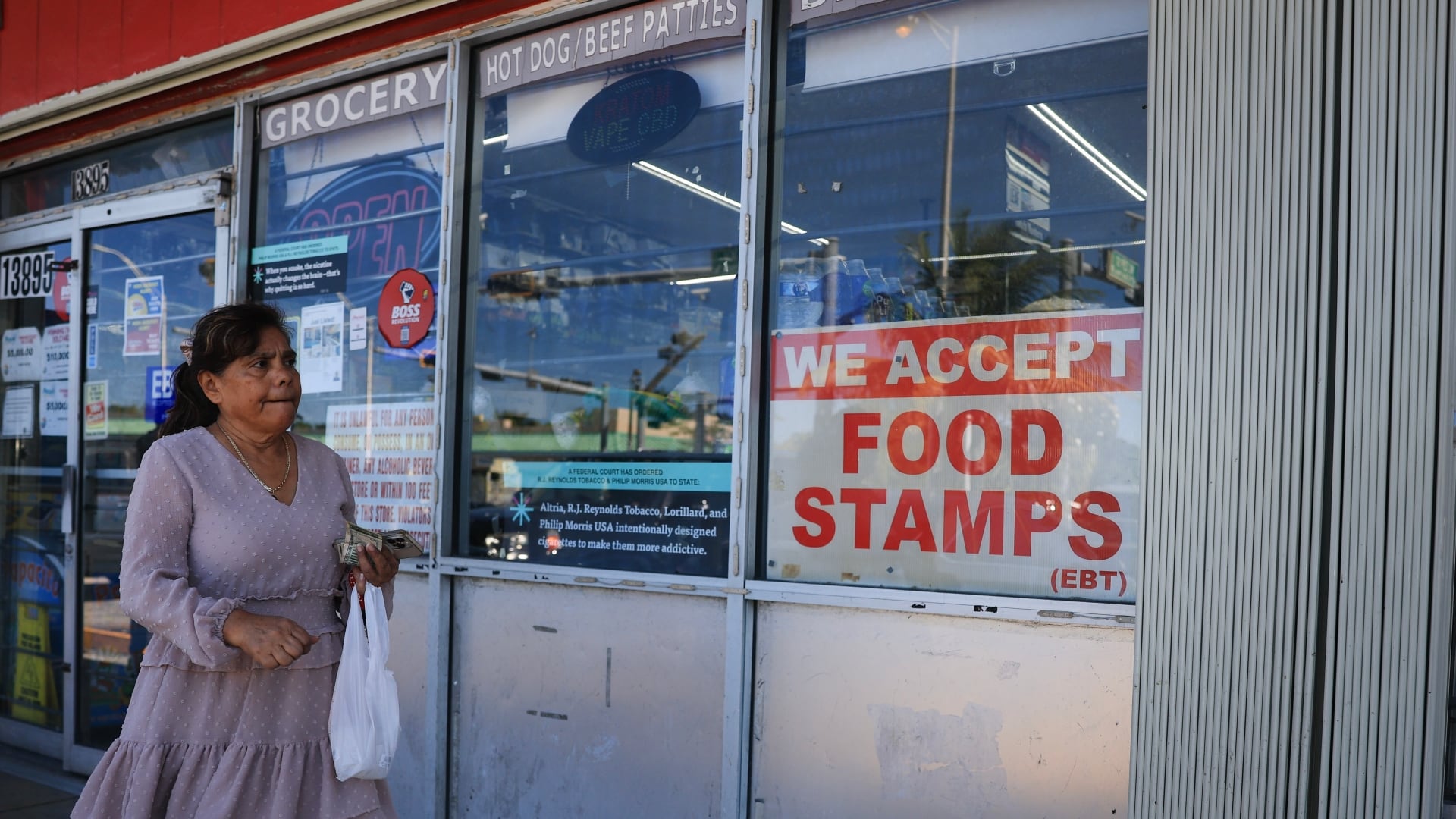
Sais, whose eligibility was restored earlier this year, is part of a largely hidden group that researchers and policymakers are still trying to address: full-time college students struggling with serious food insecurity. Radha Muthiah, president of the Capital Area Food Bank, calls it a hidden crisis, “one of those issues that came out of the shadows during the pandemic.” She estimates at least 30% of college students are food insecure.
The U.S. Department of Agriculture relaxed eligibility SNAP requirements for college students during the pandemic, allowing in those on financial aid with no expected family support and anyone who qualified for work-study programs, regardless of hours worked. Researchers estimate as many as 3 million college students were added to the program as a result.
But with the public health emergency over, students already receiving SNAP benefits had until June 30 to recertify and stay in the program under the pandemic-era rules. The expanded SNAP eligibility will only last one more year, and the entire program will revert to pre-pandemic rules at varying points over the next year, depending on individual state schedules.
“In the next couple months, potentially thousands of college students could be losing access to this program,” said MacGregor Obergfell, assistant director of governmental affairs at the Association of Public and Land-grant Universities. “It’s going to be coming in waves.”
The expanded rules won't apply to this year's freshmen class.
"It kind of starts this slow-rolling disaster where we’re reverting to the old SNAP rules right at a time where obviously the need around food security is only going up,” said Bryce McKibben, senior director of policy and advocacy at Temple University's Hope Center.
Anecdotal evidence suggests that hunger among college students is rising due to inflation, said Robb Friedlander, director of advocacy for Swipe Out Hunger, which focuses on college food insecurity. “We have definitely seen a massive increase in the level of need across campuses, from red states to blue states,” Friedlander said.
Growing awareness of the scope of the problem has led to the creation of on-campus food pantries at hundreds of universities over the past decade. But many of these food pantries, including at major universities, are funded entirely by donations — which limits their size and scale.
Given the irregular hours that often define college student life, some on-campus pantries have developed 24-hour service models that don’t require constant staffing.
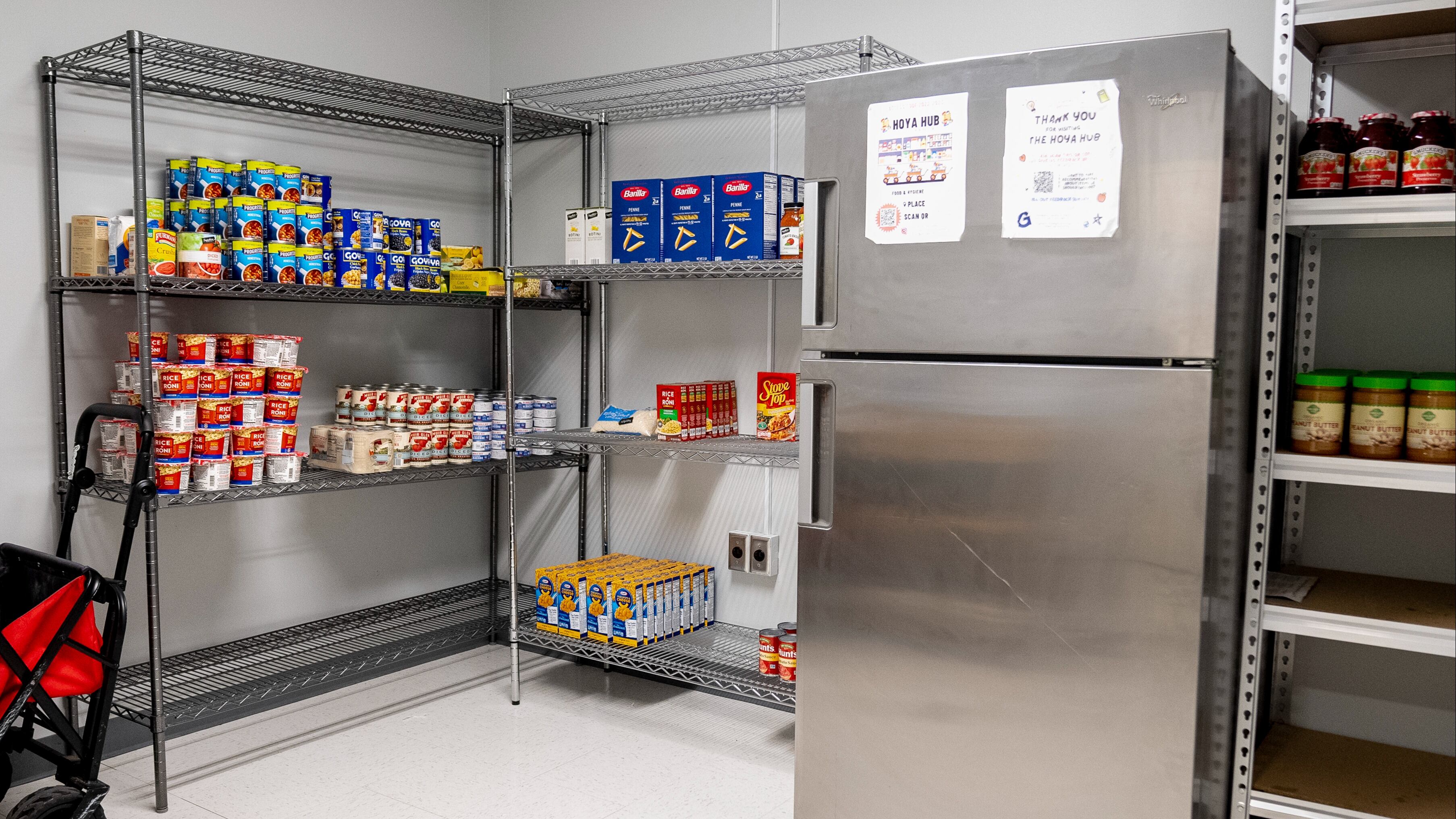
When Sais can’t make it during normal hours, the Sacramento State pantry enables him to order groceries online and pick them up from a locker. At Georgetown University, the donor-funded pantry is a locked room with shelves of food and toiletries and a refrigerator for perishables. Any students who request help are given the code to unlock the door and can essentially come and go as they need.
Now these pantries are bracing for a fresh wave of need as students are gradually pruned from the SNAP lists. In April, Swipe Out Hunger published an article warning universities around the country to prepare for a spike.
“Traffic at food banks and pantries is already increasing as states end their emergency SNAP benefits early,” the group warned. “When these emergency benefits end federally, be prepared to see a similar rise in student need at campus pantries and other on-campus hunger solutions programs.”
Even with the relaxed SNAP entry guidelines, many students complained of bureaucratic obstacles and general frustration in navigating the system. When Jessalyn Morales, a junior at Lehman College in the Bronx, found herself in a sudden financial crisis, it took her months and five rejected applications to qualify for SNAP. In one case, she said, her application was rejected because she wasn't working enough hours — something that should have been impossible under the pandemic rules.
When her Lehman College dorm closed down last fall, Morales' housing costs essentially doubled. She survived for months off of the campus food pantry and leftover food from her roommates.
“I had to choose between paying my rent and being able to buy food for the week,” said Morales, 21. “A lot of my friends didn't know my struggle. It's kind of hard for them to understand it, truthfully.”
She started receiving SNAP benefits in May, and says she can stretch her $260 monthly payment into two months worth of food if necessary, “because I've gotten so good at shopping and budgeting.”
Both Sais and Morales, in separate interviews, used the term “survival mode” to describe their daily realities. But Obergfell, of the association of public universities, warned that the stresses of that kind of survival have a secondary effect — breeding hopelessness among the specific subset of students who are seeking higher degrees in order to break the cycle of generational poverty.
“We need to help these students remain in and succeed in college,” he said. “Students need to have their basic needs taken care of before they can be fully present and active in the classroom."
And as Sais points out, mere survival shouldn't really be the goal.
“Sometimes I would like to thrive rather than just survive,” he said. “Fighting all your life is just tiring.”
Morga reported from New York.