By Kimberlee Kruesi
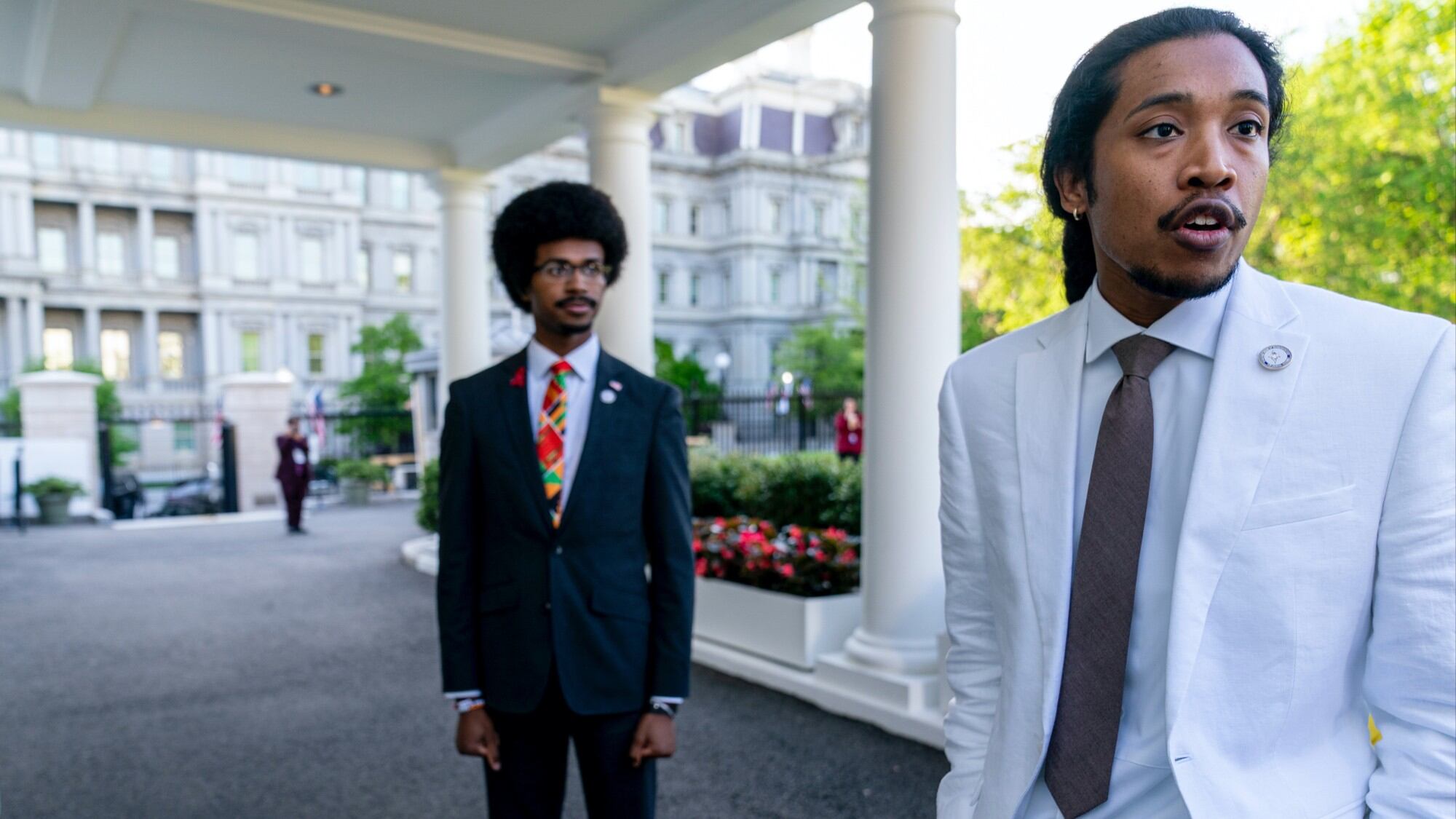
Tennessee Reps. Justin Pearson and Justin Jones, who became Democratic heroes as members of the “Tennessee Three,” reclaimed their legislative seats Thursday after they were expelled for involvement in a gun control protest on the House floor.
The young Black lawmakers were reinstated by local officials after being booted from the GOP-dominated Statehouse in Nashville, but only on an interim basis. They advanced Thursday through a special election to fully reclaim their positions. Both faced opponents in districts that heavily favor Democrats and easily defeated them according to unofficial results from the Tennessee's Secretary of State's office.
Jones, who lives in Nashville, was up against Republican candidate Laura Nelson. Meanwhile, Pearson, from Memphis, faced independent candidate Jeff Johnston.
“I think if we keep running this race, there will be victory after victory after victory,” Pearson said to supporters on Thursday. He stressed that his victory was largely possible due to Black women and the organizing work they had done to make him and other politicians successful.
Thursday’s election came as lawmakers are preparing to return to Nashville later this month for a special session to address possibly changing the state’s gun control laws. While Jones and Pearson’s reelection to their old posts won’t make a significant dent to the Republican supermajority inside the Legislature, they are expected to push back heavily against some of their GOP colleagues’ policies.
Jones and Pearson were elected to the Statehouse last year. Both lawmakers flew relatively under the radar, even as they criticized their Republican colleagues’ policies. It wasn’t until this spring that their political careers received a boost when they joined fellow Democrat Rep. Gloria Johnson in a protest for more gun control on the House floor.
The demonstration took place just days after a fatal shooting in Nashville at a private Christian school where a shooter killed three children and three adults. As thousands of protesters flooded the Capitol building to demand that the Republican supermajority enact some sort of restrictions on firearms, the three lawmakers approached the front of the House chamber with a bullhorn, and joined the protesters’ chants and cries for action.
Republican lawmakers quickly declared that their actions violated House rules and moved to expel their three colleagues — an extraordinary move that’s been taken only a handful of times since the Civil War.
The move briefly left about 140,000 voters in primarily Black districts in Nashville and Memphis with no representation in the Tennessee House.
Ultimately, Johnson, who is white, narrowly avoided expulsion while Pearson and Jones were booted by the predominantly white GOP caucus.
House Republican leaders have repeatedly denied that race was a factor in the expulsion hearings. Democrats have disagreed, with Johnson countering that the only reason that she wasn’t expelled was due to her being white.
The expulsions drew national support for the newly dubbed “Tennessee Three,” especially for Pearson and Jones’ campaign fundraising. The two raised more than $2 million combined through about 70,400 campaign donations from across the country. The amount is well beyond the norm for Tennessee’s Republican legislative leaders and virtually unheard of for two freshman Democrats in a superminority.
Meanwhile, more than 15 Republican lawmakers had funneled cash to fund campaign efforts of Jones’ Republican opponent, Nelson. Nelson has raised more than $34,000 for the race. Pearson’s opponent, Johnston, raised less than $400 for the contest.
Thursday’s election will also influence two other legislative seats.
In Nashville, community organizer Aftyn Behn and former Metro Councilmember Anthony Davis were vying to advance to the general election for a House seat in a district in the city’s northeastern region that opened after Democratic Rep. Bill Beck died in June.
Meanwhile in eastern Tennessee, Republican Timothy Hill faced Democrat Lori Love in a general election for Republican-leaning District 3. The seat was left empty when former Republican Rep. Scotty Campbell resigned following a finding that he had violated the Legislature’s workplace discrimination and harassment policy.
Hill served in the state House from 2012 until 2020 and rose to the position of majority whip. He later left his seat to run for an open U.S. House seat in 2020, but lost in a crowded primary to current Republican U.S. Rep. Diana Harshbarger.