TODAY’S NEWSLETTER IS BROUGHT TO YOU BY:

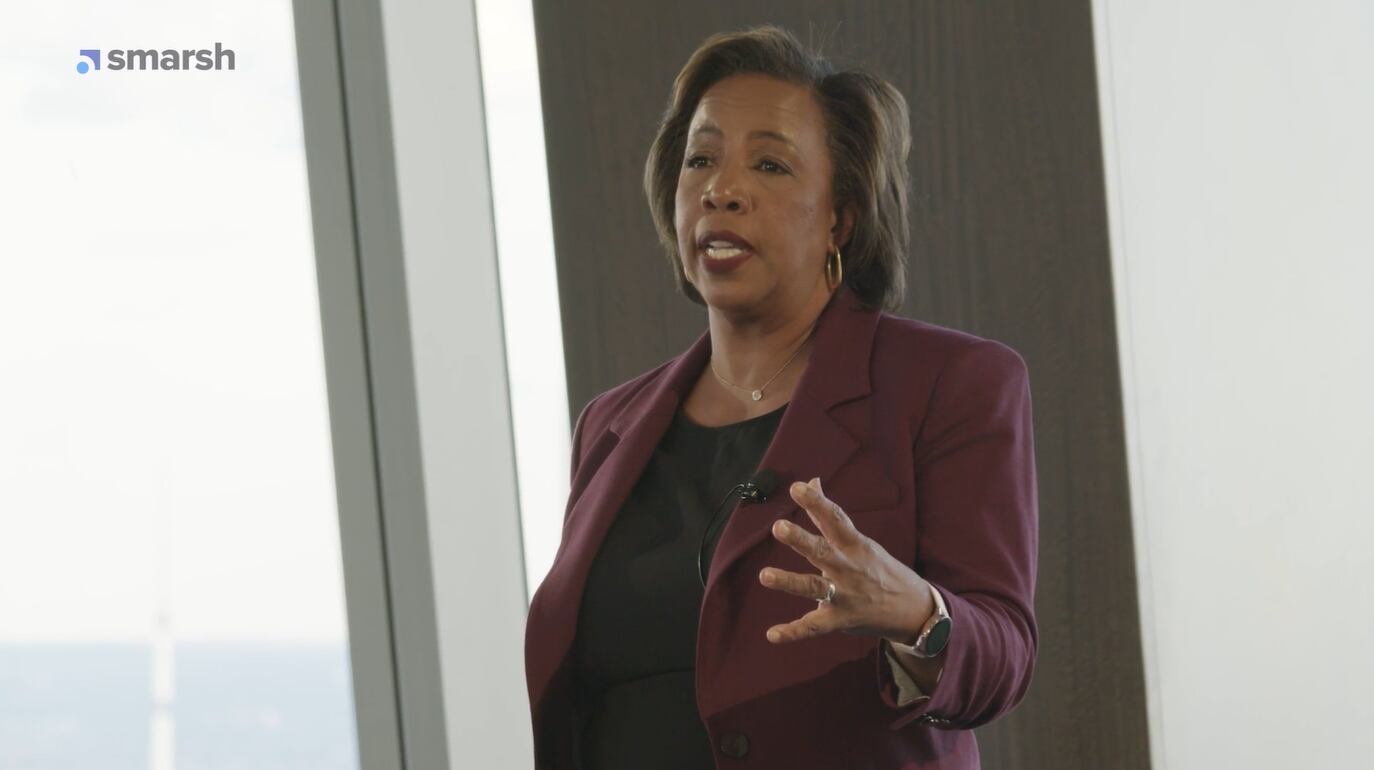
Fresh off of Black Friday and Cyber Monday, the start to the holiday season, BBTW editor Peter Green sat down with Ali Furman, U.S. Consumer Markets Industry Leader at consulting firm PwC to ask what trends she garnered from the initial data this year. It’s all about Gen Z, AI, and the new (low) appetite economy.
Peter Green: What’s your takeaway about the future of the retail economy from the start to this year’s shopping season?
Ali Furman:The top three trends that I believe are going to have an impact on the economy from a consumerism standpoint, generational shifts, AI/agentic commerce, and weight loss drugs.
What’s the most interesting generational shift?
Gen Z is planning to spend 23% less [this shopping season] compared to last year. They’re aged 13 to 29, there’s two things going on: They have a lot more cost-of-living expenses, and a lot more of them have mortgages and children this year than last year. Prices of things like utilities and food have gone up, reducing the share of their wallet that goes toward expensive, more significant discretionary purchases. It’s also a sign that retailers are not yet meeting Gen Z’s needs, because this is a generation that’s digitally native, but they love to shop in stores. Their foot traffic is actually rising in brick-and-mortar retail stores, but sales are not corresponding with that increase in foot traffic. It’s an opportunity for retailers to do better and capture their wallets in-store.They’re also looking for very fast social-to-shelf velocity. So, that’s another opportunity for retailers just to do a lot of social listening and not just plug into what the Gen Z-ers are currently interested in, but try to get ahead of them.
So Gen Z is leading the way on this AI shift?
Yes. Gen Z is the most cost-conscious generation we’ve ever seen. They care more about cost transparency, and they’re more well educated on cost because of how much time they spend online and how savvy they are with being able to compare, and they all use AI now to help them.
And what about the Ozempic economy? That’s a new one to me, and I think, many of our readers:
One of the trends that is heavily impacting the consumer right now is wellness, longevity optimization, and weight loss drugs. We call it a physiological disruption that impacts nearly every aspect of a consumer’s body and brain. Just in the last six months, U.S. household penetration of users of those drugs, it’s grown from 9% of American households have at least one GLP user to 14%. And that’s before the cost has come down and before we’ve moved into other formats like oral pills. There are projections that say in the next 10 years, 75% of the U.S. adult population may be on this drug. 70% of people are considered overweight in the U.S. 40% of people are considered obese. And the oral pill form [is coming], and there’s potential for a once-a-year injection. We think about this scenario, you’re at your annual physical, and your doctor offers you an annual shot for weight management. So all of these things considered, we could see a very significant portion of the population on this drug. It’s a physiological disruption akin to some of the greatest technological disruptions of our time, like the iPhone. When the iPhone first came out, no one could have predicted Uber, Netflix, streaming, TikTok. This is not dissimilar. What this drug does to people’s psychology, they report feeling more self-confident and happier.
What can you say about the economic effects?
We call it the appetite economy. There’s a beauty aspect to this, major aesthetic changes that you want to work on, hair loss-related things, skin care-related things. There are travel and wellness-related implications. People stop taking food and wine-indulgent vacations, they move towards active, wellness-based vacations. People who consider themselves overweight, who used to buy a lot of accessories instead of clothing, shift away from accessories, and now they buy form-fitting clothing. They move away from quick-service restaurants toward casual dining for the experience, the quality of the food.
(The interview has been edited for length and clarity)
—Peter S. Green
The usual suspects
- That’s all, folks! The bids are climbing for Warner Brothers Discovery $WBD ( ▼ 1.4% ) , and at press time, Netflix $NFLX ( ▼ 0.49% ) was leading the pack with a mostly-cash bid for WBD’s entertainment and streaming assets, including the Warner Bros. studio and HBO Max. NBCUniversal parent Comcast $CMCSA ( ▼ 0.77% ) also raised its bid for the studios and streaming, both according to news reports that don’t give a hard figure. But the Larry and David Ellison-controlled Paramount $PSKY ( ▲ 0.95% ) , which also owns CBS, has made a $25 a share all-cash bid (total: $60 billion) for the whole company, backed by an unidentified Middle East sovereign wealth fund. WBD says it wants to wrap up a sale by Christmas, and already planned to split the studios and streaming from its linear TV business, which also owns CNN. Any deal needs FCC and Justice Dept. approval, and President Donald Trump says he favors the Paramount bid, because he likes how the Ellisons are shifting Paramount’s CBS News to the right. Trump has also blasted Comcast CEO Brian Roberts for alleged anti-Trump programming. The Ellisons may sweeten their bid, the New York Post claims. But the markets will likely have the greatest sway over WBD’s board of directors, and Netflix CEO Ted Sarandos’ bid has left Netflix shares down 10% since reports of the bid surfaced, including a 5% drop on Tuesday when the new bid was announced.
- Costco sues Trump; $COST ( ▼ 3.04% ) , the warehouse retailer that sells all that stuff you never knew you needed, in quantities you’ll perhaps never use, at prices you can’t resist, is taking on the Tariffs. In a Black Friday lawsuit against the Trump Administration, Costco asked the U.S. Court of International Trade to rule that Trump’s use of the International Emergency Economic Powers Act to impose tariffs is unlawful. Costco wants to ensure it gets a “complete refund” on import duties. The chain’s claim rests on an impending decision by the U.S. Supreme Court on whether Trump usurped Congress’s constitutional powers to levy taxes and tariffs. Legal observers said the Supremes’ Nov. 5 court hearing did not bode well for Trump. The suit doesn’t say how much Costco has paid in tariffs, but the Treasury says it’s collected more than $90 billion in tariffs.
- NYC gives Starbucks a tall order: Starbucks $SBUX ( ▼ 1.93% ) has agreed to pay $35.5 million to current and former workers in its New York City stores (plus $3.4 million in fines) for short-shifting baristas and failing to give them regular schedules, violations of New York City’s Fair Workweek Law. Hourly employees will get $50 for each work week from 2021 to 2024. Starbucks complained the city’s fair labor practices were a “compliance” issue, insisting it was not “wage theft.” Unions representing Starbucks employees have accused the company of keeping weekly hours for many employees below the threshold needed to be eligible for health insurance.
- Is a Crypto winter coming? Bitcoin’s plunge from a high of near $120,000 to as low as $83,822 on Monday is shaking investor confidence in cryptocurrencies. No one is sure quite what’s driving the drop, but it’s coming as investors increasingly question the sky-high valuations of tech stocks, and try to divine the likelihood of another Fed rate cut. The end of the Fed’s effort to tighten the money supply might have helped, as the New York Fed bought back $38.5 billion of T-bills, injecting cash into the financial system that may have helped pump up crypto prices. But in the opaque world of crypto it’s hard to know what’s happening. One thing that did show up in the charts: The Trump-family controlled American Bitcoin $ABTC ( ▲ 1.05% ) bitcoin mining firm dropped 39% on Tuesday, in what Eric Trump said was natural profit-taking by early investors.
- Who’s gonna wear the mouse ears? Disney $DIS ( ▼ 0.28% ) appears to be closing in on a successor to long-time CEO Bob Iger, who’s probably done more to shape the House of Mouse than anyone since Ol’ Walt himself. Top of the list: parks chief Josh D’Amaro and TV head Dana Walden. Iger’s shoes won’t be easy to fill. Iger served from 2005 to 2020, then led a putsch against CEO Bob Chapeck, his one-time protegé, in 2022. Disney shares spiked seven-fold in Iger’s first term to nearly $150, and his return pushed the stock up to nearly $200. But TV and streaming have dropped in popularity, and the stock is now trading at $105. Either D’Amaro or Walden will have their work cut out for them to recapture Disney’s past glory.
- Space Chase: Jeff Bezos’ Blue Origin has long been a second-place stalwart in the race to put things into space. But as NASA becomes increasingly frustrated with delays and launchpad explosions at Elon Musk’s SpaceX, Blue Origin sees a chance to eclipse its rival in the contest to return Americans to the Moon before Chinese astronauts can get there. Early in 2026, Blue Origin plans to put a small lunar rover on the Moon, and get an astronaut there by 2028. Key to the turnaround at Blue Origin: hiring operations chief Ian Richardson away from SpaceX. Musk has responded with his own plan to best Blue Origin, but has yet to win that contract from NASA. And Sam’s in, too. OpenAI CEO Sam Altman has been talking with another rocket company, Stoke Space, about an eventual controlling stake. Talks have halted as OpenAI deals with its terrestrial competition, but Altman mused recently that it may be more efficient to put solar-powered data centers into orbit than battle for scarce energy resources on Earth.
ADVERTISEMENT
Keebeck Wealth Management: A modern advisory firm built for founders and families. We offer a thoughtful, relationship-driven approach designed to bring clarity and confidence to complex financial decisions. Our team focuses on understanding each client’s goals, creating comprehensive plans, and providing transparent guidance every step of the way.At Keebeck, we believe effective advice comes from alignment, communication, and disciplined thinking. We use technology and a collaborative process to help clients stay informed and prepared as their needs evolve.Our mission is simple: to empower you with the insight and structure needed to navigate your financial future with purpose.Keebeck Wealth Management — Helping you become the CEO of your capital.
* Information provided is general in nature and does not constitute personalized investment advice. A professional adviser should be consulted before implementing any of the options presented. Any tax and estate planning information provided is general in nature and should not be construed as legal or tax advice. Always consult an attorney or tax professional regarding your specific legal or tax situation. The use of generative AI (artificial intelligence) will allow users to ask general questions, not provided by a human. This service will rely on third-party sources of data and information. We cannot guarantee the accuracy of such information, and the user should take steps to verify information provided herein. Information provided on or through this service is not an offer to buy or sell, or a solicitation of any offer to buy or sell the securities mentioned herein. Hyperlinks on this website are provided as a convenience and we disclaim any responsibility for information, services or products found on pages linked hereto. Our annual fee for portfolio management services is equal a percentage of the market value of your assets under our management. You will be charged, separate from and in addition to your management fee, any applicable Platform Fees as well as applicable independent manager fees. We do not receive any portion of the fees paid directly to third party service providers, including the independent managers.
END OF ADVERTISEMENT
The tech stack
- Open AI looks in the rear view mirror: And what it sees is an 18-wheeler named Google $GOOG ( ▼ 0.87% ) , prompting CEO Sam Altman to declare a “code red” effort to boost the quality of ChatGPT, the Wall Street Journal reports, citing an internal company memo. Google’s release of a new version of Gemini AI last month bested OpenAI’s models on benchmark testing, sending shares in parent company Alphabet up more than 15% in less than a week. OpenAI’s also facing the possibility of a referendum in California that could reverse its conversion from a non-profit to a for-profit company.
- Nvidia has its own rear-view mirror problem: Amazon $AMZN ( ▼ 1.55% ) . Amazon Web Services has launched a new chip, the Traimium 3, that can cut the cost of training AI models by 50%. That’s bad news for Nvidia, which has watched a series of AI chip deals go down without its involvement: OpenAI has signed with AMD $AMD ( ▼ 1.27% ) and Broadcom for their chips, Anthropic is using AWS’ Trainium2 chip for its Claude AI, and Meta is shopping for Google’s tensor processing units. Many of the buyers are still using Nvidia $NVDA ( ▲ 1.64% ) chips, just diversifying, and that pleases Wall Street. Morgan Stanley just raised its target for Nvidia shares to $250, a 38% jump from its opening price Thursday of $181.62, praising the firm’s 70% market share and reliable supply chain amid growing demand for AI.
- Apple’s Siri problem: At 14 years old, Siri still can’t handle complex conversations,and Apple $AAPL ( ▼ 1.43% ) is shaking things up. AI head John Giannandrea is taking an apparent early retirement at 60, and Amar Subramanya, Google’s Gemini chat bot chief before a short stint at Microsoft, will take over AI. Despite the introduction of the AI-wired iPhone 16, Apple has yet to deliver an AI product that delights customers. Still, shares are up 17% this year, primarily on record sales for the iPhone 17.
- Samsung folds, again. Apple $AAPL ( ▼ 1.43% ) is set to dethrone Samsung $SSNLF ( ▲ 56.02% ) as the world’s best-selling smart phone this year, according to industry data source Counterpoint, for the first time in 14 years. But Samsung’s not folding. Well, it is, but not like that. It’s unveiled a tri-fold phone that folds up like a regular smartphone, or opens up as wide as a small tablet. Apple is preparing its own folding phone for 2027.
The short stack
- No tip tax break for pole dancers? The Big Beautiful Bill wiped out income tax on tips for many service industry workers, “digital content creators,” “entertainers and performers” and “dancers.” But conservative activists slapped an exception on the rule for “pornographic activity.” So much for that tax free income from your OnlyFans account. Well, it’s not really clear. In a deep dive into the topic, the New York Times notes that IRS agents would have to review your videos or watch your pole dances to decide. And of course, that may not be easy. Supreme Court Justice Potter Stewart, in a landmark 1964 case, said he couldn’t define pornography, “but I know it when I see it.”
- Speaking of knowing it when you see it. Austrian businessman Bernd Bergmair, once the majority owner of a major X-rated video site, has approached the U.S. Treasury about buying international assets of sanctioned Russian oil major Lukoil. ExxonMobil $XOM ( ▼ 0.67% ) and Chevron $CVX ( ▲ 0.16% ) are also interested in Lukoil’s global network of refineries and retail gas stations.
- Bad jobs data: It’s a bad time to be looking for work, as new data this week shows more job losses hitting the U.S. economy. Employers announced 71,321 layoffs in November, according to data from outplacement firm Challenger, Gray & Christmas. That’s up 24% from November 2024, while the Labor Department showed 191,000 initial unemployment benefit claims in the week ending Nov. 29, after 218,000 claims the week before. Earlier this week, payroll company ADP said the U.S. lost 32,000 private-sector jobs in November. Some of those numbers may overlap, but it’s all led to a feeling of doom and gloom, or shall we say, a challenging, grey Christmas, as the University of Michigan’s consumer survey shows 69% expecting more layoffs next year, double the share of employment pessimists a year ago. The stock market is also at record highs with the jobs data, ironically, bolstering hopes for a Fed rate cut next week.
Get Big Business This Week in your inbox every week—and read it before everybody else! Sign up today.
Car talk
- Back to gas? For Ford $F ( ▲ 0.08% ) , the end of EV subsidies may also mean the end of the Electric F-150, America’s best-selling pickup, as Ford reported a fall of 61% in EV sales from a year earlier. President Trump’s rollback this week of auto emission standards isn’t helping, nor is Trump’s 25% tariff on all auto and parts imports. In fact, Americans appear to be fed up with high car prices. The Wall Street Journal reports that carmakers expect no growth this year or next, as cars sit longer in dealer lots, and more people default on auto loans. But used cars are no panacea—they’re in demand, and parts prices have soared from tariffs.
- Meanwhile, the Dutch government and Chinese automobile chip maker Nexperia are playing chicken. The Dutch government took control of a local subsidiary in September, concerned that the flow of chips to European carmakers could be halted. That’s become something of a self-fulfilling prophecy, with Nexperia’s Chinese owner, Wingtech Technology, saying it won’t start making more chips for Europe until the government opens talks with the Dutch unit on who controls the company.
Peter S. Green is a veteran reporter and editor who has spent more than two decades covering business and finance from Eastern Europe to New York City, and has worked for Bloomberg News, The New York Post, The New York Times and The Messenger. He lives in New York City and is always looking for the next big story.