Is a “prediction market” a gambling platform or an investment vehicle? That’s the question dividing state regulators from the Trump Administration, which is lining up its forces behind the prediction markets, arguing that they serve a useful function, allowing Americans to “hedge commercial risk” and serve as “an important check on our news media.”
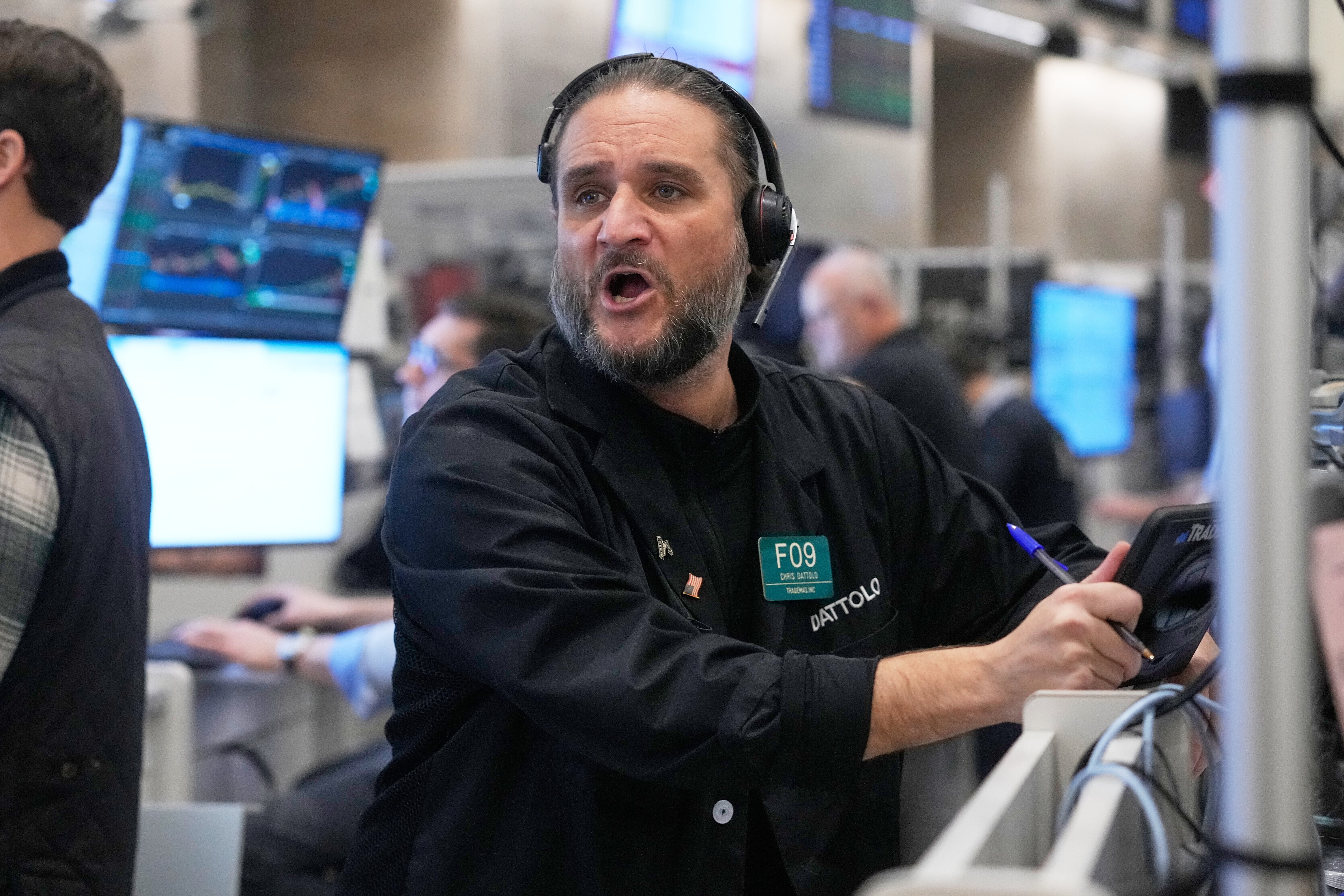
More than $1 billion was wagered on the Super Bowl on a single prediction market site, Kalshi $KALSHI, with $100 million riding on which songs Bad Bunny would sing at the halftime show. But that transaction volume is coming at a high cost, taking profits away from legalized gambling, taxes away from government, control away from state governments, and is accelerating a gambling crisis among young men.
Growth in Gambling Crisis Indicators (2017-2025)
| Indicator | 2017/2018 Baseline | 2024/2025 Data | Source |
|---|---|---|---|
| Helpline Calls (Legal States) | Baseline | +148% increase | Axios Report |
| Addiction Help Searches | Baseline | +23% (6.5M+ total) | Forbes/UCSD Study |
| Prediction Market Volume | <$100M/month | $16.4B/month | Gambling Insider |
| Gen Z Addiction Risk | 2% (older adults) | 37% (Gen Z) | Futurism Survey |
| Online Participation | 15% of adults | 22% of adults | National Council on Problem Gambling (NCPG) |
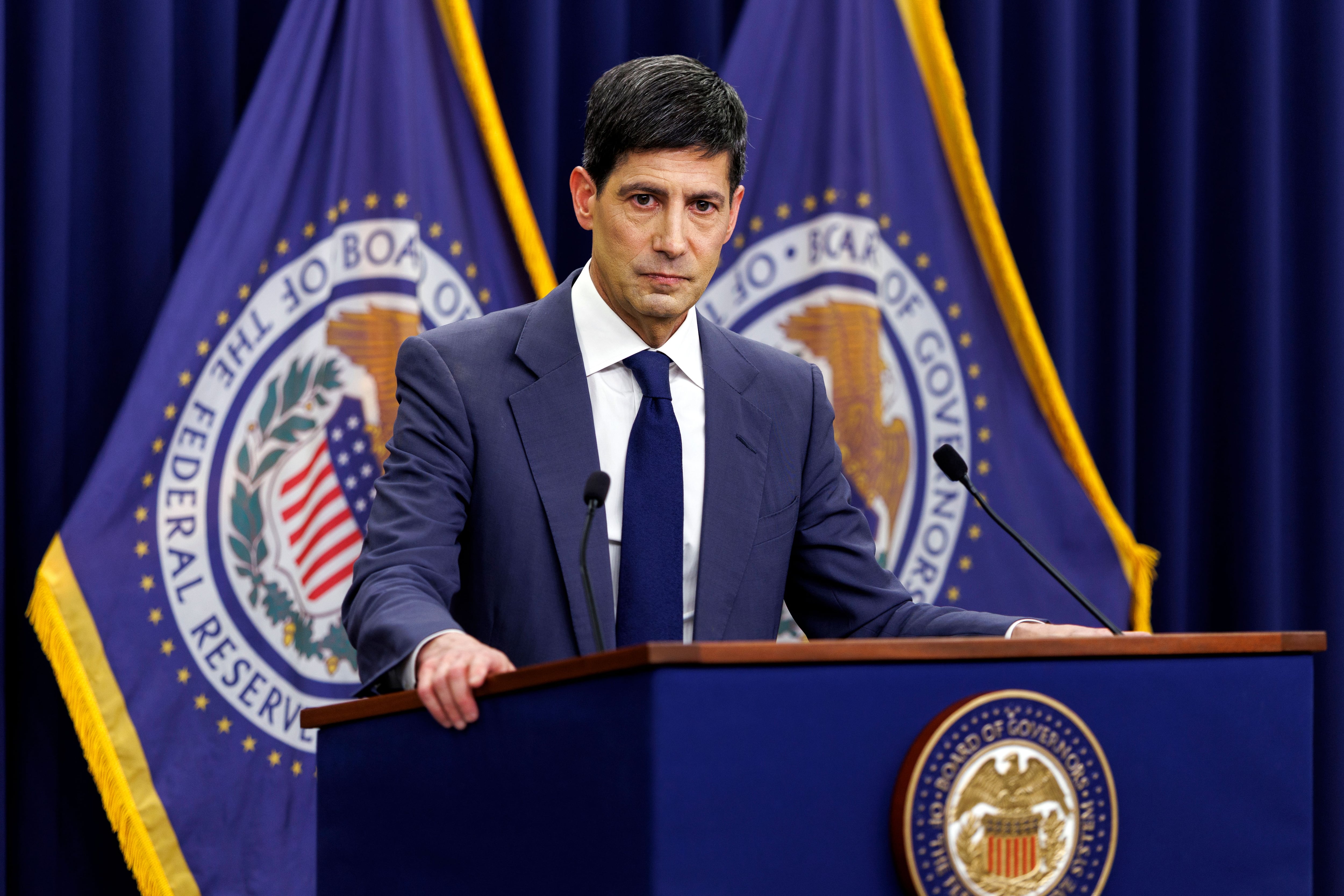
The stakes got higher this week, when the Trump Administration’s Commodity Futures Trading Commission, which regulates derivatives and other financial instruments, announced it was filing a friend-of-the-court brief to defend its “exclusive jurisdiction” over prediction markets.
“The CFTC will no longer sit idly by while overzealous state governments undermine the agency’s exclusive jurisdiction over these markets by seeking to establish statewide prohibitions on these exciting products,” CFTC chair Mike Selig wrote in the Wall Street Journal this week.
Backers of the markets, including key players like Kalshi and Polymarket $POLYMARKET, say they are providing financial instruments much like stock options and derivatives, which are essentially bets, not weighted down by ownership of equity (shares) or debt (bonds), on which way stocks, bonds, and markets will move. But state governments are getting ticked off, and they say the prediction markets are nothing more than gussied-up sports books. Their ire has several sources: For one thing, the platforms’ profits from derivatives are taxed at much lower rates than gambling books, generally 15-20% for derivatives and as much as 50% for gambling profits. That’s a lot of money that used to flow into state coffers from places like Caesar’s Palace. For another, by one estimate, prediction markets siphoned off $8 billion from regulated, tax-paying sports books last year.
Kalshi and Polymarket, for instance, allow “bets” or “contracts” or “predictions”, however you choose to describe them, on just about anything, from which songs Bad Bunny will sing at the Super Bowl halftime show, to whether White house Spokesperson Karoline Leavitt would speak for more than 65 minutes at a recent press conference. Ms. Leavitt cut herself off just seconds before that, igniting the suspicions of Kalshi-watchers that she might have known about the bet.
Age matters, too. Most states limit sports gambling to adults over 21. CFTC-regulated markets are open in most cases to 18-year-olds. “We’re seeing patients who’ve never stepped foot in a casino, who lost everything on their phones. The average age is dropping. The speed at which people get into serious trouble is accelerating,” said Rick Benson, a gambling counselor. “In 30 years of treating gambling addiction, I’ve never seen anything like this.”
Where prediction markets differ from casinos or sports books is that users bet against each other, rather than the house, and the house takes a percentage of each transaction on its platform. The explosion of sports betting began after the Supreme Court legalized sports betting in 2018, and now 39 states have legalized it.
“If you’re a sportsbook operator in Nevada, for example, there’s a lot you have to do to comply with regulations here and minimum internal control standards,” Gregory Gemignani, a gaming law lawyer and professor at the University of Nevada, Las Vegas, told The Guardian. “The prediction markets have none of that.”
Massachusetts and Nevada are already working to limit prediction markets in their states, and finding some help from the courts. But the federal government is backing the CFTC, with a twist: What’s good for Kalshi and Polymarket is also good for the President’s family. Donald Trump, Jr., has invested in Polymarket through his VC firm and is also a strategic advisor to Kalshi.
Utah Gov. Spencer Cox says he’s going to fight the CFTC and its chair, Mike Seliig, who claims the prediction markets are not gambling and help Americans hedge risk. CFTC approval has allowed prediction markets to operate in all 50 states, even those, like Utah, that do not allow gambling. “I don’t remember the CFTC having authority over the ‘derivative market’ of LeBron James rebounds,” Cox posted on X this week. “These prediction markets you are breathlessly defending are gambling—pure and simple. They are destroying the lives of families and countless Americans, especially young men. They have no place in Utah.”
Maybe not in Utah, but with the might of the federal government behind them, the showdown over prediction markets may find its way to the Supreme Court.
Big Businesses mentioned this week:
$KALSHI ( 0.0% ) $POLYMARKET ( 0.0% ) $PSKY ( ▼ 1.66% ) $WBD ( ▼ 0.9% ) $NFLX ( ▼ 1.21% ) $AAPL ( ▼ 1.25% ) $BAC ( ▼ 1.12% ) $NYT ( ▲ 0.08% ) $AMZN ( ▲ 0.03% ) $UNH ( ▲ 0.6% ) $BAYRY ( ▼ 0.23% ) $GOOG ( ▼ 0.18% )
The usual suspects
- That’s NOT all, Folks… Larry and David Ellison’s Paramount Skydance $PSKY ( ▼ 1.66% ) is back in talks with studio and streaming giant Warner Bros. Discovery $WBD ( ▼ 0.9% ) , promising to sweeten its offer, after rival suitor Netflix $NFLX ( ▼ 1.21% ) agreed to a seven-day waiver on its pending offer for WBD. The waiver is part of Netflix’s merger agreement with WBD, and gives Paramount one last chance to improve its offer. Netflix then has the right to match or better the Paramount offer. Provisions like this are often made a part of big merger deals so that the Board of a target company can prove it honestly pursued the best deal for shareholders. Paramount told WBD it would pay $31 a share, and might improve its offer. But Paramount is a tiny company, by comparison to Netflix, that may be biting off more than it can chew. Paramount’s market cap is just $11.2 billion, compared with Netflix’s market cap of $329 billion. In a letter to Paramount, WBD chair Samuel Di Piazza and CEO David Zaslav said the WBD board still believes Netflix’s offer is better, and noted that Paramount’s “significant debt financing” creates “material closing uncertainty” given Netflix’s investment-grade credit rating and positive free cash flow. Paramount wants to buy all of WBD, for about $77.9 billion, but WBD’s board has already pledged to split off the linear networks, including CNN, from its streaming and studios business, which Netflix aims to buy for $72 billion. Netflix chief Ted Sarandos said Paramount is “flooding the zone with confusion,” and notes his deal is all cash. Shares of WBD rose 3% Tuesday, when the waiver was announced, while Paramount shares rose 5%, and Netflix shares rose less than 1 %. The competing offers raised the prospect that shareholders may see the two suitors fight to offer a higher price. “It’s about time the actual headline price bidding heated up in what has to be one of the most inactive corporate bidding wars in history,” Eric Talley, a business professor at Columbia Law School, told the New York Times.
- Buffett’s rotten Apple. In his last quarter as CEO of Berkshire Hathaway $BRK.A ( ▼ 0.46% ) , Oracle of Omaha Warren Buffett sold 10.3 million shares in Apple $AAPL ( ▼ 1.25% ) and 50.8 million shares of Bank of America $BAC ( ▼ 1.12% ) and, perhaps not so surprisingly, bought 5.1 million shares of thriving legacy media company The New York Times $NYT ( ▲ 0.08% ) . The moves were disclosed in a regulatory filing this week. Buffett was once a big believer in newspapers and owned the Buffalo News, the Tulsa World in Oklahoma, and the Richmond Times-Dispatch in Virginia until 2020. Berkshire also sold 7.7 million shares in Amazon $AMZN ( ▲ 0.03% ) , slashing its stake by 77%.
- UnitedHealth’s CEO side bets. Stephen Hemsley, the CEO and chair of UnitedHealth $UNH ( ▲ 0.6% ) has been investing millions of his own dollars in privately held healthcare-related startups that often do business with UnitedHealth, which never told its own shareholders about the potential conflict, the Wall Street Journal reports. UnitedHealth says the investments comply with the company’s conflict of interest policies. The story also didn’t quote anybody who said the side-bets are fishy. It simply reported on them for the first time.
- Bayer Roundup payout: It probably would have been a good idea to mention on the label that weedkiller Roundup could cause cancer. Instead, German pharma and chemical giant Bayer $BAYRY ( ▼ 0.23% ) has been locked for nearly a decade in more than 40,000 lawsuits in the U.S. over claims the weedkiller, used by farmers around the world, causes non-Hodgkin’s Lymphoma. Now, Bayer says it’s agreed to pay plaintiffs $7.25 billion to settle the suits. The deal still needs court approval, which is not a sure thing, and a pending Supreme Court decision could determine whether federal law would shield Bayer from claims in state courts. Bayer got into this hole when it acquired Roundup manufacturer Monsanto in 2016. Shares in Bayer rose 7% on the announcement of a proposed deal. Bayer is up 142% in the past year but down 18% over the last five.
The short stack
- Another real estate crash? Office landlords are falling behind on their mortgage payments at a record rate, with 12.34% of office loans wrapped into those famously toxic commercial mortgage-backed securities technically “delinquent,” according to real estate data firm Trepp, and lenders are getting nervous. What’s causing the delinquencies and setting nerves on edge? Two things that have been pretty obvious to ordinary consumers, and should have been clear to commercial investors: As loans to office buildings come up for refinancing (commercial mortgage typically refinance every seven years), it’s clear that mortgage rates aren’t going down anytime soon, and even more obviously, hybrid work means there’s just no longer a need for so much office space, especially the fancy expensive stuff in city centers. Lenders are back adopting the strategy that caused the 2008 commercial real estate crash, when they just kept hoping the market would improve, a tactic called “extend and pretend.” About $25 billion of CMBS loans are now past maturity without being paid off, liquidated, or formally extended. Across all markets, Trepp reported, some $76.6B in CMBS are set to mature in 2026, and 36% of them are at 8% interest or below, meaning many of the properties will start hemorrhaging money, and lenders may have to take them back.
- Some call it “Activist investing”. Whatever your preferred word, it’s back in the news. Paul Singer’s Elliott Management is back in the ship business, this time, planning to shake up Norwegian Cruise Lines $NCLH ( ▼ 2.51% ) by taking a 10% stake in the travel company. Elliott has been nudging the foundering cruise line for months, and last week, Norwegian tossed CEO Harry Sommer overboard, replacing him with the former CEO of Subway. The Wall Street Journal says Elliott is working with the former COO of rival Royal Caribbean, and says changes in management, cost control, and improved customer experience could push the stock up to $56 a share from $24. In 2012, so-called vulture funds linked to Elliott seized the Argentine navy’s training ship, a three-masted square-rigged sailing ship called the Libertad, in a dispute over sovereign debt repayments.
- Anthropic’s Problem: Anthropic’s Claude is the only LLM that can be used in classified settings, but Pete Hegseth’s Defense Department doesn’t want to work with Anthropic, and a Trump brothers-adjacent hedge fund, 1789 Capital, recently declined to follow through on a planned nine-figure investment in Anthropic, the Wall Street Journal reported. Why? Because Anthropic’s leaders have criticized Trump, the Journal reported, and because it’s been lobbying for AI regulation and refusing to let the Pentagon use its AI for domestic surveillance or autonomous weapons. OpenAI, Google $GOOG ( ▼ 0.18% ) , and xAI all say they’re cool with having their AI used in any “lawful use” cases. Anthropic is already on edge over the Pentagon’s claim that Claude was used in the capture of Venezuelan President Nicolas Maduro in January. Now the journal says the Pentagon views Anthropic as a “supply chain risk.”
Trumplandia
- Japan’s Big Investment…um, wait for it. Japanese firms are planning to invest as much as $36 billion in U.S. ventures, the U.S. Commerce Dept. said this week. Softbank $SFTBY ( ▲ 0.56% ) is promising $33 billion for a gas-fired power station in Ohio, and an as-yet unidentified investor will commit $2 billion to a new oil terminal in Texas. That’s a far cry from the $550 billion Trump trumpeted last year, when he walked back tariffs on Japanese goods. It’s not yet clear who will be making the investments, nor whether the investments will be cash for ownership stakes or simply the sale of equipment made by Japanese companies. So far, there’s been no comment from the Japanese government or companies, but the move comes ahead of Prime Minister Sanae Takaichi’s visit to Washington next month. The New York Times reports that Japanese companies have little enthusiasm for investing in the U.S., describing the projects as “strategic but less than bankable.”
Get Big Business This Week in your inbox every week—and read it before everybody else! Sign up today.
Elon’s world
- Business intelligence? Just days before Elon Musk announced his plans to merge xAI and SpaceX into what he says will be a trillion-dollar-plus company, Musk sold an unidentified stake in xAI to Saudi Arabia’s AI company, Humain, created last year by Crown Prince Mohammed bin Salman. Humain became “a significant minority shareholder in xAI, with its holdings subsequently converted into shares in SpaceX,” the company said in a statement. The deal gives the Islamic regime a stake in a key U.S. government contractor, tying the fate of the U.S. closer to that of the Saudi royal dynasty. It comes after a visit to Washington in December by the prince, after which the White House agreed that Saudis could buy special U.S. computer chips that defense analysts feared could end up in the hands of China.
- Ukraine got a rare piece of good news this week, when Starlink shut down unauthorized users in Russia and Ukraine. All of Russia and its military are banned by U.S. sanctions from using Starlink, and the shutdown halted a vast number of Russian drones and missiles using the Starlink guidance to target Ukraine. Media reports credit the shutdown of Russian Starlink devices for Ukraine’s capture earlier this month of 201 square kilometers of territory from Russian forces near the Zaporizhzhia nuclear power plant. Musk’s move follows a series of independent media reports of smuggled Starlinks. Meanwhile, the billionaire battle over whose starship is bigger entered a new phase, as Amazon’s $AMZN ( ▲ 0.03% ) Low-Earth Orbit satellite network, now called LEO, but previously known as Kuiper, for a 20th-Century Dutch astronomer, may be catching up to Starlink: Last week it won FCC approval to deploy 4,500 more internet satellites, bringing its planned total to 7,700. Musk’s starlink has more than 9,000 satellites and 9 million customers. Amazon is promising to start offering internet service later this year. Amazon is under pressure from the FCC to deploy 1,600 satellites by July. It asked the regulators to give it another year, saying there aren’t enough FAA-approved rockets available to hoist its satellites into space. Europe’s Arianespace will put 32 LEO satellites in orbit this week. Meanwhile, even Elon has real estate fever. Starbase, the newly incorporated South Texas town that’s home to the SpaceX launch pad, wants to add about 11 square miles, about 7 times larger than the city’s current size, including some wildlands owned by Texas and the federal government.
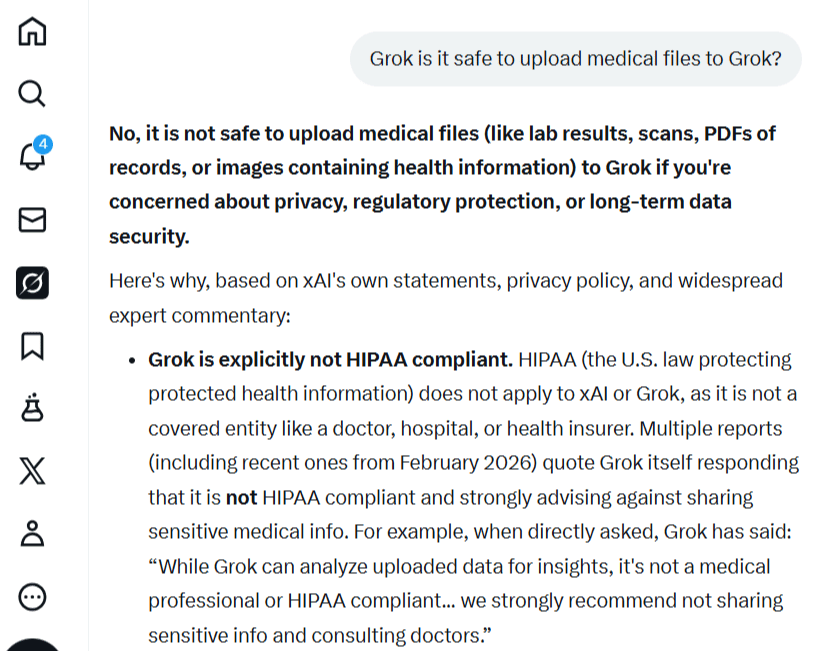
- Grok gets all ethical on Elon: So while Elon Musk has been urging X users to upload their medical files to Grok, his AI chatbot, to get a second opinion, Grok has been taking its cues from Hippocrates with a sprinkle of peak AI passive-aggressivity:
Want More Cheddar?
You’re clearly into smart people talking about even smarter things. Lucky for you, that’s literally our whole deal at Cheddar. We interview the brightest minds in business, finance, and tech. If you’d like more in-depth analysis from interesting people, lcheck out ourwhere to watchpage and turn us on 24/7! Your wallet will thank you and so, more importantly, will your mind. But also your wallet. Remember that.
Peter S. Green is a veteran reporter and editor who has spent more than two decades covering business and finance from Eastern Europe to New York City, and has worked for Bloomberg News, The New York Post, The New York Times and The Messenger. He lives in New York City and is always looking for the next big story.