MELBOURNE, Australia (AP) — The Australian government announced on Thursday what it described as world-leading legislation that would institute an age limit of 16 years for children to start using social media, and hold platforms responsible for ensuring compliance.
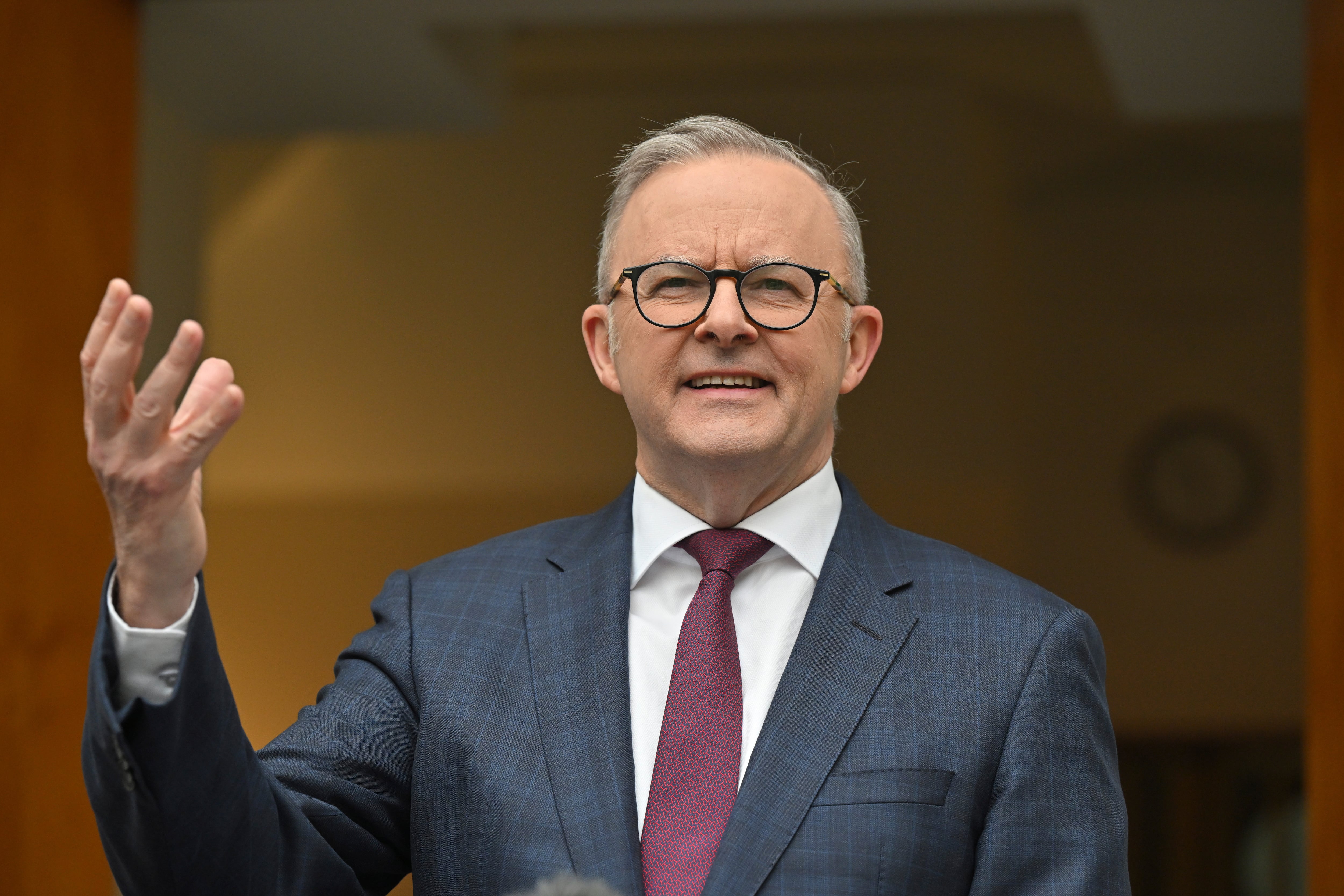
“Social media is doing harm to our kids and I’m calling time on it,” Prime Minister Anthony Albanese said.
The legislation will be introduced in Parliament during its final two weeks in session this year, which begin on Nov. 18. The age limit would take effect 12 months after the law is passed, Albanese told reporters.
The platforms including X, TikTok, Instagram and Facebook would need to use that year to work out how to exclude Australian children younger than 16.
“I’ve spoken to thousands of parents, grandparents, aunties and uncles. They, like me, are worried sick about the safety of our kids online,” Albanese said.
The proposal comes as governments around the world are wrestling with how to supervise young people's use of technologies like smartphones and social media.
Social media platforms would be penalized for breaching the age limit, but under-age children and their parents would not.
“The onus will be on social media platforms to demonstrate they are taking reasonable steps to prevent access. The onus won’t be on parents or young people,” Albanese said.
Antigone Davis, head of safety at Meta, which owns Facebook and Instagram, said the company would respect any age limitations the government wants to introduce.
“However, what’s missing is a deeper discussion on how we implement protections, otherwise we risk making ourselves feel better, like we have taken action, but teens and parents will not find themselves in a better place,” Davis said in a statement.
She added that stronger tools in app stores and operating systems for parents to control what apps their children can use would be a “simple and effective solution.”
X did not immediately respond to a request for comment on Thursday. TikTok declined to comment.
The Digital Industry Group Inc., an advocate for the digital industry in Australia, described the age limit as a “20th Century response to 21st Century challenges.”
“Rather than blocking access through bans, we need to take a balanced approach to create age-appropriate spaces, build digital literacy and protect young people from online harm,” DIGI managing director Sunita Bose said in a statement.
More than 140 Australian and international academics with expertise in fields related to technology and child welfare signed an open letter to Albanese last month opposing a social media age limit as “too blunt an instrument to address risks effectively.”
Jackie Hallan, a director at the youth mental health service ReachOut, opposed the ban. She said 73% of young people across Australia accessing mental health support did so through social media.
“We’re uncomfortable with the ban. We think young people are likely to circumvent a ban and our concern is that it really drives the behavior underground and then if things go wrong, young people are less likely to get support from parents and carers because they’re worried about getting in trouble,” Hallan said.
Child psychologist Philip Tam said a minimum age of 12 or 13 would have been more enforceable.
“My real fear honestly is that the problem of social media will simply be driven underground,” Tam said.
Australian National University lawyer Associate Prof. Faith Gordon feared separating children from there platforms could create pressures within families.
Albanese said there would be exclusions and exemptions in circumstances such as a need to continue access to educational services.
But parental consent would not entitle a child under 16 to access social media.
Earlier this year, the government began a trial of age-restriciton technologies. Australia’s eSafety Commissioner, the online watchdog that will police compliance, will use the results of that trial to provide platforms with guidance on what reasonable steps they can take.
Communications Minister Michelle Rowland said the year-long lead-in would ensure the age limit could be implemented in a “very practical way.”
“There does need to be enhanced penalties to ensure compliance,” Rowland said.
“Every company that operates in Australia, whether domiciled here or otherwise, is expected and must comply with Australian law or face the consequences,” she added.
The main opposition party has given in-principle support for an age limit at 16.
Opposition lawmaker Paul Fletcher said the platforms already had the technology to enforce such an age ban.
“It’s not really a technical viability question, it’s a question of their readiness to do it and will they incur the cost to do it,” Fletcher told Australian Broadcasting Corp.
“The platforms say: ’It’s all too hard, we can’t do it, Australia will become a backwater, it won’t possibly work.’ But if you have well-drafted legislation and you stick to your guns, you can get the outcomes,” Fletcher added.