Smartphones could get much smarter this year as the next wave of artificial intelligence seeps into the devices that accompany people almost everywhere they go.
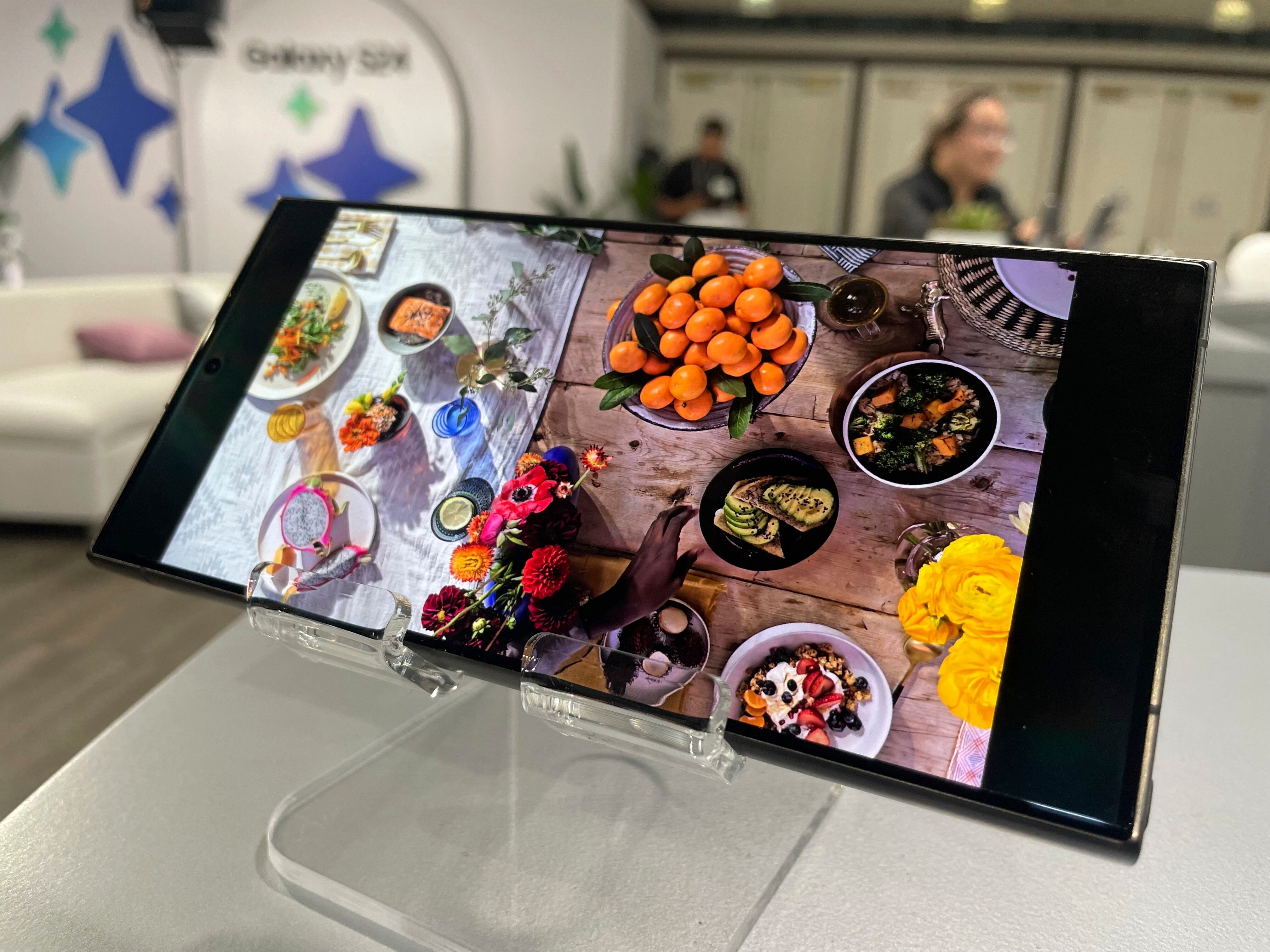
Samsung, the biggest rival to Apple and its iPhone, provided a glimpse of how smartphones are evolving during a Wednesday unveiling of the next generation of its flagship Galaxy models.
The sales pitch for the Galaxy S24 lineup revolves around an array of new features powered by AI.
“We will reshape the technology landscape, we will open a new chapter without barriers to unleash your potential," TM Roh, the president of Samsung's mobile experience division, vowed to a crowd gathered in a San Jose, California, arena usually used for hockey games and concerts.
Besides featuring some of Samsung's own work in AI, the Galaxy S24 lineup will be packed with some of the latest advances coming out of Google.
The technological improvements will also usher in a higher price for Samsung's top-of-the-line phone, the Galaxy S24 Ultra, which will be priced at $1,300 — a $100, or 8% increase, from last year's comparable model. The increase mirrors what Apple did with its fanciest model, the iPhone 15 Pro Max, released in September.
Samsung is holding steady on the prices for the Galaxy S24 Plus, which will sell for $1,000, and the basic Galaxy S24, which will start at $800.
All the new Galaxy phones, due in stores Jan. 31, will be packed with far more AI than before, including a feature that will provide live translation during phone calls in 13 languages and 17 dialects. The Galaxy S24 lineup will also introduce Google's “Circle To Search” that involves using a digital stylus or a finger to circle snippets of text, parts of photos or videos to get instant search results about whatever has been highlighted.
The new Galaxy phones will also enable quick and easy ways to manipulate the appearance and placement of specific parts of pictures taken on the devices' camera. It's a feature that could help people refine their photos, while also making it easier to create misleading images.
Google started a push last fall to infuse its latest Pixel phones with more AI, including the ability to alter the appearance of photos — an effort that the company accelerated at the end of last year with the initial rollout of project Gemini, its next technological leap. Google is also pushing out the Circle To Search tool to its latest phones, the Pixel 8 and Pixel 8 Pro, with plans to expand it to other devices running on its Android software later this year.
Besides introducing Circle To Search, Google also is drawing upon AI to enable users of its mobile app for iPhones as well as Android to point a camera at an object for a summary about what is being captured by the lens. Although Google believes Circle To Search and the Lens option will make its results even more useful, executives have also acknowledged they both may be prone to inaccuracies.
Like virtually all phone manufacturers other than Apple, Samsung relies on Google's Android operating system, so the two companies' interests have been aligned even though they compete against each other in the sale of mobile devices.
Apple is expected to put more AI into its next generation of iPhones in September, but now Samsung has a head start toward gaining the upper hand in making the technology more ubiquitous, Forrester Research analyst Thomas Husson said. It's a competitive edge that Samsung could use, having ceded its longstanding mantle as the world's largest seller of smartphones to Apple last year, according to the market research firm International Data Corp.
“Samsung’s marketing challenge is precisely to make the technology transparent to impress consumers with magic and invisible experiences,” Husson said.
The increasing use of AI in smartphones comes after the Microsoft-backed startup, OpenAI, thrust the technology into the mainstream last year with its ChatGPT bot capable of quickly creating stories, memos, videos and drawings upon request.
As AI becomes a more integral piece of smartphones, the technology will likely have broad implications on productivity, creativity and privacy, predicted Todd Lohr, U.S. technology consulting leader for KPMG.
“Intelligence is actually coming to your smartphone, which really haven't been that smart,” Lohr said. “You may eventually see use cases where you could have your smartphone listen to you all day and have it provide a summary of your day at the end of it. That could create a challenge in the social construct because if everyone's device is listening to everyone, whose data is it?”
AI isn't quite that advanced yet, but Samsung already is trying to address privacy worries likely to be raised by the amount of new technology rolling out in the Galaxy S24 lineup. Samsung executives are emphasizing that the AI features can be kept on the device, although some applications may need to connect to data centers in the virtual cloud.
The South Korean company also is promising users that their on-device activity will be protected by its “Samsung Knox” security.
Michael Kokotajlo, KPMG's digital transformation partner of telecommunications, thinks Samsung and other smartphone makers are on the way to giving people an “AI assistant in their pockets” — a concept that he expects to be more readily adopted by younger generations that have grown up during the mobile-computing era.
“Millennials and Gen Z are definitely going to be looking for these AI capabilities because they don’t have as much concern about privacy and security, but some of the older generations may have more concerns about that or how do you even leverage all of it,” Kokotajlo said.