30 years later, Pixar resurrects two-dimensional animation
By Grant Keller
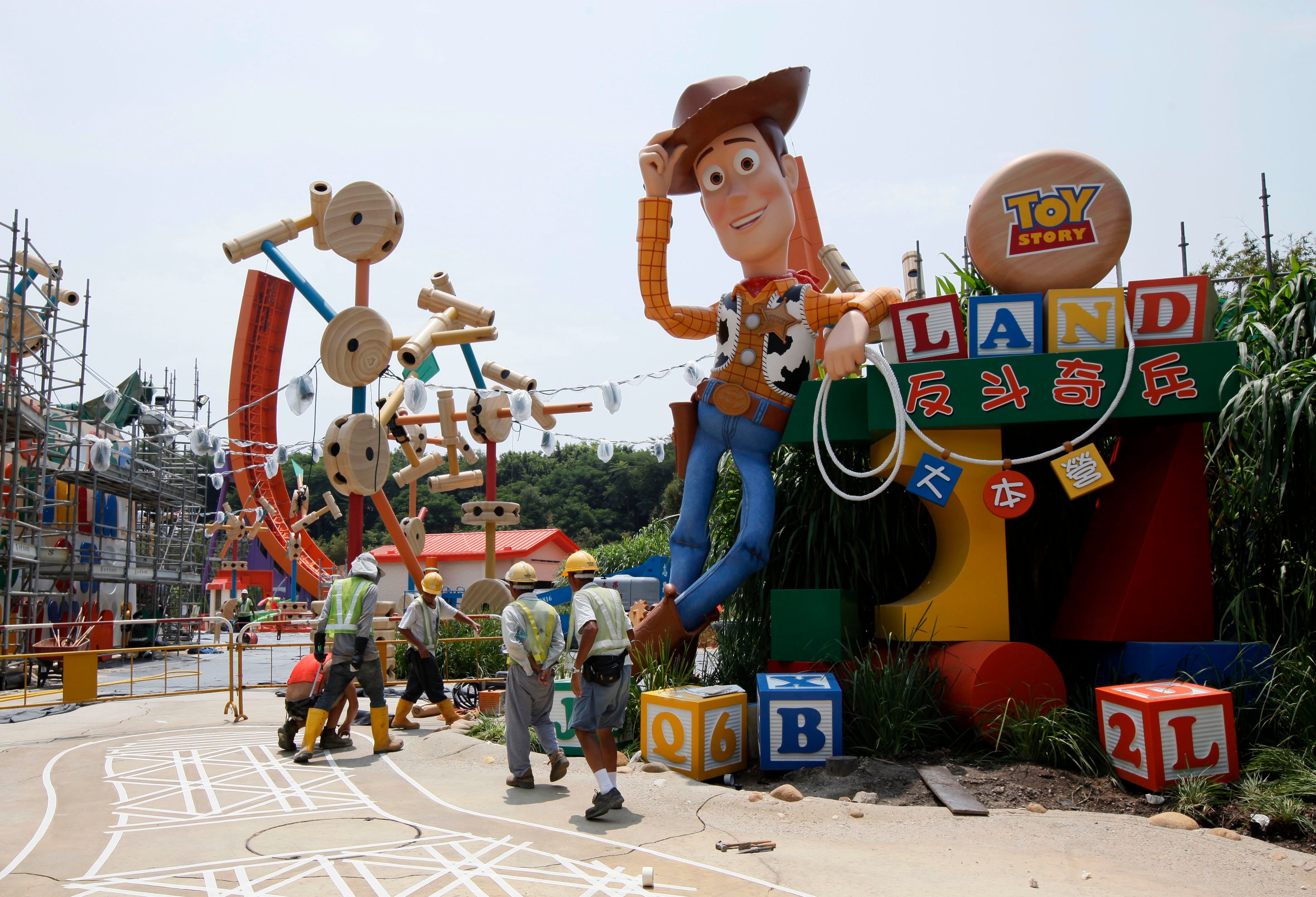
FILE - In this Sept. 8, 2011, file photo, workers walk past "Toy Story" character Woody at the construction site of the new attraction area Toy Story Land in Hong Kong Disneyland. A new 11-acre Toy Story Land is planned for Walt Disney World Resort near Orlando, Fla., in 2018, opening at the theme park's Hollywood Studios. (AP Photo/Kin Cheung, File)
30 years ago, “Toy Story”, the first ever theatrical length computer generated animated film, hit theaters to such massive critical and commercial success that the franchise is still going with a new film releasing next summer. This radical triumph changed the American animation industry forever but not totally in a positive way.
Toy Story’s major achievement, much to the chagrin of the people who worked on it, was to kill American two-dimensional animation. Every hand-drawn 2D American animated film released post-Toy Story flopped, and studios believed the reason was because they were not made with computers in three dimensions. Not because, you know, they were bad. This caused movies like “Chicken Little” and “Shrek” to abandon their hand-drawn roots and switch to three-dimensional computer graphics.
After Pixar was purchased by Disney, John Lassator, director of “Toy Story”, was promoted to Chief Creative Officer of both Pixar and Walt Disney Animation Studios and tried to revive 2-D animation in the states with “The Princess and The Frog”. When it underperformed at the box office, it was the final nail in the coffin for the style.
Abroad, theatrical 2-D animation never stopped and now with imported movies like “The Boy and The Heron” and “Demon Slayer: Infinity Caste” becoming surprise hits, the viability of theatrical 2-D animation in the states is restored.
Pixar has been waiting for this moment. Quietly, they have been developing their own method of 2-D animation within their Disney Plus Spark Shorts program with great films like “Kitbull,” “Burrow,” and “Twenty Something,” which you should absolutely check out if you haven’t already. Now they are preparing to release their first theatrical length 2-D animated feature, “Gatto” in 2027.
Pixar may have accidentally killed American theatrical 2-D animation, but thanks to the help of overseas hits, they might also resurrect the genre. Fingers crossed.
The New York Times and President Donald Trump are fighting again. The news outlet said Wednesday it won't be deterred by Trump's “false and inflammatory language” from writing about the 79-year-old president's health. The Times has done a handful of stories on that topic recently, including an opinion column that said Trump is “starting to give President Joe Biden vibes.” In a Truth Social post, Trump said it might be treasonous for outlets like the Times to do “FAKE” reports about his health and "we should do something about it.” The Republican president already has a pending lawsuit against the newspaper for its past reports on his finances.
OpenAI has appointed Slack CEO Denise Dresser as its first chief of revenue. Dresser will oversee global revenue strategy and help businesses integrate AI into daily operations. OpenAI CEO Sam Altman recently emphasized improving ChatGPT, which now has over 800 million weekly users. Despite its success, OpenAI faces competition from companies like Google and concerns about profitability. The company earns money from premium ChatGPT subscriptions but hasn't ventured into advertising. Altman had recently announced delays in developing new products like AI agents and a personal assistant.
President Donald Trump says he will allow Nvidia to sell its H200 computer chip used in the development of artificial intelligence to “approved customers” in China. Trump said Monday on his social media site that he had informed China’s leader Xi Jinping and “President Xi responded positively!” There had been concerns about allowing advanced computer chips into China as it could help them to compete against the U.S. in building out AI capabilities. But there has also been a desire to develop the AI ecosystem with American companies such as chipmaker Nvidia.
U.S. sports betting is booming as NFL and college football fuel massive activity. BetMGM CEO Adam Greenblatt breaks down trends, growth, and what’s next.
President Donald Trump says a deal struck by Netflix last week to buy Warner Bros. Discovery “could be a problem” because of the size of the combined market share. The Republican president says he will be involved in the decision about whether federal regulators should approve the deal. Trump commented Sunday when he was asked about the deal as he walked the red carpet at the Kennedy Center Honors. The $72 billion deal would bring together two of the biggest players in television and film and potentially reshape the entertainment industry.
Disney's changes to a program for disabled visitors are facing challenges in federal court and through a shareholder proposal. The Disability Access Service program, which allows disabled visitors to skip long lines, was overhauled last year. Disney now mostly limits the program to those with developmental disabilities like autism who have difficulty waiting in lines. The changes have sparked criticism from some disability advocates. A shareholder proposal submitted by disability advocates calls for an independent review of Disney's disability policies. Disney plans to block this proposal, claiming it's misleading. It's the latest struggle by Disney to accommodate disabled visitors while stopping past abuses by some theme park guests.
With a merger this big, creators, studios, and theaters all face uncertain futures. Here’s what experts are worried about and what good could come from it.
With disengagement rising and hybrid work shifting, 'Everybody Matters' author Bob Chapman explains why treating people well could define the future of work.
We sat down with Ali Furman, U.S. Consumer Markets Industry Leader at consulting firm PwC to ask what trends she garnered from the initial data this year.