By Egill Bjarnason

Schools, shops, banks and Iceland's famous swimming pools shut on Tuesday as women in the volcanic island nation — including the prime minister — went on strike to push for an end to unequal pay and gender-based violence.

Icelanders awoke to all-male news teams announcing shutdowns across the country, with public transport delayed, hospitals understaffed and hotel rooms uncleaned. Trade unions, the strike's main organizers, called on women and nonbinary people to refuse paid and unpaid work, including chores. About 90% of the country's workers belong to a union.

Prime Minister Katrin Jakobsdóttir said she would stay home as part of the strike — “kvennaverkfall” in Icelandic — and expected other women in her Cabinet would do the same.

Iceland, a rugged island of around 380,000 people just below the Arctic Circle, has been ranked as the world’s most gender-equal country 14 years in a row by the World Economic Forum, which measures pay, education, health care and other factors.

No country has achieved full equality, and there remains a gender pay gap in Iceland.

Tuesday’s walkout, running from midnight to midnight, was billed as the biggest since Iceland’s first such event on Oct. 24, 1975, when 90% of women refused to work, clean or look after children, to voice anger at discrimination in the workplace.

In 1976, Iceland passed a law guaranteeing equal rights irrespective of gender. Since then there have been several partial-day strikes, most recently in 2018, with women walking off the job in the early afternoon, symbolizing the time of day when women, on average, stop earning compared to men.

Iceland's chools and the health system, which have female-dominated workforces, said they would be heavily affected. National broadcaster RUV said it was reducing television and radio broadcasts for the day, and reported that only one bank branch in the country was open.

Gatherings on Tuesday were held across Iceland, the largest in Reykjavik, where much of the capital's center was closed to traffic and tens of thousands gathered on the grassy Arnarhóll hill for a rally.

Speakers listed grim facts about economic inequality and sexual violence in Iceland, ending by asking, “You call that equality?” The crowd thundered back: “No!”

“We have not yet reached our goals of full gender equality and we are still tackling the gender-based wage gap, which is unacceptable in 2023,” Jakobsdóttir told news website mbl.is. “We are still tackling gender-based violence, which has been a priority for my government to tackle.”

Jakobsdóttir's Cabinet is evenly split between male and female ministers, and nearly half of lawmakers in Iceland's parliament, the Althingi, are women.

But while women in Iceland have pushed or broken the glass ceiling to top jobs — from bishop to leaders of the national wrestling association — the lowest-paying jobs, such as cleaning and child care, are still predominantly done by women.

The work, essential to Iceland's tourism-dominated economy, also depends heavily on immigrants, who on the whole work longer hours and take home the lowest salaries. Around 22% of the female workforce is foreign-born, according to Statistics Iceland.

“Foreign women are more vulnerable,” said Alice Clarke, an artist and designer from Canada who has lived in Iceland for 30 years. “Hopefully what is being done today will help to change that."

Iceland's 1975 strike inspired similar protests in other countries including Poland, where women boycotted jobs and classes in 2016 to protest a proposed abortion ban. In Spain, women staged a 24-hour strike in 2018 on March 8, International Women’s Day, under the theme “If we stop, the world stops.”

Spain's acting equality minister, Irene Montero, said Tuesday that the 2018 strike was inspired by Iceland’s 1975 walkout and expressed full support for the latest protest.

Associated Press writers Jill Lawless in London and Ciarán Giles in Madrid contributed to this report.


Share:
More In Politics
US tariffs are having an uneven effect on holiday prices and purchases
Many U.S. consumers say they’ve noticed higher than usual prices for holiday gifts in recent months, according to a a December poll from The Associated Press-NORC Center for Public Affairs Research. A contributing factor is the unusually high import taxes the Trump administration put on foreign goods. While the worst-case consumer impact that many economists foresaw from the administration’s trade policies hasn’t materialized, some popular gift items have been affected more than others. Most toys and electronics sold in the U.S. come from China. So do most holiday decorations. Jewelry prices have risen due to the cost of gold.
Serbia organized crime prosecutors charge minister, others in connection with Kushner-linked project
Serbia’s prosecutor for organized crime has charged a government minister and three others with abuse of position and falsifying of documents related to a luxury real estate project linked to U.S. President Donald Trump’s son-in-law Jared Kushner. The charges came on Monday. The investigation centers on a controversy over a a bombed-out military complex in central Belgrade that was a protected cultural heritage zone but that is facing redevelopment as a luxury compound by a company linked to Kushner. The $500 million proposal to build a high-rise hotel, offices and shops at the site has met fierce opposition from experts at home and abroad. Selakovic and others allegedly illegally lifted the protection status for the site by falsifying documentation.
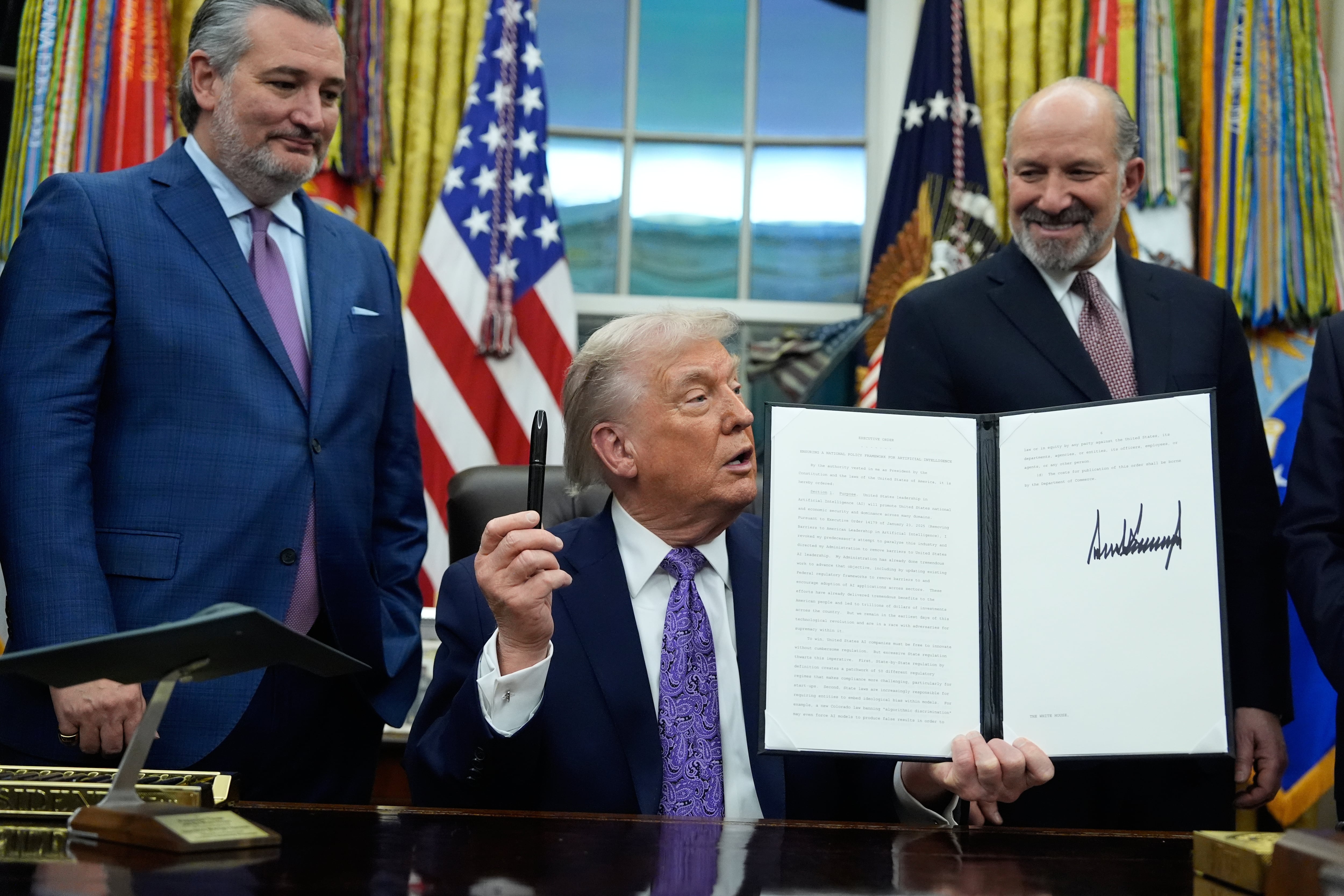
Trump signs executive order to block state AI regulations
President Donald Trump has signed an executive order to block states from regulating artificial intelligence. He argues that heavy regulations could stifle the industry, especially given competition from China. Trump says the U.S. needs a unified approach to AI regulation to avoid complications from state-by-state rules. The order directs the administration to draw up a list of problematic regulations for the Attorney General to challenge. States with laws could lose access to broadband funding, according to the text of the order. Some states have already passed AI laws focusing on transparency and limiting data collection.
New York Times, after Trump post, says it won’t be deterred from writing about his health
The New York Times and President Donald Trump are fighting again. The news outlet said Wednesday it won't be deterred by Trump's “false and inflammatory language” from writing about the 79-year-old president's health. The Times has done a handful of stories on that topic recently, including an opinion column that said Trump is “starting to give President Joe Biden vibes.” In a Truth Social post, Trump said it might be treasonous for outlets like the Times to do “FAKE” reports about his health and "we should do something about it.” The Republican president already has a pending lawsuit against the newspaper for its past reports on his finances.
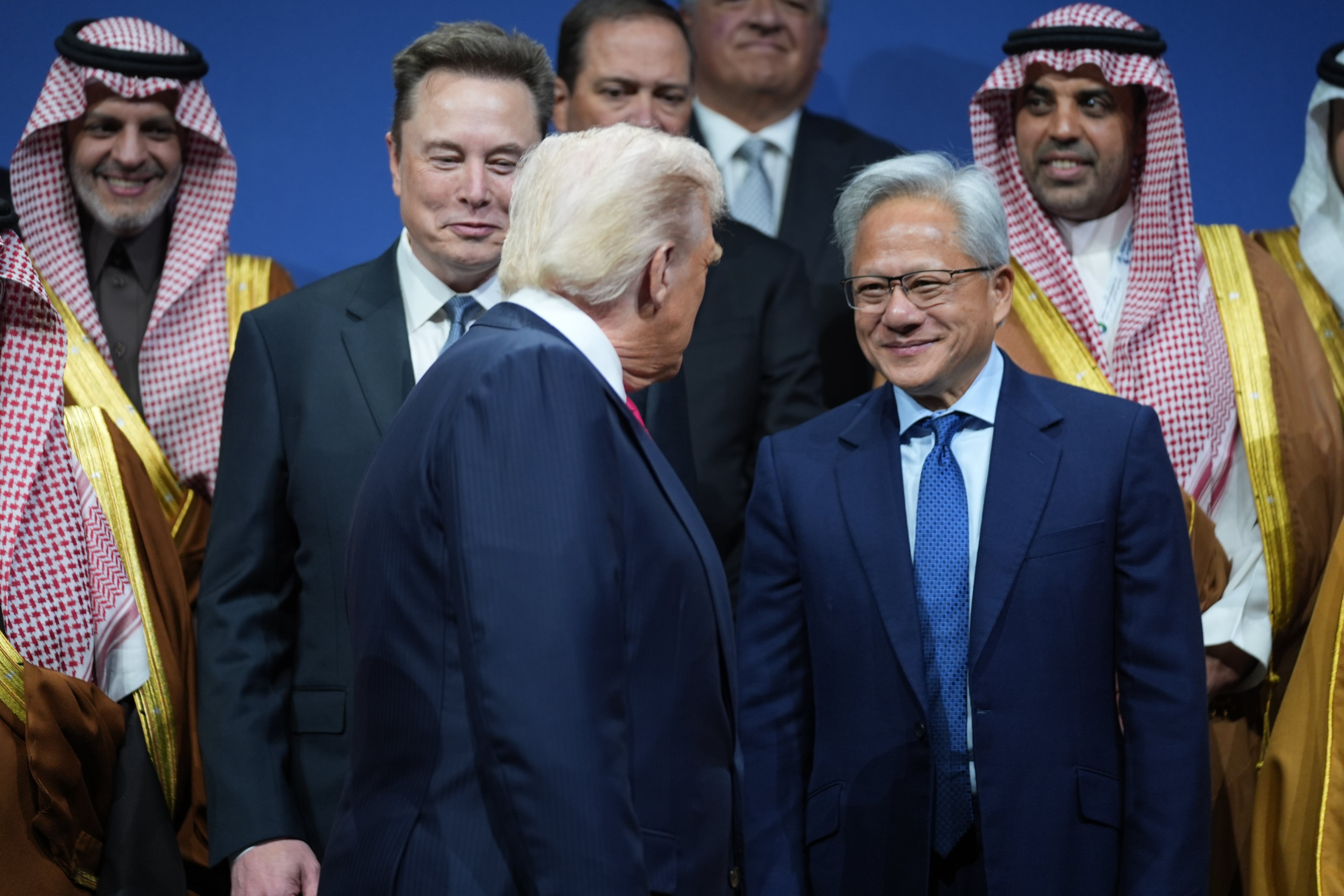
Trump approves sale of more advanced Nvidia computer chips used in AI to China
President Donald Trump says he will allow Nvidia to sell its H200 computer chip used in the development of artificial intelligence to “approved customers” in China. Trump said Monday on his social media site that he had informed China’s leader Xi Jinping and “President Xi responded positively!” There had been concerns about allowing advanced computer chips into China as it could help them to compete against the U.S. in building out AI capabilities. But there has also been a desire to develop the AI ecosystem with American companies such as chipmaker Nvidia.
Swing district Republicans brace for political fallout if health care subsidies expire
House Republicans in key battleground districts are working to contain the political fallout expected when thousands of their constituents face higher bills for health insurance coverage obtained through the Affordable Care Act. For a critical sliver of the GOP majority, the impending expiration of the enhanced premium tax credits after Dec. 31 could be a major political liability as they potentially face midterm headwinds in a 2026 election critical to President Donald Trump’s agenda. For Democrats, the party’s strategy for capturing the House majority revolves around pinning higher bills for groceries, health insurance and utilities on Republicans.
Load More