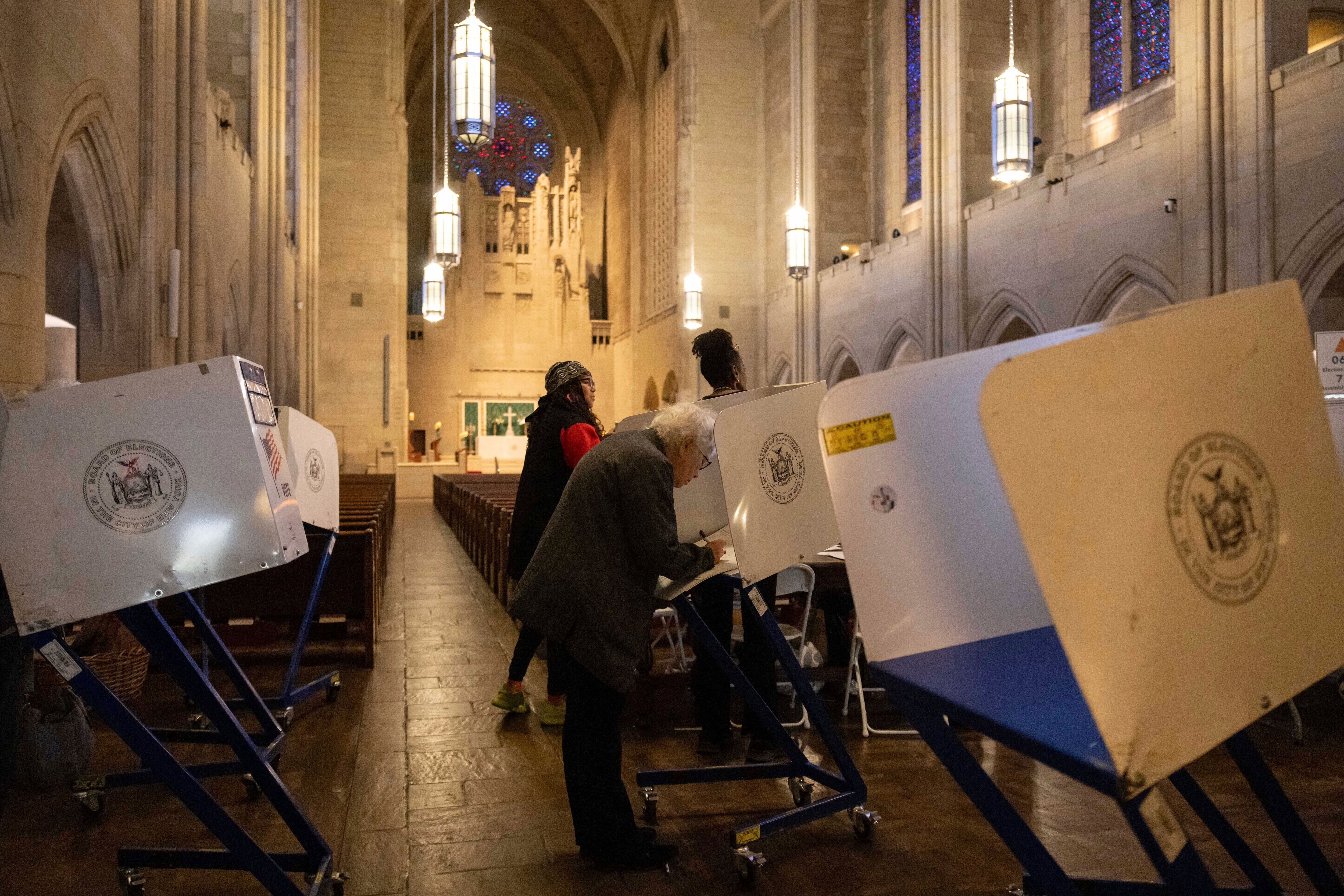
NEW YORK (AP) — New York City is using ranked choice voting in its Democratic mayoral primary election Tuesday, a system that takes some explaining, even for New Yorkers who have used it before.
Voters’ understanding of how ranked choice works could play a role in which candidate comes out on top in a race that features former Gov. Andrew Cuomo, progressive upstart Zohran Mamdani and several other current and former public officials, including City Council Speaker Adrienne Adams and City Comptroller Brad Lander, who was arrested last week at an immigration court.
The system is based on a simple premise: Democracy works better if people aren’t forced to make an all-or-nothing choice with their vote.
Rather than pick just one candidate, voters get to rank several in order of preference. Even if a voter’s top choice doesn’t have enough support to win, their rankings of other candidates still play a role in determining the victor.
The system is more complex than a traditional election, making it tough to forecast a winner. It could also take longer to get results.
How does it work?
In New York City’s version, voters get to rank up to five candidates, from first to last, on the ballot.
If one candidate is the first choice of a majority of voters — more than 50% — that person wins the race outright, just like in a traditional election.
If nobody hits that threshold, ranked choice analysis kicks in.
Vote tabulation is done by computer in rounds. After the first round, the candidate in last place — the candidate ranked No. 1 by the fewest amount of people — is eliminated. The computer then looks at the ballots cast by people who ranked that candidate first, to see who they ranked second. Those people’s votes are then redistributed to their second choices.
That process then repeats. As more candidates are eliminated, voters’ third, fourth and even fifth choices could potentially come into play. Rounds continue until there are only two candidates left. The one with the most votes wins.
Eleven candidates are on the ballot in the Democratic mayoral primary. Incumbent Mayor Eric Adams isn’t one of them. He’s a Democrat but is running as an independent. The Republican Party has already picked its nominee, Guardian Angels founder Curtis Sliwa.
How long will this take?
The computerized process of tabulating votes takes little time, but it doesn’t start right away.
Polls close at 9 p.m. Tuesday. Within a few hours, preliminary results should give a picture of how the candidates are doing based on voters’ first choices.
The ranked choice tabulations, however, won’t start until July 1 because the city needs to wait for the arrival of mail-in ballots.
The July 1 tabulation could potentially give a clear picture of who won, but the result won’t be official. Further rounds of ranked choice analysis will be done as additional absentee ballots come in until the board certifies the election July 15.
This will be the second time New York City has used ranked choice in a mayoral primary. The first time, in 2021, things went haywire when elections officials neglected to clear test data from the tabulation program. That led to an inaccurate vote tally being reported until officials realized the error.
Officials are hoping things go smoother this time.
Why do people like ranked choice?
One benefit is that nobody “wastes” their vote by picking an unpopular candidate as their first choice.
Voters can rank someone they like No. 1, even if they suspect the candidate doesn’t stand a chance. If that person is eliminated, voters still get a say in who wins based on their other rankings.
Another benefit is that it’s tough for someone to get elected without broad support. In a traditional election, it’s possible for someone with fringe political views to win in a crowded field of candidates, even if they are deeply disliked by a majority of voters.
That’s theoretically less likely in a ranked choice system. A candidate could get the largest share of first-choice votes but still lose to someone who is the second or third choice of a large number of people.
What are the negatives?
The system is tough to grasp. It requires voters to do more research. It also makes races less predictable.
Transparency and trust are also potential problems. Ordinarily, candidates, the public and news organizations can see votes coming in, precinct by precinct, and know exactly who is leading and where their support comes from.
Under the ranked choice system, the process of redistributing votes is done by computer. Outside groups will have a harder time evaluating whether the software sorted the ranked votes accurately.
That’s a challenge for news organizations, like The Associated Press, that analyze vote tallies and attempt to report a winner before the count is complete.
There may be instances when candidates who seem to have a comfortable lead in first-place votes on election night lose because relatively few voters rank them as their second or third choice. That could lead to people questioning the results.