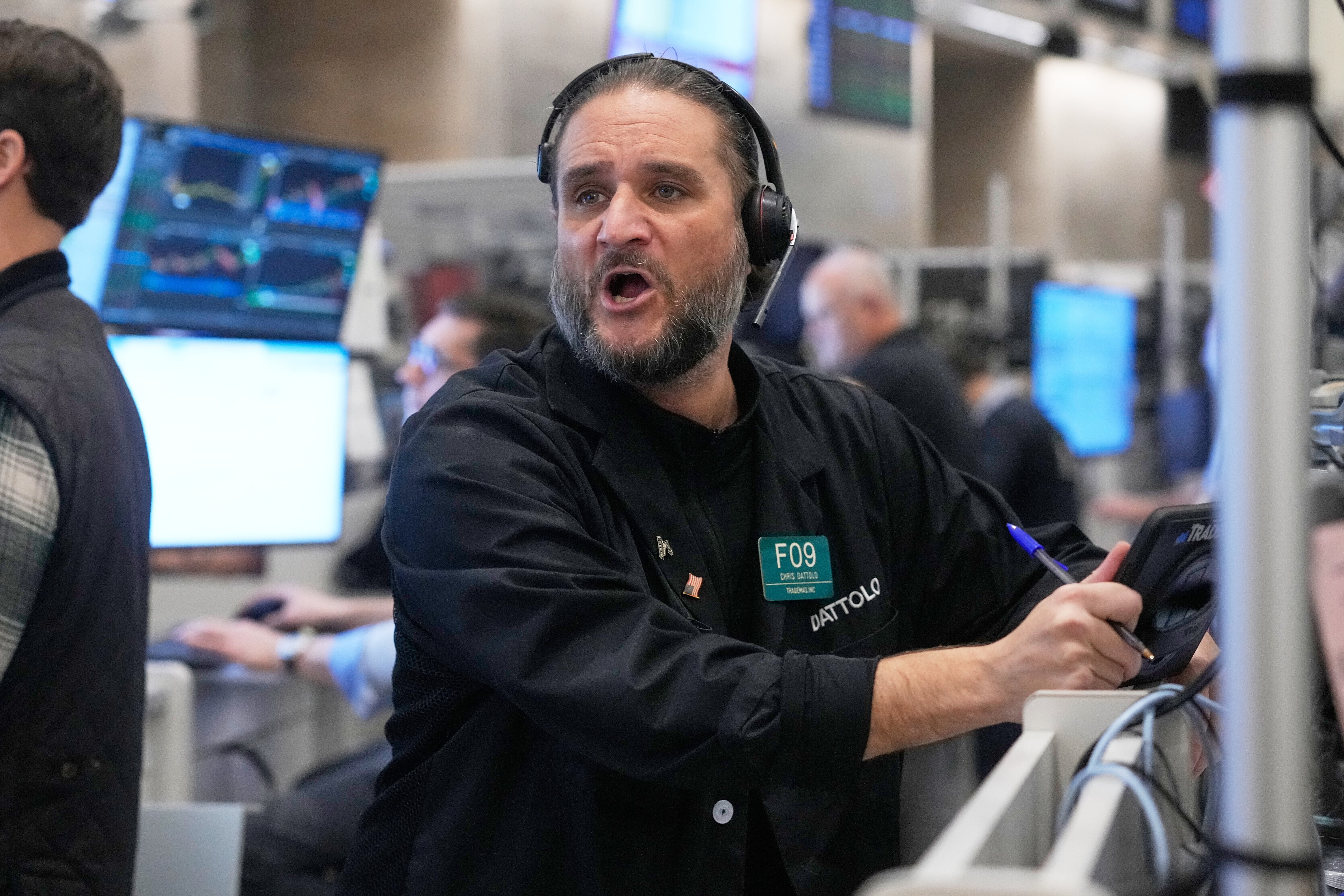
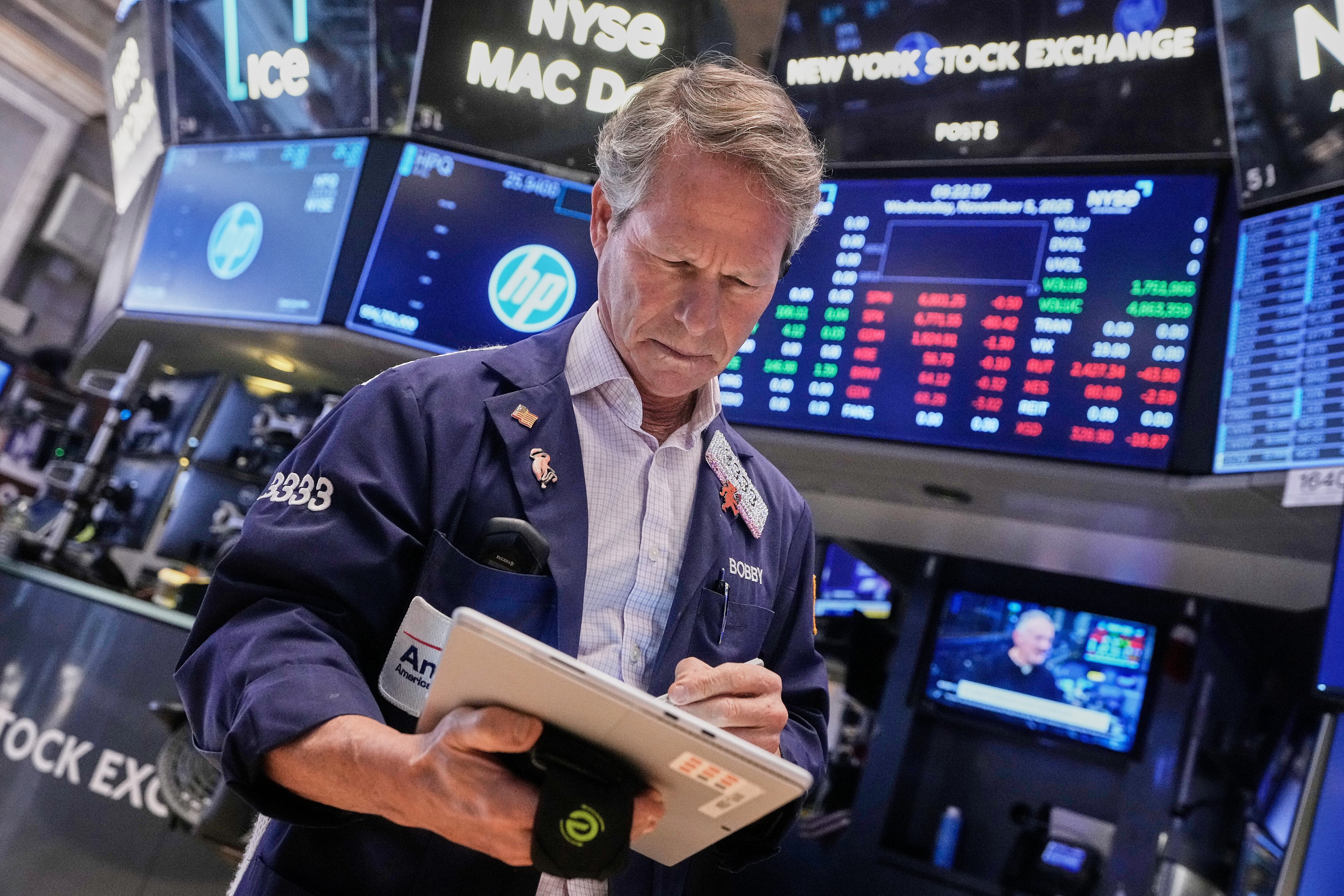
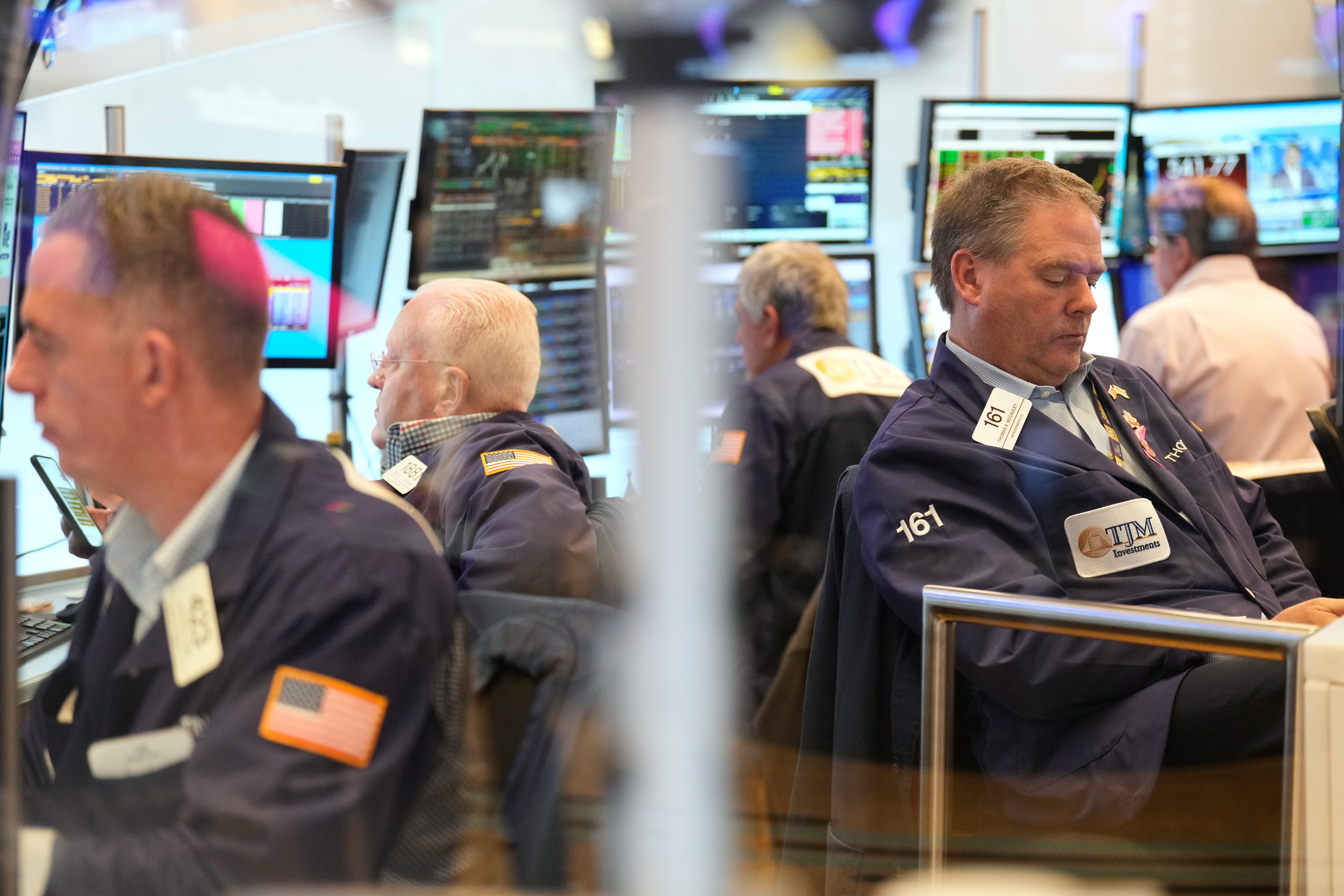
NEW YORK (AP) — Wall Street’s sell-off is accelerating Thursday after President Donald Trump upped the stakes in his trade war by threatening huge taxes on European wines and alcohol. Not even a double-shot of good news on the U.S. economy could stop the bleeding.
The S&P 500 was down 1.2% in afternoon trading, caught in a dizzying, battering stretch that's driven the index roughly 10% below its record, which was set just a few weeks ago. Wall Street calls such steep drops a “correction,” and if the index finishes the day below 5,529, it would be the first for the U.S. stock market since 2023.
The Dow Jones Industrial Average was down 507 points, or 1.2%, as of 2:15 p.m. Eastern time, and the Nasdaq composite was 1.6% lower.
The swings for stocks have been coming not just day to day but also hour to hour, and the Dow hurtled between a slight gain and a drop of 689 points during Thursday's trading.
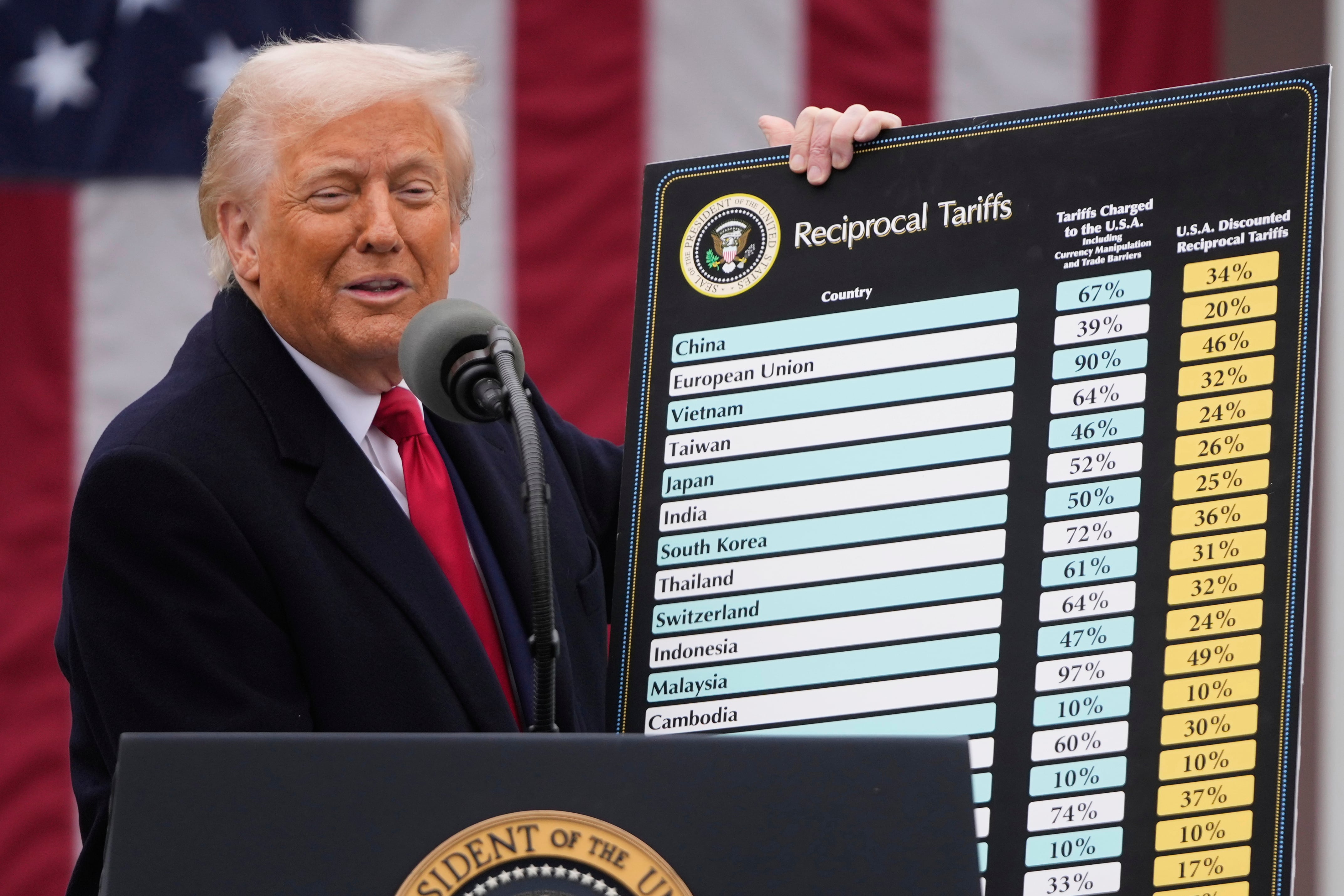
The turbulence is a result of uncertainty about how much pain Trump will let the economy endure through tariffs and other policies in order to reshape the country and world as he wants. The president has said he wants manufacturing jobs back in the United States, along with a smaller U.S. government workforce and other fundamental changes.
Trump's latest escalation came Thursday when he threatened 200% tariffs on Champagne and other European wines, unless the European Union rolls back a “nasty” tariff announced on U.S. whiskey. The European Union unveiled that move on Wednesday, in response to U.S. tariffs on European steel and aluminum.
U.S. households and businesses have already reported drops in confidence because of all the uncertainty about which tariffs will stick from Trump’s barrage of on -again, off -again announcements. That’s raised fears about a pullback in spending that could sap energy from the economy. Some U.S. businesses say they’ve already begun to see a change in their customers' behavior because of the uncertainty.
A particularly feared scenario for the economy is one where its growth stagnates but inflation stays high because of tariffs. Few tools are available in Washington to fix what's called “stagflation.” If the Federal Reserve were to cut interest rates to boost the economy, for example, that could also push inflation higher.
Good news came on both those economic fronts Thursday.
One report showed inflation at the wholesale level last month was milder than economists expected. It followed a similarly encouraging report from the prior day on inflation that U.S. consumers are feeling.
But “the question for markets is whether good news on the inflation front can make itself heard above the noise of the ever-changing tariff story," said Chris Larkin, managing director, trading and investing, at E-Trade from Morgan Stanley.
A separate report, meanwhile, said fewer U.S. workers applied for unemployment benefits last week than economists expected. It’s the latest signal that the job market remains relatively solid overall. If that can continue, it could allow U.S. consumers to keep spending, and that’s the main engine of the economy.
On Wall Steet, some stocks connected to the artificial-intelligence industry resumed their slide and weighed on stock indexes. Palantir Technologies, which offers an AI platform for customers, sank 4.5%. Super Micro Computer, which makes servers, lost 6%. Nvidia swung between gains and losses before rising 0.7%.
Such stocks have been under the most pressure in the U.S. stock market's recent sell-off after critics said their prices shot too high in the frenzy around AI.
Other areas of the market that had also been riding big earlier momentum have seen their fortunes swing drastically. Elon Musk’s Tesla fell 3.2% following a rare back-to-back gain, and it's down more than 40% so far in 2025.
American Eagle Outfitters dropped 4% after the retailer said “less robust demand and colder weather” has held back its performance recently. It forecasted a dip in revenue for the upcoming year, though it also delivered a stronger profit report for the latest quarter than analysts expected.
On the winning side of Wall Street was Intel, which jumped 14.9% after naming former board member and semiconductor industry veteran Lip-Bu Tan as its CEO. Tan, 65, will take over the daunting job next week, more than three months after Intel’s previous CEO, Pat Gelsinger, abruptly retired amid a deepening downturn at the once-dominant chipmaker.
In the bond market, Treasury yields lost an early gain to sink lower. The yield on the 10-year Treasury fell to 4.26% from 4.32%. The yield has been mostly dropping since January, when it was approaching 4.80%, as traders and economists have ratcheted back their expectations for U.S. economic growth.
While few are predicting a recession, particularly with the job market remaining relatively solid, recent reports have shown a souring of confidence among U.S. consumers and companies.
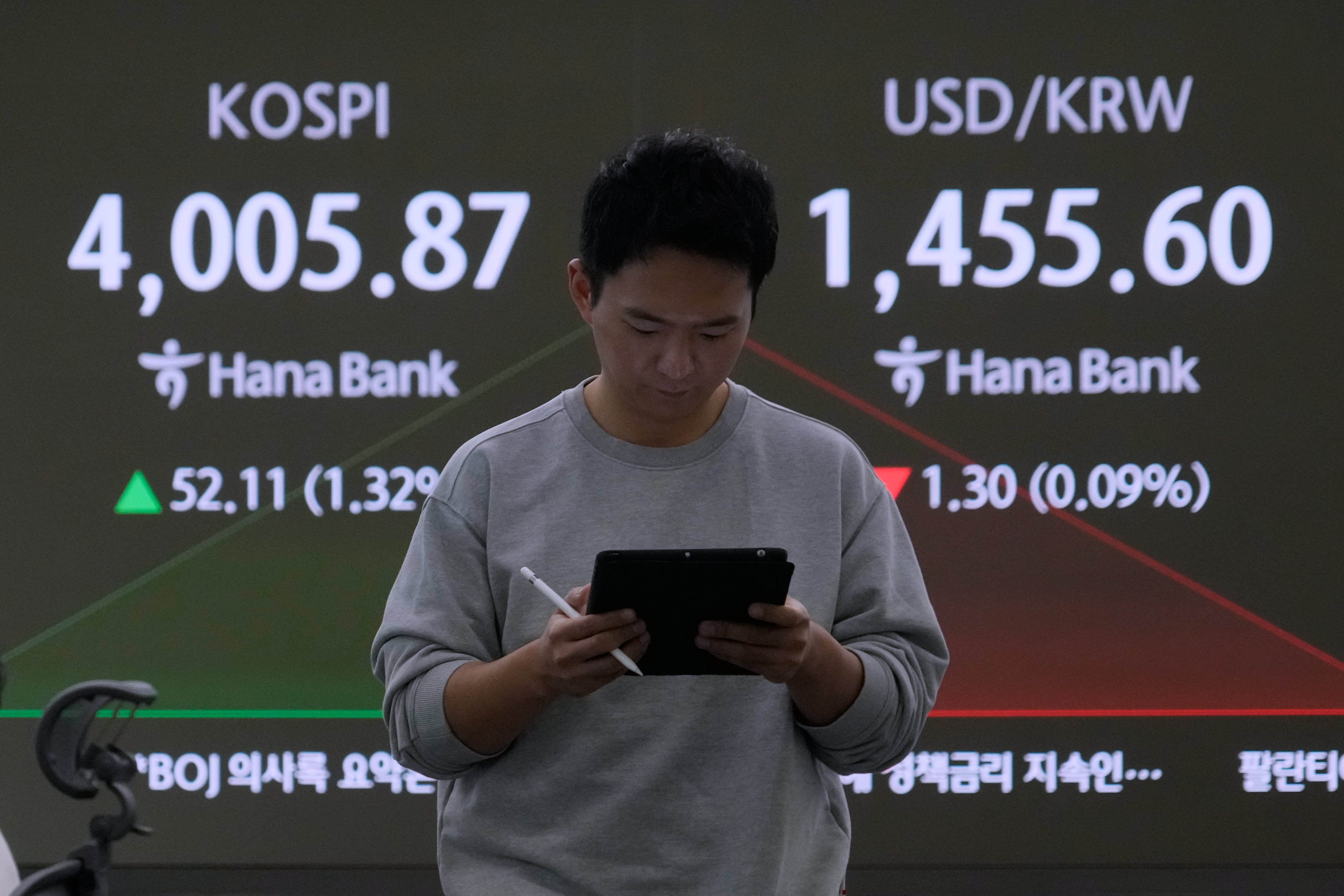
In stock markets abroad, indexes fell across much of Europe and Asia, but the moves were relatively modest.
___
AP Business Writers Matt Ott and Elaine Kurtenbach contributed.