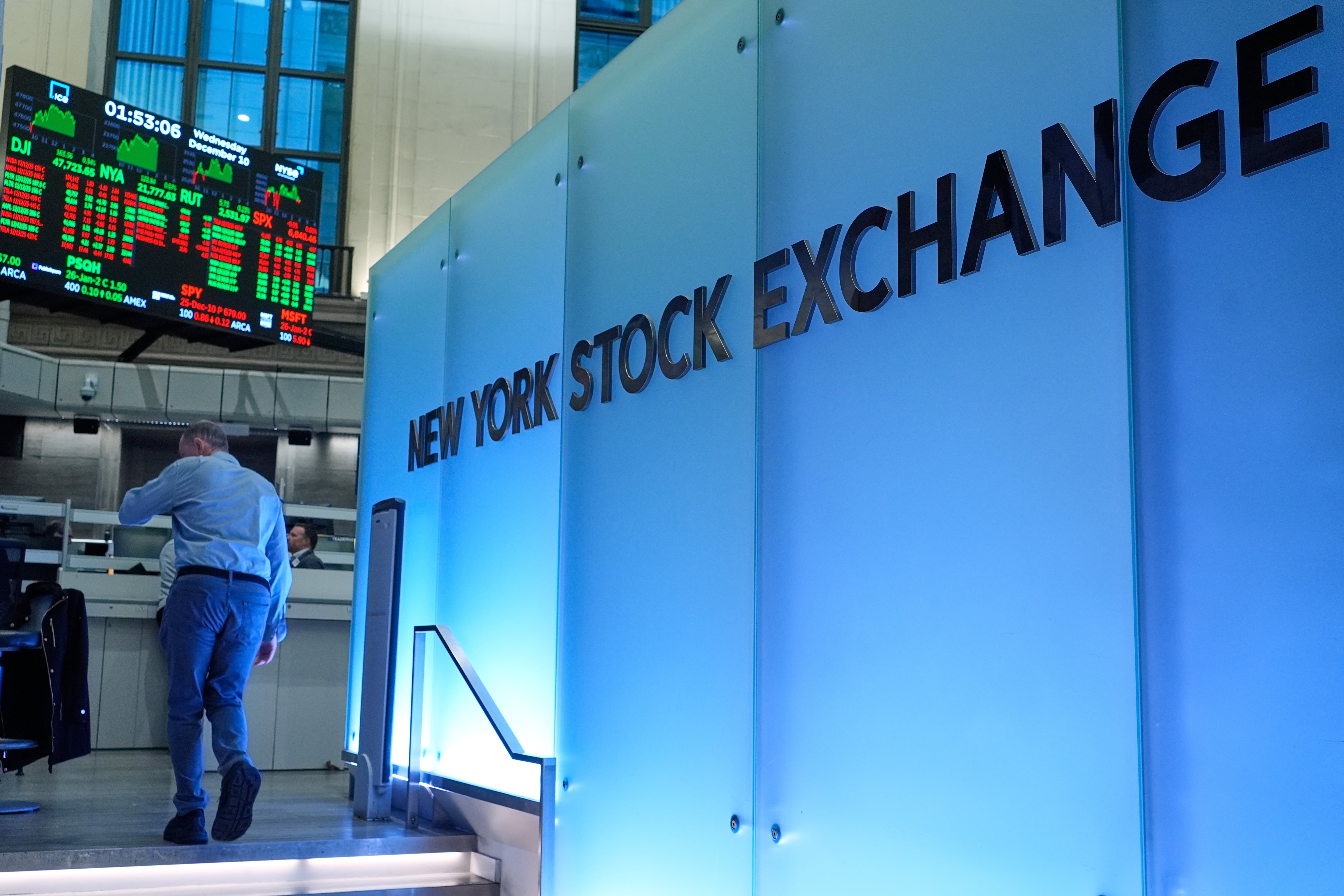
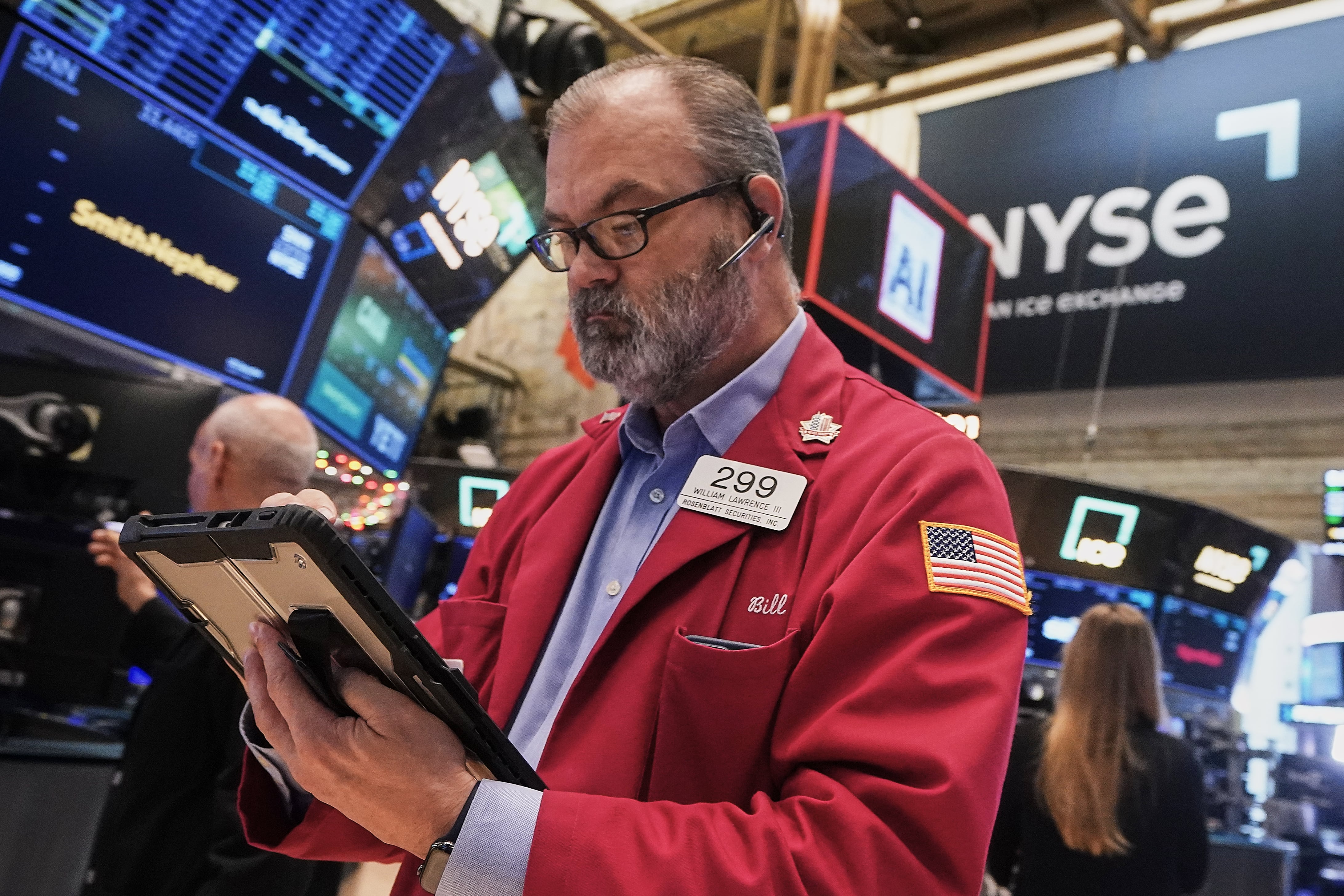
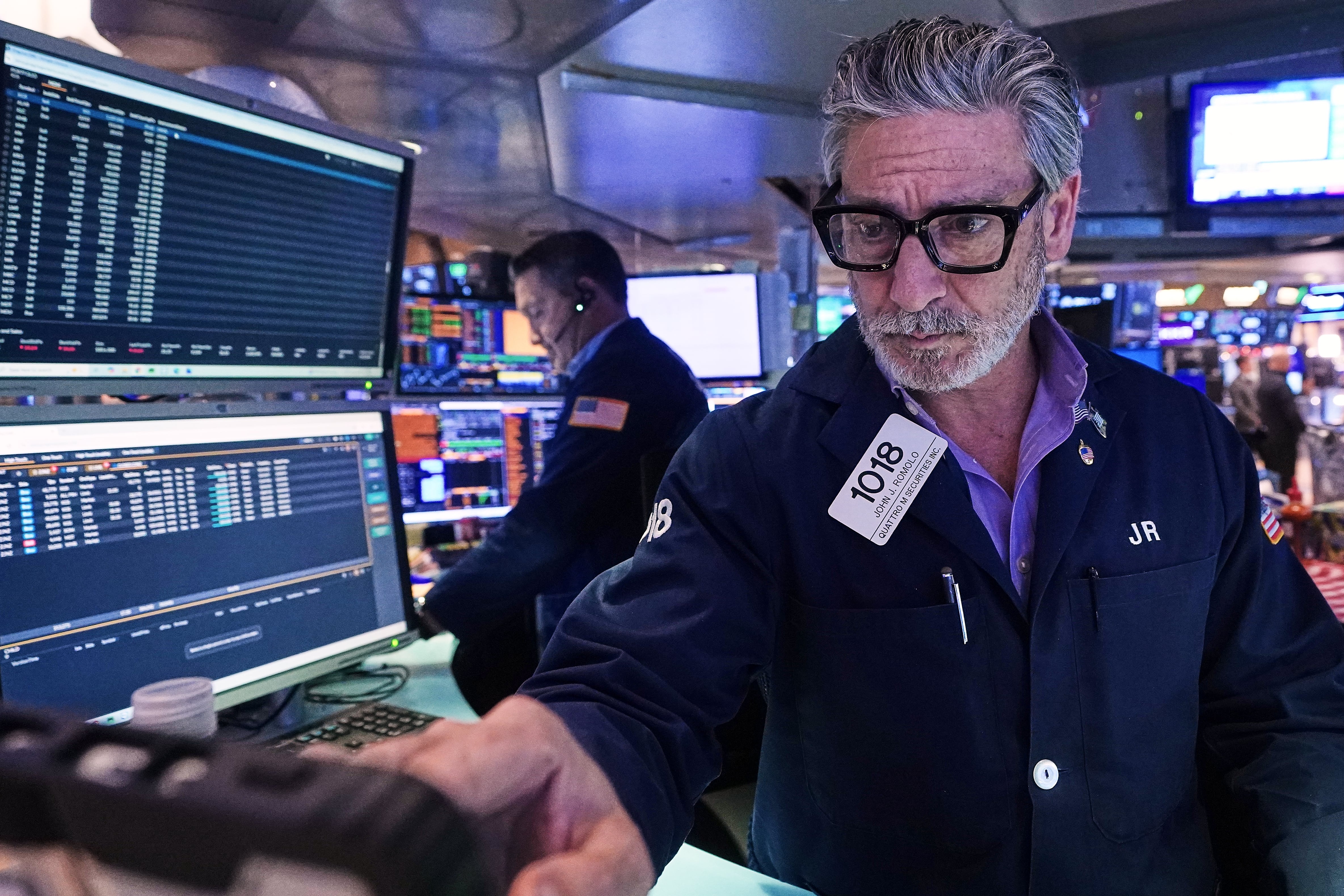
NEW YORK (AP) — The U.S. stock market is flirting with its all-time high on Wednesday after the Federal Reserve cut its main interest rate to bolster the job market.
The S&P 500 rose 0.8% and was on track to squeak past its all-time closing high, which was set in October. The Dow Jones Industrial Average was up 559 points, or 1.2%, with roughly an hour remaining in trading, and the Nasdaq composite was 0.4% higher.
Wall Street loves lower interest rates because they can boost the economy and goose prices for investments, even if they have the potential of making inflation worse.
Fed Chair Jerome Powell said again on Wednesday that the central bank is in a difficult position, because the job market is facing downward pressure when inflation is facing upward pressure at the same time. That creates a dilemma for the Fed, which usually makes one of those problems worse in the short term when it tries to fix the other.
At the moment, though, Powell said for the first time in this rate-cutting campaign that interest rates are close to where they’re pushing neither inflation nor the job market higher or lower. That should give the Fed time to hold and reassess what to do next with interest rates as more data comes in on the job market and on inflation.
“We are well positioned to wait and see how the economy evolves,” Powell said. He also said no one at the Fed is expecting a hike to rates in their “base case” anytime soon.
After voting on Wednesday’s cut of a quarter of a percentage point, Fed officials released projections for where they see the federal funds rate potentially ending 2026. The median member is penciling in one more cut by the end of next year, the same as three months earlier.
That projection is under the microscope because Fed officials had seemed unusually split about how much more help the economy may need from lower interest rates. With inflation remaining stubbornly above the Fed’s 2% target, some officials had been saying it was the bigger threat for the economy rather than the job market.
In Wednesday’s vote, two Fed officials voted against the cut of a quarter percentage point because they saw no need to reduce rates now. Another official, meanwhile, voted against Wednesday’s cut because he wanted a deeper reduction of half a percentage point.
In the bond market, the yield on the 10-year Treasury edged fell to 4.14% from 4.18% late Tuesday. The two-year yield, which more closely tracks expectations for the Fed, fell more and sank to 3.54% from 3.61%.
On Wall Street, GE Vernova flew 16.8% higher after the energy company raised its forecast for revenue by 2028, doubled its dividend and increased its program to buy back its own stock.
Palantir Technologies added 4.6% after saying the U.S. Navy will use its artificial-intelligence technology as part of a $448 million program.
Cracker Barrel Old Country Store rose 3.9%. The restaurant chain caught up in a furor around its logo design reported better results for the latest quarter than analysts expected but also cut its forecast for revenue this fiscal year, as well as for an underlying measure of earnings.
On the losing end of Wall Street was GameStop, which fell 3.2% after reporting weaker revenue for the latest quarter than analysts expected. The video-game retailers’ profit topped forecasts, though.
In stock markets abroad, indexes were mixed amid mostly modest movements across Europe and Asia.
___
AP Business Writers Yuri Kageyama and Matt Ott contributed.