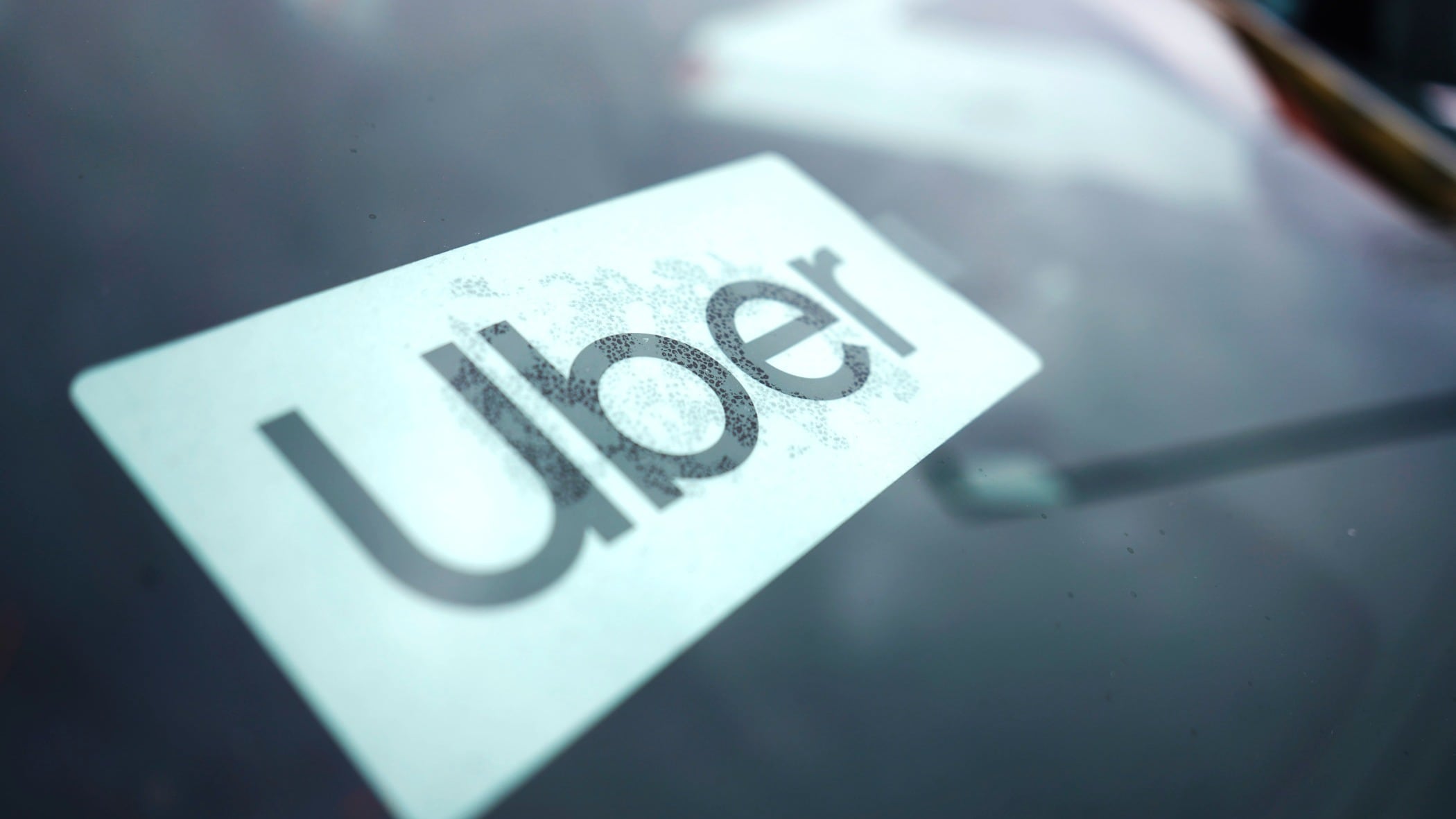
An Uber sign is displayed inside a car in Palatine, Ill., Thursday, Feb. 10, 2022. (AP Photo/Nam Y. Huh, File)
Uber is shutting down alcohol delivery app Drizly, the company confirmed, three years after acquiring the platform for $1.1 billion.
Drizly will officially shut down at the end of March, Uber told The Associated Press. That means orders are open until then, Drizly said in details posted on X, the platform formerly known as Twitter.
"We'll be sure to let you know when it's last call," Drizly wrote in a post Monday.
In a prepared statement, Uber's senior vice president of delivery Pierre Dimitri Gore-Coty said that the company decided to close Drizly's business and "focus on our core Uber Eats strategy of helping consumers get almost anything — from food to groceries to alcohol — all on a single app."
Uber purchased Drizly in a cash-and-stock deal back in 2021. The Boston-based subsidiary continued to operate as a standalone app, with its marketplace also integrated into the Uber Eats platform.
Drizly currently delivers beer, wine and spirits in states where it's legal, and partners with retailers across North America.
Regulators accused the alcohol delivery app of security failures several years ago that exposed personal information of some 2.5 million customers. To resolve these allegations, Drizly later agreed to tighten security and limit data collection.
Axios first reported on Uber's decision to shutter Drizly Monday.
In a Tuesday email to The AP, Uber said it plans to learn from Drizly's time in the industry as the company continues to grow its own "BevAlc" offerings, which are currently available in 35 U.S. states and 25 countries worldwide. The San Francisco company added that the majority of current Drizly customers also have Uber accounts.
Nvidia smashes earnings with record-breaking revenue and soaring Blackwell demand as shares slip this morning, Barron’s senior writer Adam Levine unpacks it all
Jeff Wagoner, CEO of Outrigger Hospitality Group, discusses the company’s coral preservation initiatives and sustainable practices at their hotels and resorts.
Dena Jalbert, Head of M&A at Align Advisory, discusses the state of mergers and acquisitions in 2025 and beyond, highlighting key trends and opportunities.
Kim Perell, author and entrepreneur, shares actionable tips and tricks to help current and aspiring entrepreneurs kick off 2026 with confidence and momentum.
Computer chipmaker Nvidia is poised to release a quarterly earnings report that is expected to either deepen a recent downturn in the stock market or prompt an ebullient sigh of relief among investors increasingly worried the world’s most valuable company is perched upon an artificial intelligence bubble about to burst.
Emera CEO Scott Balfour discusses soaring energy demand, AI-driven grid challenges, clean-power investments, and how the company is building a resilient future.
JB Mackenzie discusses Robinhood’s new entertainment prediction markets, letting users engage with pop culture, award shows, and more through low-stakes bets.
Rhett Power shares his startup journey, lessons from his early years and insights from his book on overcoming negative self-talk to lead with confidence.
Despite inflation, Americans aren’t giving up the gym. Crunch Fitness CEO Jim Rowley discusses strong growth, value-driven expansion and what the future holds.
Home prices far outpacing incomes, low inventory, and higher living costs are reshaping the market. WSJ’s Veronica Dagher breaks down the challenges ahead.