WASHINGTON (AP) — President Donald Trump’s expansive new tariffs reverse a decades-long global trend of lower trade barriers and are likely, economists say, to raise prices for Americans by thousands of dollars each year while sharply slowing the U.S. economy.
The White House is gambling that other countries will also suffer enough pain that they will open up their economies to more American exports, leading to negotiations that would reduce the tariffs imposed Wednesday.
Or, the White House hopes, companies will reverse their moves toward global supply chains and bring more production to the United States to avoid higher import taxes.
How will Americans react?
But a key question for the Trump administration will be how Americans react to the tariffs. If prices rise noticeably and jobs are lost, voters could turn against the duties and make it harder to keep them in place for the time needed to encourage companies to return to the U.S.
The Yale Budget Lab estimates the Trump administration's tariffs would cost the average household $3,800 in higher prices this year. That includes the 10% universal tariff plus much higher tariffs on about 60 countries announced Wednesday, as well as previous import taxes on steel, aluminum and cars. Inflation could top 4% this year, from 2.8% currently, while the economy may barely grow, according to estimates by Nationwide Financial.
Investors turned thumbs-down on the new duties Thursday, with the S&P 500 index dropping 4.8% at the close of trading, its worst day since the pandemic. The Dow Jones Industrial Average plunged more than 1,600 points.
Still, Trump was upbeat Thursday when asked about the stock market drop.
“I think it’s going very well,” he said. “We have an operation, like when a patient gets operated on and it’s a big thing. I said this would exactly be the way it is."
The average U.S. tariff could rise to nearly 25% when the tariffs are fully implemented April 9, economists estimate, higher than in more than a century, and higher than the 1930 Smoot-Hawley tariffs that are widely blamed for worsening the Great Depression.
“The president just announced the de facto separation of the U.S. economy from the global economy,” said Mary Lovely, senior fellow at the Peterson Institute for International Relations. “The stage is set for higher prices and slower growth over the long term."
Commerce Secretary Howard Lutnick argued the policies will help open markets overseas for U.S. exports.
“I expect most countries to start to really examine their trade policy towards the United States of America, and stop picking on us,” he said on CNBC Thursday. ”This is the reordering of fair trade.”
Mixed feelings among Americans so far
Bob Lehmann, 73, who stopped by a Best Buy in Portland, Oregon, Wednesday opposed the tariffs. “They’re going to raise prices and cause people to pay more for daily living,” he said.
Mathew Hall, a 64-year-old paint contractor, called the tariffs a “great idea” and said potential price increases in the short term were worth it.
“I believe in the long term, it’s going to be good,” he said, adding that he felt the U.S. had been taken advantage of.
But a former trade official from Trump’s first term, speaking on condition of anonymity to talk candidly about the impact, suggested that Americans, including those who voted for Trump, may have difficulty accepting the stiff duties.
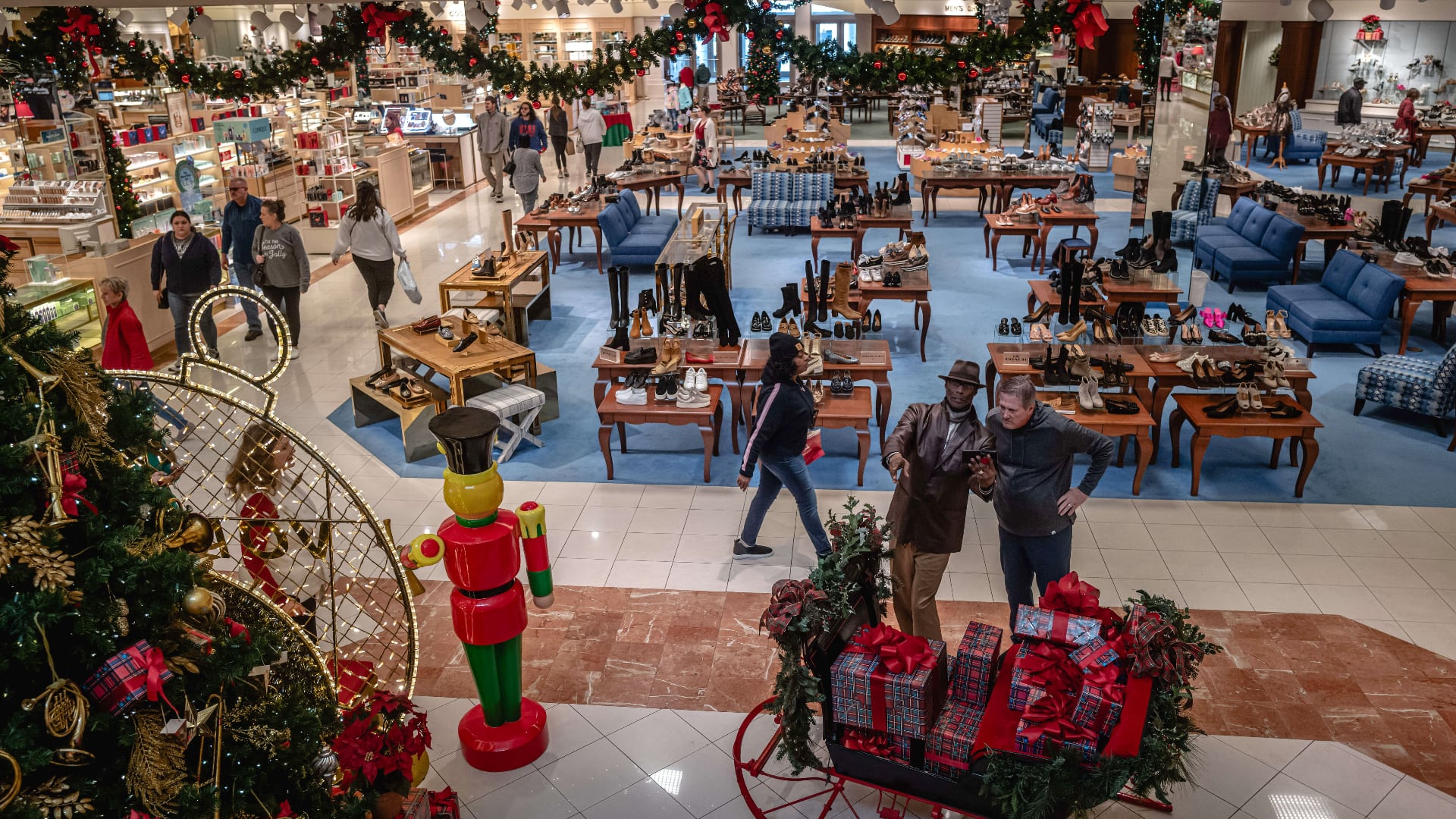
Americans “have never faced tariffs like this,” the former official said Thursday. “The downstream impact on clothing and shoe stores, it’s going to be pretty significant. So we’ll have to see how the Trump voters view this ... and how long their support for these policies goes.”
On Thursday, automaker Stellantis, which owns the Jeep, Citroen and Ram brands, said it would temporarily halt production at plants in Canada and Mexico in response to Trump's 25% tax on imported cars. The reduced output means the company is temporarily laying off 900 workers at plants in Michigan and Indiana.
Some exporters overseas may cut their prices to offset some of the tariffs, and U.S. retailers could eat some of the cost as well. But most economists expect much of the tariffs to bring higher prices.
Clothing, shoes, furniture could get more expensive
The tariffs will hit many Asian countries hard, with duties on Vietnamese imports rising to 46% and on Indonesia to 32%. Tariffs on some Chinese imports will be as high as 79%. Those three countries are the top sources of U.S. shoe imports, with Nike making about half its shoes last year and one-third of its clothes in Vietnam.
The Yale Budget Lab estimates all Trump’s tariffs this year will push clothing prices 17% higher.
On Thursday, the Home Furnishings Association, which represents more than 13,000 U.S. furniture stores, predicted the tariffs will increase prices between 10% and 46%. Vietnam and China are the top furniture exporters to the U.S.
It said manufacturers in Asia are offsetting some of the costs by discounting their products and lowering ocean freight rates, but that won't be enough to avoid price hikes. Even domestically made furniture often relies on imported components.
“While many in the industry support the long-term goal of reshoring manufacturing, the reality is that it will take at least a decade to scale domestic production,” Home Furnishings Association CEO Shannon Williams said in a statement. “Permitting, training a skilled workforce and managing the higher costs of U.S. manufacturing are significant hurdles.”
At Gethsemane Garden Center in Chicago, there are Canadian-grown tulip, daffodil and hyacinth bulbs, though only about 5% of center plants are imported. Thousands of lemon cypress trees from Canada are sold year-round and Canadian mums are sold in the fall.
Regas Chefas, whose family has owned Gethsemane for decades, says all the tariffs won't be passed onto customers.
“We’re going to absorb some of the increase. The growers will absorb some of the increases and then the customers will pay a little bit higher price,” he said.
The Consumer Brands Association, which represents Coca-Cola, General Mills, Nestle, Tyson and Del Monte as well as Procter & Gamble and Colgate-Palmolive, said its companies already make the majority of their goods in the U.S.
But there are critical ingredients and inputs — like wood pulp for toilet paper — that are imported because of scarce domestic availability. Cinnamon is harvested from trees that can’t survive in the U.S.. Domestic production of coffee and cocoa is also limited.
“We encourage President Trump and his trade advisers to fine-tune their approach and exempt key ingredients and inputs in order to protect manufacturing jobs and prevent unnecessary inflation at the grocery store,” said Tom Madrecki, the association’s vice president of supply chain resiliency.
Outside a Tractor Supply south of Denver, two family members on opposite sides of the political spectrum debated the tariffs.
Chris Theisen, a 62-year-old Republican, said: “I feel a good change coming on, I feel it’s going to be hard, but you don’t go to the gym and walk away and say, ’God, I feel great.”
Nayen Shakya, a Democrat and Theisen’s great nephew, said higher prices are already a hardship. At the restaurant where he works, menu prices have been raised to account for higher ingredient costs.
“It’s really easy sometimes to say some things in a vague way that everyone can agree with that is definitely more complex under the surface,” said Shakya. "The burden of the increased prices is already going to the consumer.”
Listening to his nephew, Theisen added: “I understand this side of it, too."
“I ain’t got no crystal ball. I hope it works out good.”
___
AP Writers Paul Wiseman, Jesse Bedayn, Dee-Ann Durbin, and Claire Rush contributed to this report. Rush reported from Portland, Durbin from Detroit, and Bedayn from Colorado. AP Photographer Erin Hooley contributed from Chicago.