NEW YORK (AP) — President Donald Trump is opening a new salvo in his tariff war, targeting films made outside the U.S.
In a post Sunday night on his Truth Social platform, Trump said he has authorized the Department of Commerce and the Office of the U.S. Trade Representative to slap a 100% tariff “on any and all Movies coming into our Country that are produced in Foreign Lands.”
“The Movie Industry in America is DYING a very fast death,” he wrote, complaining that other countries “are offering all sorts of incentives to draw” filmmakers and studios away from the U.S. ”This is a concerted effort by other Nations and, therefore, a National Security threat. It is, in addition to everything else, messaging and propaganda!”
The White House said Monday that it was figuring out how to comply with the president’s wishes.
“Although no final decisions on foreign film tariffs have been made, the Administration is exploring all options to deliver on President Trump’s directive to safeguard our country’s national and economic security while Making Hollywood Great Again,” said spokesperson Kush Desai.
It’s common for both large and small films to include production in the U.S. and in other countries. Big-budget movies like the upcoming “Mission: Impossible — The Final Reckoning," for instance, are shot around the world.
Incentive programs for years have influenced where movies are shot, increasingly driving film production out of California and to other states and countries with favorable tax incentives, like Canada and the United Kingdom.
Yet Trump’s tariffs are designed to lead consumers toward American products. And in movie theaters, American-produced movies overwhelmingly dominate the domestic marketplace.
China has ramped up its domestic movie production, culminating in the animated blockbuster “Ne Zha 2” grossing more than $2 billion this year. But even then, its sales came almost entirely from mainland China. In North America, it earned just $20.9 million.
In New Zealand, where successive governments have offered rebates and incentives in recent years to draw Hollywood films to the country, the film industry has generated billions of dollars in tourism revenue driven by the “Lord of the Rings” and “Hobbit” films, which featured the country’s pristine and scenic vistas. More recently, the blockbuster “Minecraft” movie was filmed entirely in New Zealand, and U.S. productions in 2023 delivered $1.3 billion New Zealand dollars ($777 million) to the country in return for NZ$200 million in subsidies, according to government figures.
New Zealand Prime Minister Christopher Luxon said he was awaiting more details of Trump’s measures before commenting on them but would continue to pitch to filmmakers abroad, including in India’s Bollywood. “We’ve got an absolutely world class industry,” he said. “This is the best place to make movies, period, in the world.”
The Motion Picture Association, which represents major U.S. film studios and streaming services, didn’t immediately respond to messages Sunday evening.
The MPA’s data shows how much Hollywood exports have dominated cinemas. According to the MPA, the American movies produced $22.6 billion in exports and $15.3 billion in trade surplus in 2023.
Trump, a Republican, has made good on the “tariff man” label he gave himself years ago, slapping new taxes on goods made in countries around the globe. That includes a 145% tariff on Chinese goods and a 10% baseline tariff on goods from other countries, with even higher levies threatened.
By unilaterally imposing tariffs, Trump has exerted extraordinary influence over the flow of commerce, creating political risks and pulling the market in different directions. There are tariffs on autos, steel and aluminum, with more imports, including pharmaceutical drugs, set to be subject to new tariffs in the weeks ahead.
Trump has long voiced concern about movie production moving overseas.
Shortly before he took office, he announced that he had tapped actors Mel Gibson, Jon Voight and Sylvester Stallone to serve as “special ambassadors” to Hollywood to bring it “BACK — BIGGER, BETTER, AND STRONGER THAN EVER BEFORE!”
U.S. film and television production has been hampered in recent years, with setbacks from the COVID-19 pandemic, the Hollywood guild strikes of 2023 and the recent wildfires in the Los Angeles area. Overall production in the U.S. was down 26% last year compared with 2021, according to data from ProdPro, which tracks production.
The group’s annual survey of executives, which asked about preferred filming locations, found no location in the U.S. made the top five, according to the Hollywood Reporter. Toronto, the U.K., Vancouver, Central Europe and Australia came out on top, with California placing sixth, Georgia seventh, New Jersey eighth and New York ninth.
The problem is especially acute in California. In the greater Los Angeles area, production last year was down 5.6% from 2023 according to FilmLA, second only to 2020, during the peak of the coronavirus pandemic. Last, October, Gov. Gavin Newsom, a Democrat, proposed expanding California’s Film & Television Tax Credit program to $750 million annually, up from $330 million.
Other U.S. cities like Atlanta, New York, Chicago and San Francisco have also used aggressive tax incentives to lure film and TV productions. Those programs can take the form of cash grants, as in Texas, or tax credits, which Georgia and New Mexico offer.
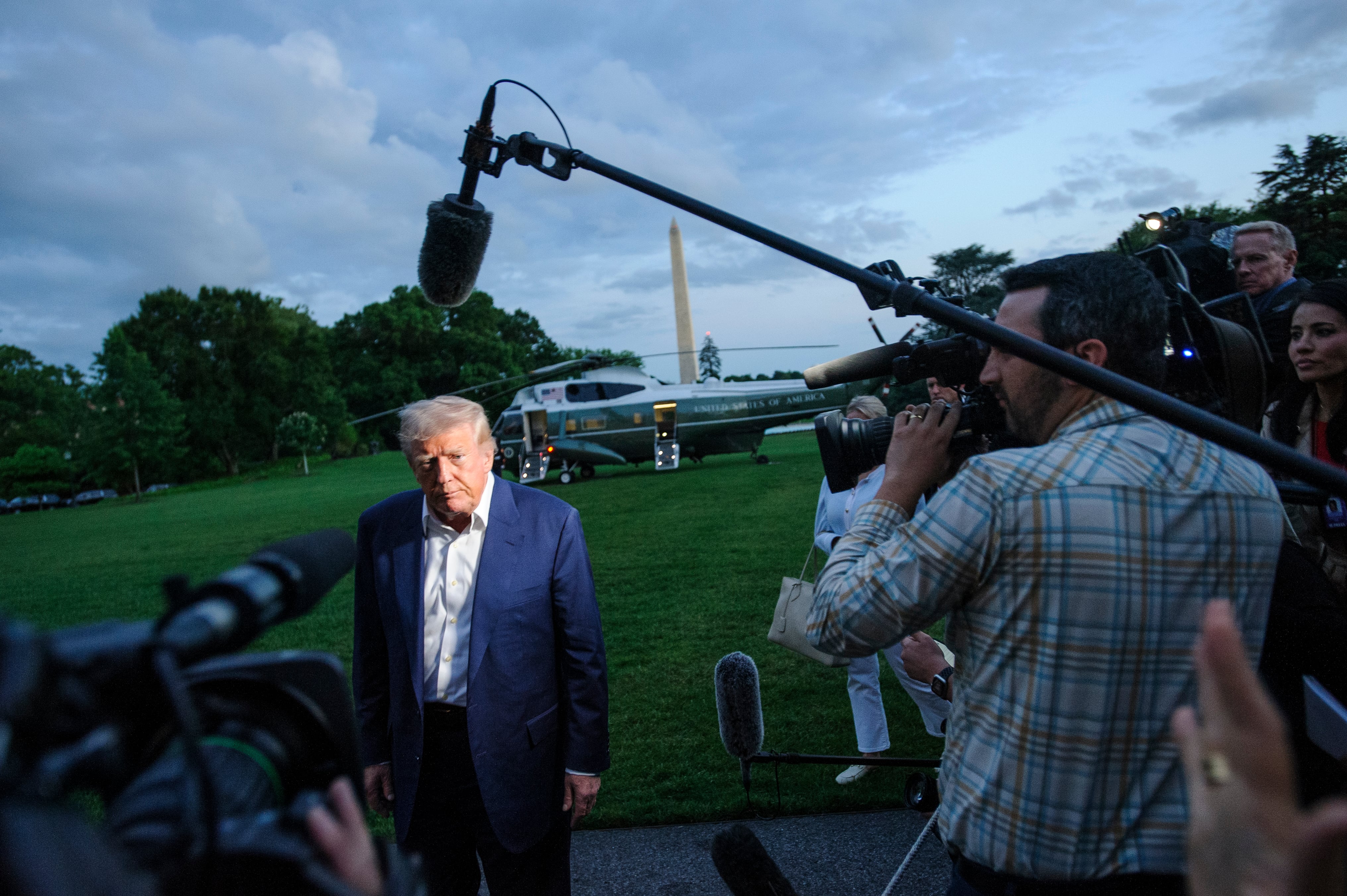
“Other nations have been stealing the movie-making capabilities from the United States,” Trump told reporters at the White House on Sunday night after returning from a weekend in Florida. “If they’re not willing to make a movie inside the United States we should have a tariff on movies that come in.”
___
Associated Press writers Gary Fields in Washington and Charlotte Graham-McLay in Wellington, New Zealand, contributed to this report.