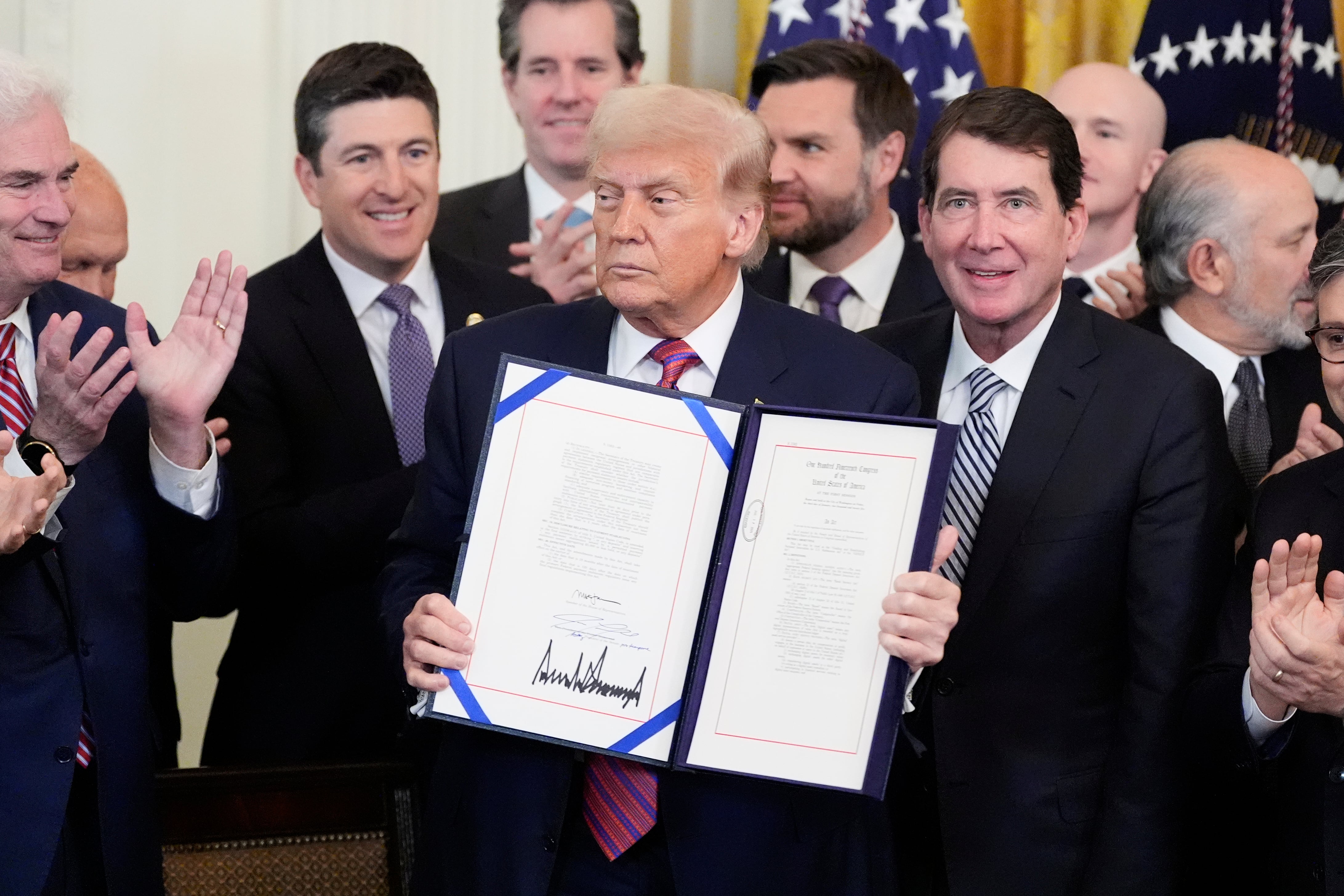
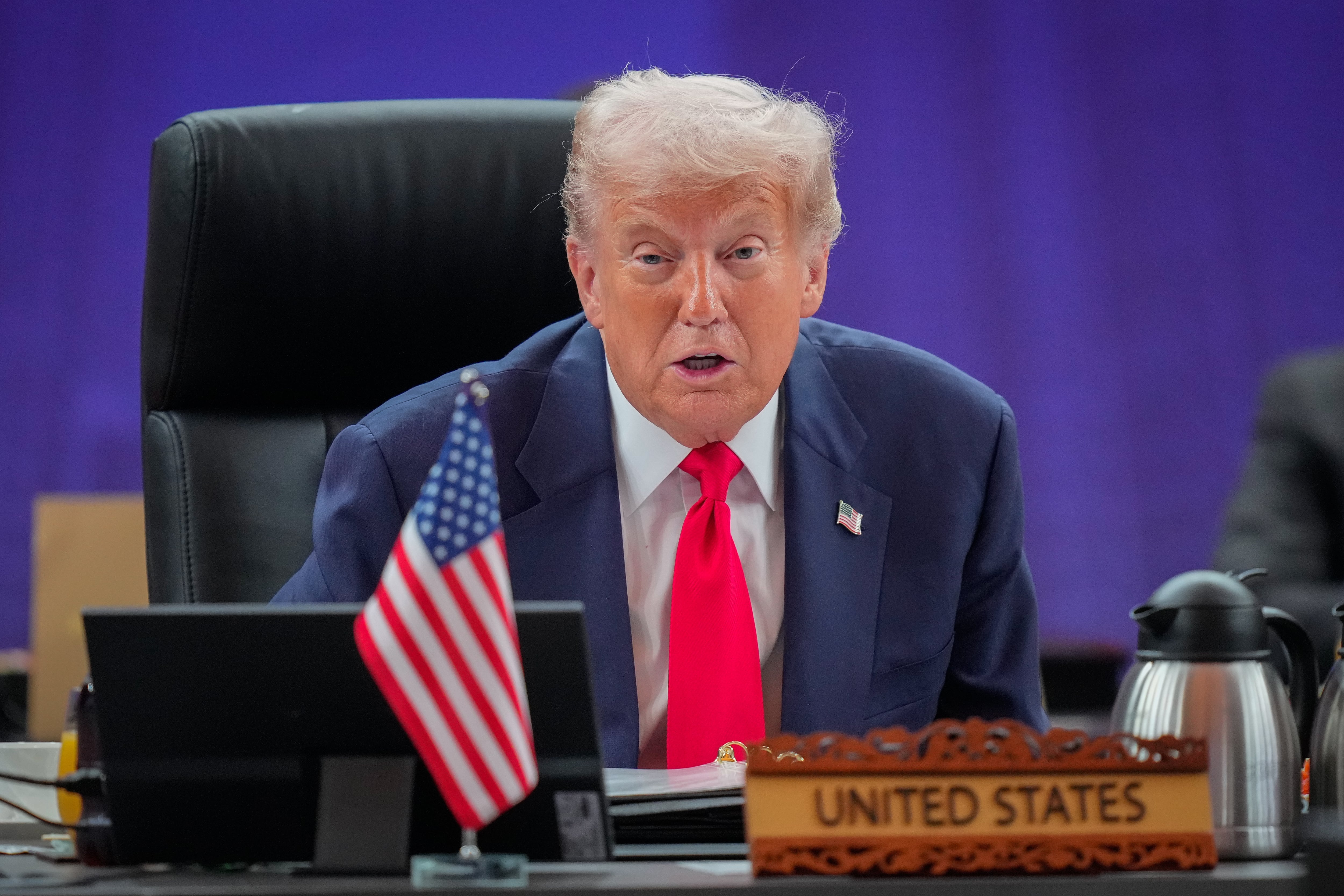
WASHINGTON (AP) — President Donald Trump on Friday signed into law new regulations for a type of cryptocurrency, a major milestone for an industry that has spent heavily to strengthen its legitimacy and political might.
The GENIUS Act sets initial guardrails and consumer protections for stablecoins, which are tied to assets like the U.S. dollar to reduce price volatility compared with other forms of cryptocurrency. It passed both the House and Senate with wide bipartisan margins.
The new law is meant to bolster consumer confidence in the crypto industry, which has quickly become a major power player in Washington thanks to massive campaign donations and spending on lobbying. Its passage comes as Trump had repeatedly pledged to make the U.S. the “crypto capital of the world.”
“For years you were mocked and dismissed and counted out,” Trump told crypto industry executives at a White House bill signing attended by about 200 people, including several top GOP lawmakers. “This signing is a massive validation of your hard work and your pioneering spirit.”
The crypto industry has long complained it was unfairly targeted by former President Joe Biden’s administration and spent heavily to help Trump win last year’s election.
The president lavished praise on crypto leaders during his speech Friday, saying “nobody has gained the respect in such a short period of time.”
Trump said helping the cryptocurrency industry was “good for the dollar and it’s good for the country.”
“That’s why I backed you at an early stage,” said Trump, who had previously been a skeptic of cryptocurrency before embracing it. His administration has taken several early steps to boost the crypto industry, including the Securities and Exchange Commission dropping several enforcement actions against large crypto companies.
Trump then added a candid admission about the political calculus of his support for the crypto industry: “And I also did it for the votes,” he said, drawing laughter from the audience.
The president also joked that lawmakers had named the GENIUS Act after him. The acronym stands for “Guiding and Establishing National Innovation for U.S. Stablecoins.”
The use of stablecoins has grown dramatically in recent years. Circle, the U.S.-based issuer of one of the most popular cryptocurrencies, made its debut on the New York Stock Exchange earlier this year and quickly saw its value soar amid heavy interest from crypto enthusiasts and investors. Stablecoin issuers make profits by collecting the interest on the assets they hold in reserve to back their stablecoins.
A provision in the GENIUS Act bans members of Congress and their families from profiting off stablecoins. But that prohibition does not extend to the president and his family, even as Trump builds a crypto empire from the White House. His family holds a significant stake in World Liberty Financial, a crypto project that launched its own stablecoin earlier this year and received an early boost from an investment fund in the United Arab Emirates.
The House also passed two other bills Thursday that are meant to help the crypto industry. One creates a new market structure for cryptocurrency, and the other bans the Federal Reserve from issuing a new digital currency. Both measures now go to the Senate.
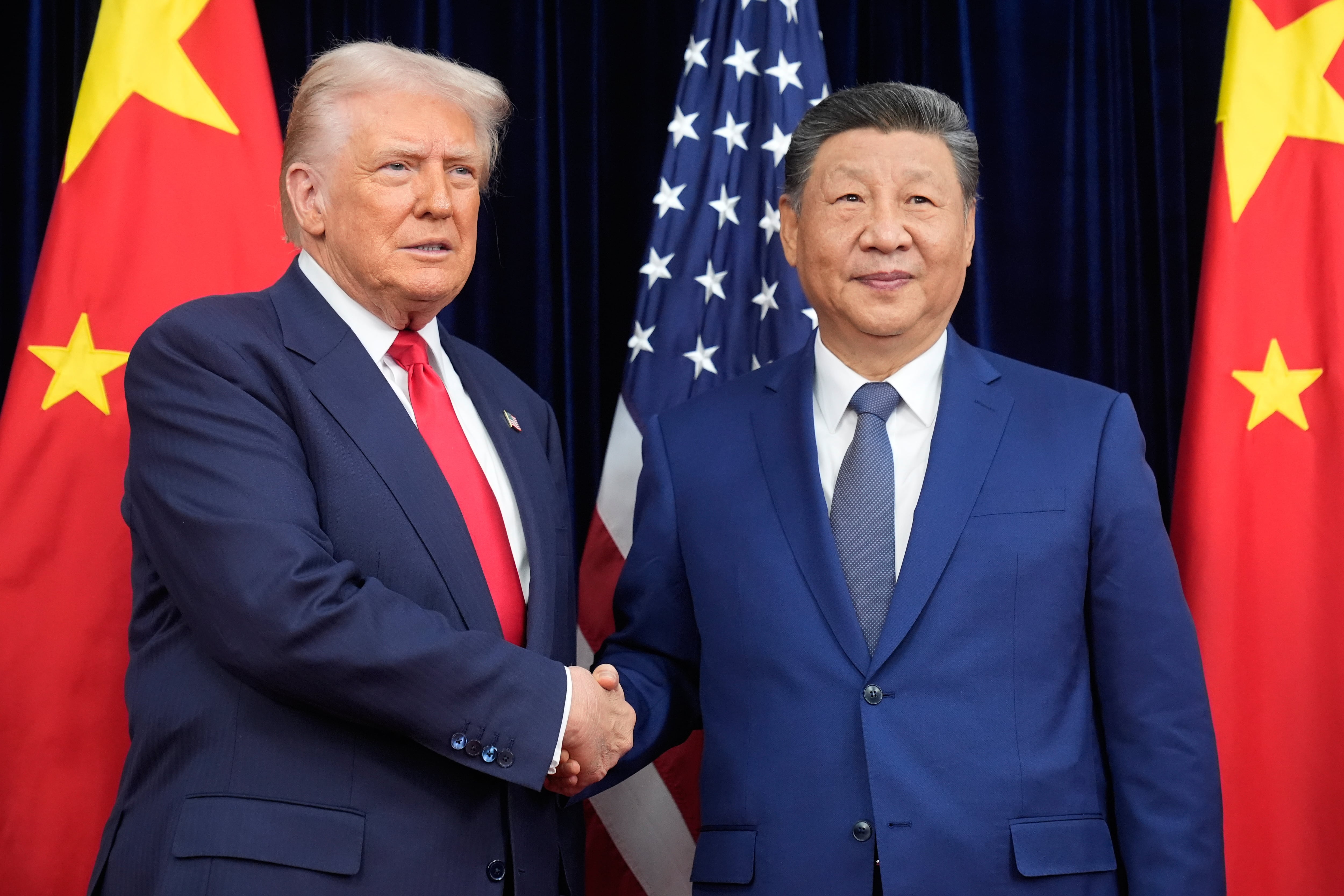
President Donald Trump said he has decided to lower his combined tariff rates on imports of Chinese goods to 47% after talks with Chinese leader Xi Jinping on curbing fentanyl trafficking.
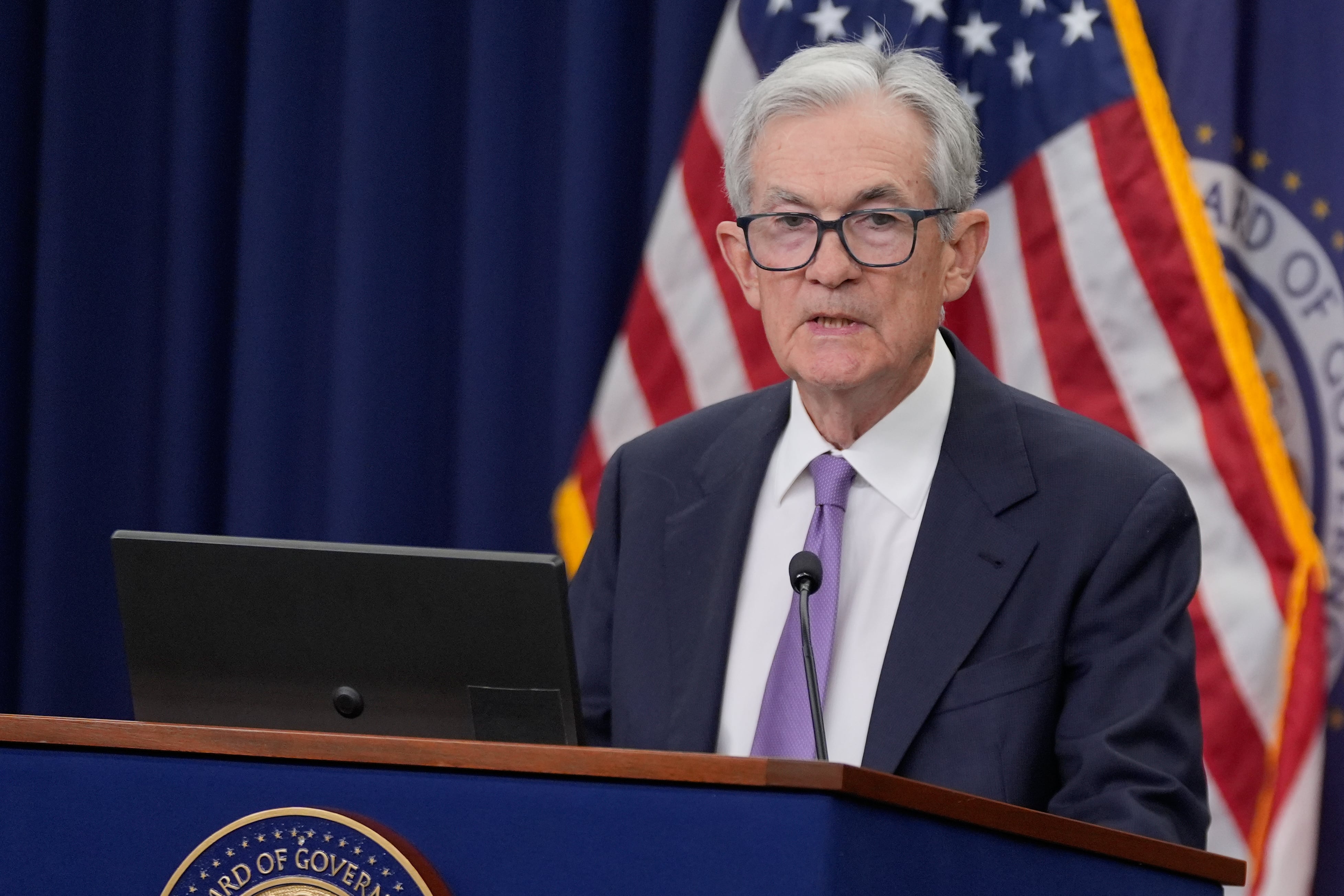
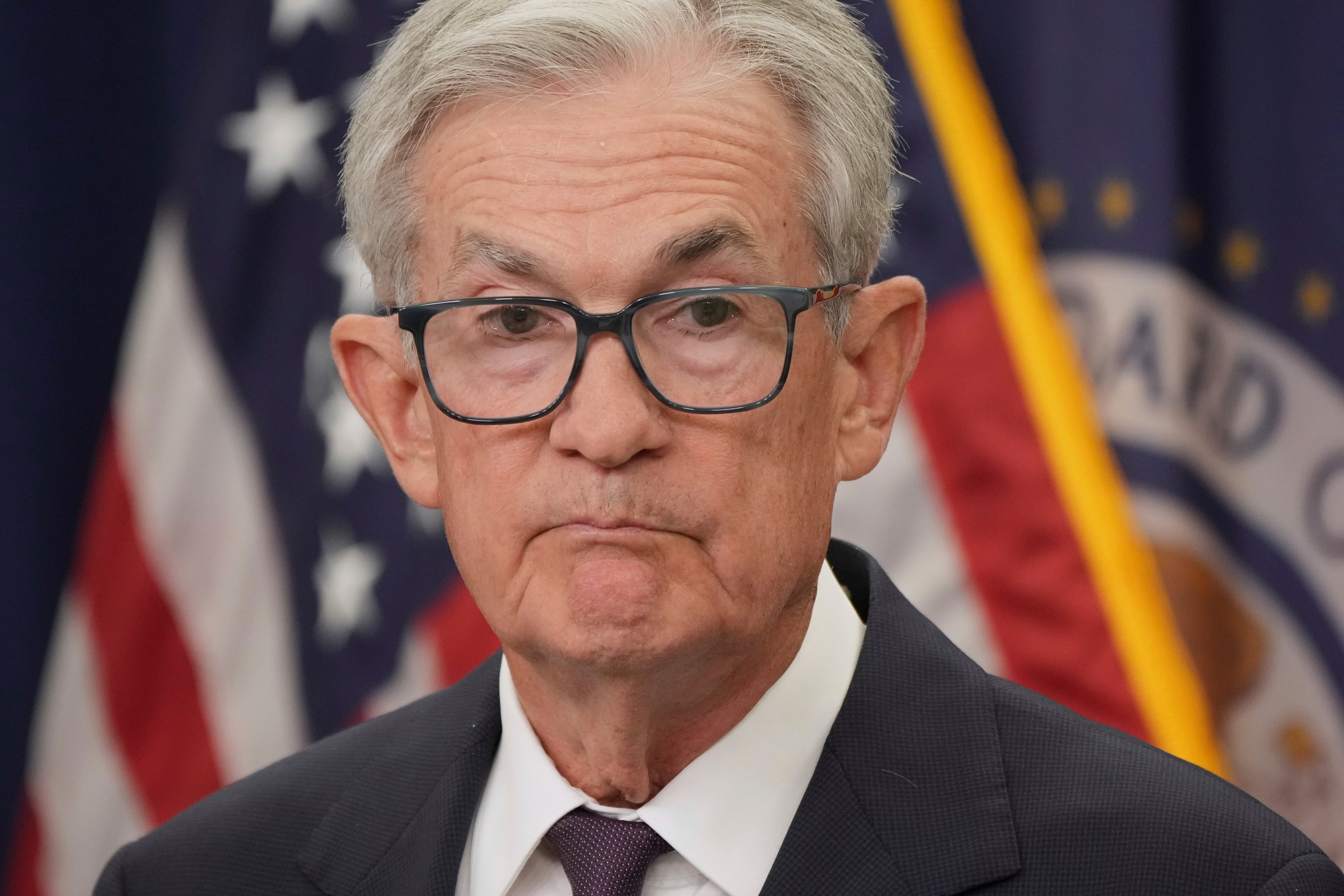
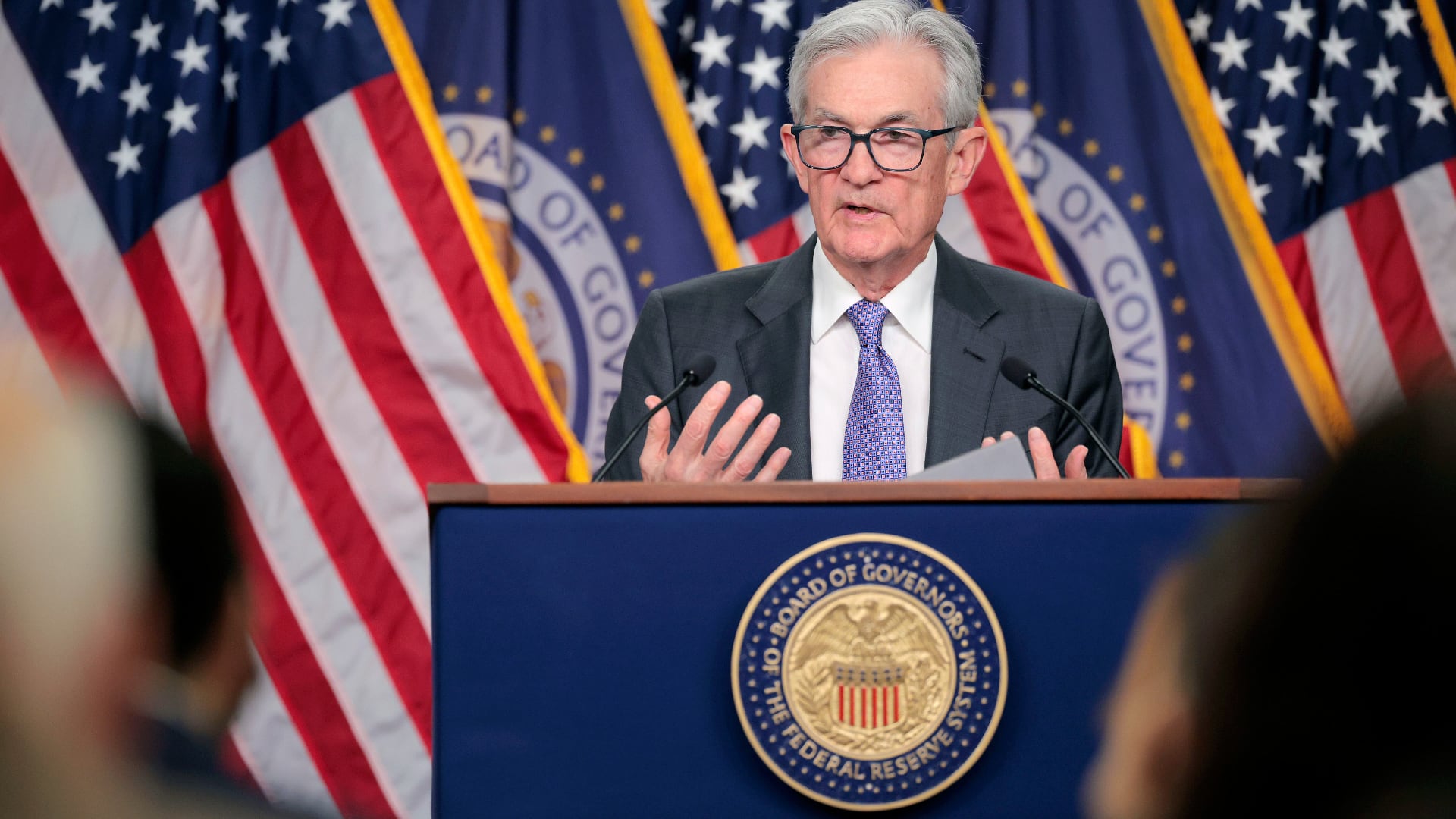
The Federal Reserve cut its key interest rate Wednesday for a second time this year as it seeks to shore up economic growth and hiring even as inflation stays elevated. The move comes amid a fraught time for the central bank, with hiring sluggish and yet inflation stuck above the Fed’s 2% target. Compounding its challenges, the central bank is navigating without much of the economic data it typically relies on from the government. The Fed has signaled it may reduce its key rate again in December but the data drought raises the uncertainty around its next moves. Fed Chair Jerome Powell told reporters that there were “strongly differing views” at the central bank's policy meeting about to proceed going forward.
The Federal Reserve will almost certainly cut its key interest rate on Wednesday and could signal it expects another cut in December as the central bank seeks to bolster hiring. A cut Wednesday would be the second this year and could benefit consumers by bringing down borrowing costs for mortgages and auto loans. Since Fed chair Jerome Powell strongly signaled in late August that rate cuts were likely this year, the average 30-year mortgage rate has fallen to about 6.2% from 6.6%. Still, the Fed is navigating an unusual period for the U.S. economy and its future moves are harder to anticipate than is typically the case.
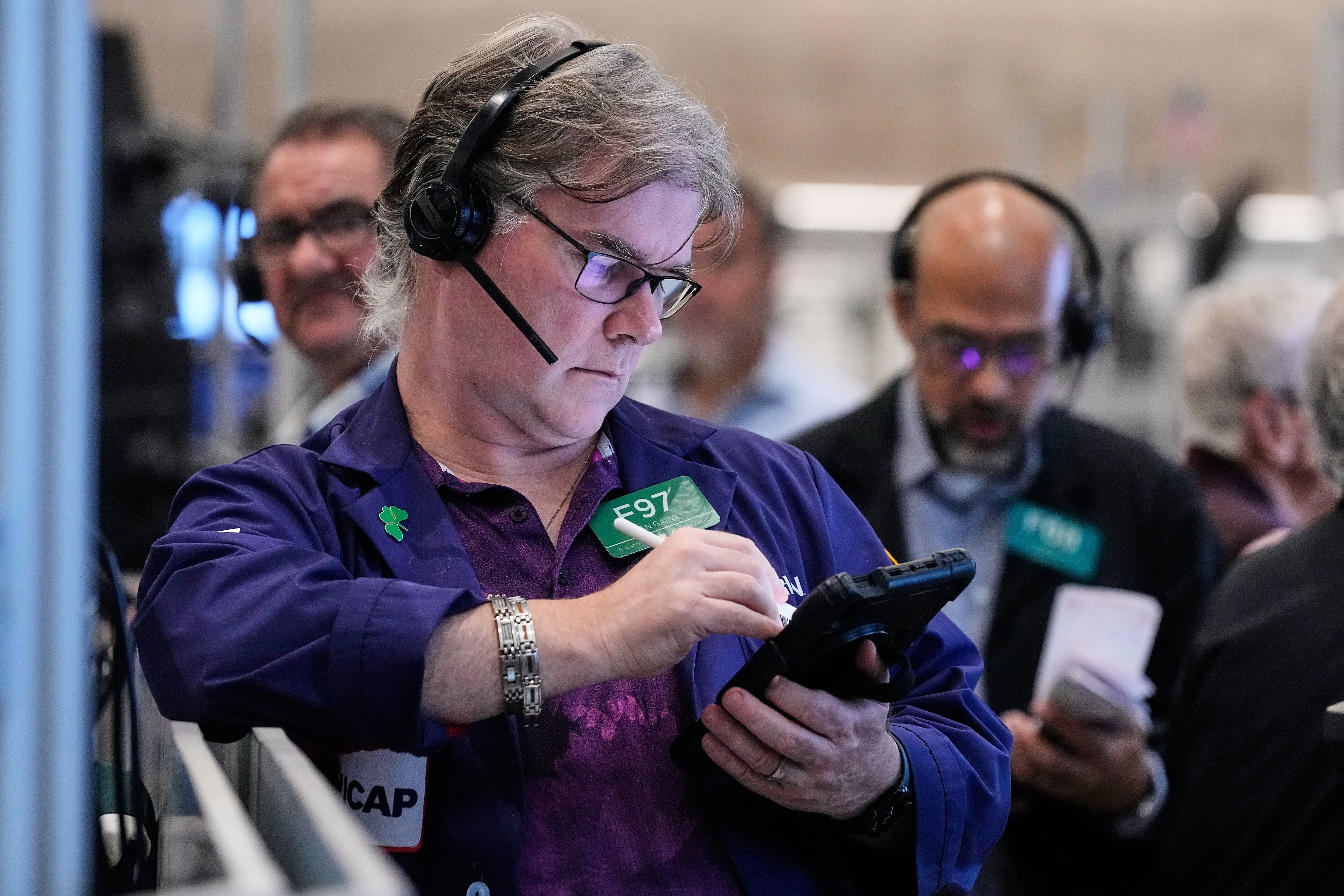
Stocks are rallying toward more records ahead of a week packed with potentially market-moving events. The S&P 500 rose 1% Monday. The Dow Jones Industrial Average added 224 points, and the Nasdaq composite jumped 1.7%. Stocks also climbed in Asia ahead of a meeting on Thursday between the heads of the United States and China. The hope is that the talks could clear rising tensions between the world’s two largest economies. This upcoming week will feature profit reports from some of Wall Street's most influential companies and a meeting by the Federal Reserve on interest rates. Gold fell back toward $4,000 per ounce.
U.S. and Chinese officials say a trade deal between the world’s two largest economies is drawing closer. The sides have reached an initial consensus for President Donald Trump and Chinese leader Xi Jinping to aim to finalize during their high-stakes meeting Thursday in South Korea. Any agreement would be a relief to international markets. Trump's treasury secretary says discussions with China yielded preliminary agreements to stop the precursor chemicals for fentanyl from coming into the United States. Scott Bessent also says Beijing would make “substantial” purchases of soybean and other agricultural products while putting off export controls on rare earth elements needed for advanced technologies.
Some seniors say the Social Security Administration's cost-of-living adjustment won’t help much in their ability to pay for their daily expenses. The agency announced Friday the annual cost-of-living adjustment will go up by 2.8% in 2026, translating to an average increase of more than $56 for retirees every month. Eighty-year-old Florence, South Carolina, resident Linda Deas says it does not match the current "affordability crisis.” The benefits increase will go into effect for Social Security recipients beginning in January. Friday’s announcement was meant to be made last week but was delayed because of the federal government shutdown. Recipients got a 2.5% COLA boost in 2025 and a 3.2% increase in 2024.
Wall Street is heading for records after an update said U.S. households are feeling a bit less pain from inflation than feared. The S&P 500 climbed 1% Friday and was on track to top its all-time high set earlier this month. The Dow Jones Industrial Average jumped 529 points, and the Nasdaq composite rose 1.3%. Both are also heading toward records. The inflation data could clear the way for the Federal Reserve to keep cutting interest rates in hopes of helping the slowing job market. A strong earnings reports from Ford Motor and continued gains for AI stars also drove stocks higher.
Federal Reserve Chair Jerome Powell says that a sharp slowdown in hiring poses a growing risk to the U.S. economy.
Three researchers who probed the process of business innovation have won the Nobel memorial prize in economics for explaining how new products and inventions promote economic growth and human welfare, even as they leave older companies in the dust.
U.S. stocks are rising and recovering some of their sell-off from Friday. The S&P 500 climbed 1.6%.