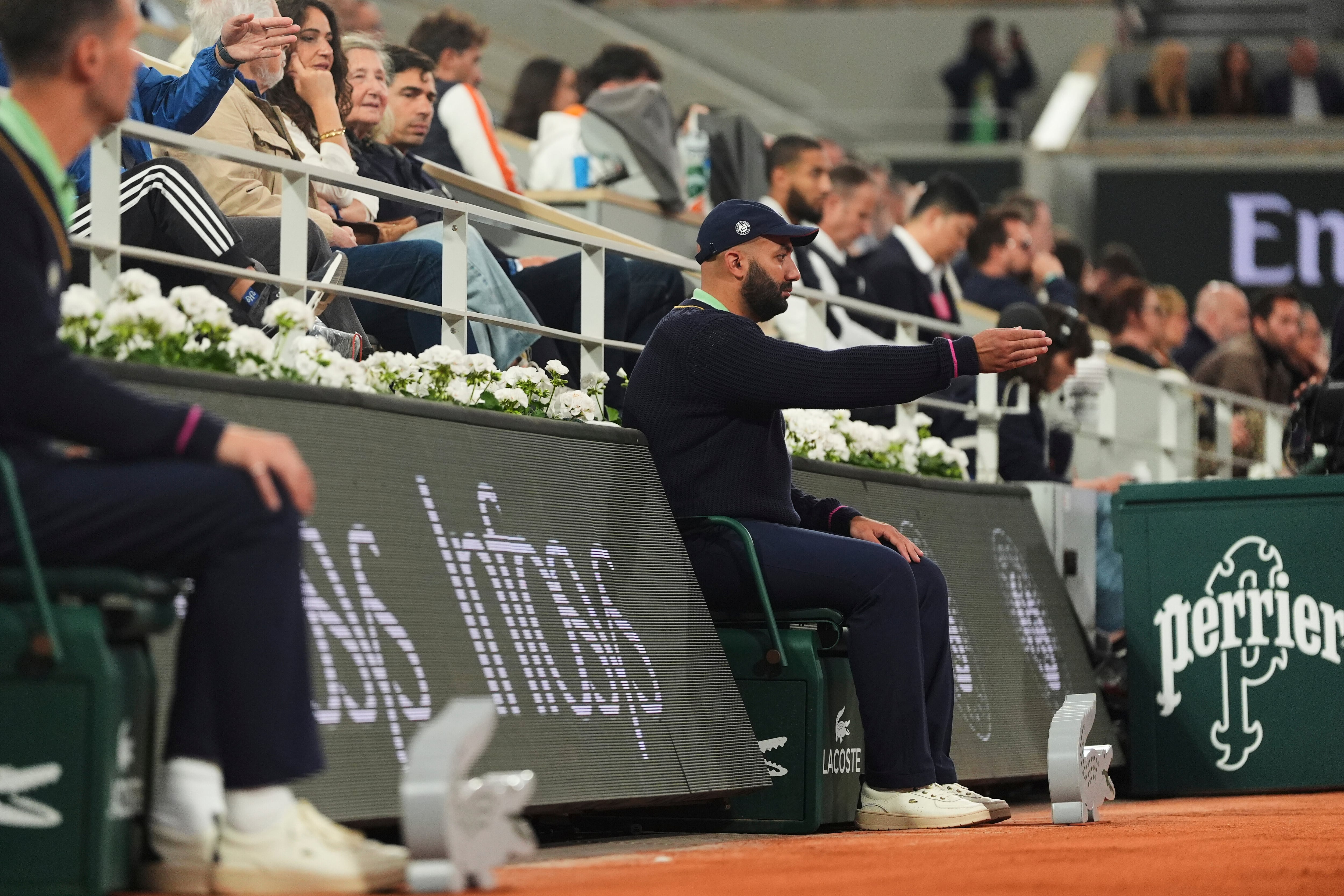
PARIS (AP) — For Novak Djokovic, this is a relatively easy call: He, like many players, thinks the French Open is making a mistake by eschewing the electronic line-calling used at most big tennis tournaments and instead remaining old school by letting line judges decide whether serves or other shots land in or out.
Plenty of sports, from soccer and baseball to the NFL, are replacing, or at least helping, officials with some form of high-tech replays or other technology. Tennis, too, is following that trend, except at Roland-Garros, where competition continues through June 8.
Even the longest-running and most tradition-bound of the majors, Wimbledon, is — gasp! — abandoning line judges and moving to an automatic system this year. The WTA and ATP added machine-generated rulings this season for tour events on red clay, the surface at the French Open. But Grand Slam hosts can do what they want, and the French tennis federation is keeping the human element.
The French Open is pushing back against modern technology
Djokovic, the 24-time major champion scheduled to play his first-round match in Paris on Tuesday, understands why folks might prefer the way to keep things the way they were for more than a century in his sport. He gets why there could be an inclination to shy away from too much change in a world now drowning in cell phones and streaming and social media.
“You don’t want to give everything away to the technology, right? But if I have to choose between the two, I’m more of a proponent of technology. It’s just more accurate, saves time, and ... (means) less people on the court” said Djokovic, 38, who was disqualified from the 2020 U.S. Open for inadvertently hitting an official with a ball hit out of frustration between games.
That edition of the tournament in New York only placed line judges on its two largest courts, while others used an electronic setup, a nod to the COVID-19 pandemic. The Australian Open got rid of all line judges in 2021, a first at a tennis major; the U.S. Open did the same later that year.
The French Open remains a holdout, and that’s not likely to change anytime soon.
Don’t expect electronic line-calling at Roland Garros in the near future
“Unless the players are unanimous and come to us and say, ‘We won’t play if there isn’t a machine’ ... then I think we’ve got a great future ahead of us to maintain this style of refereeing,” French federation president Gilles Moretton said, while boasting of the quality of his country’s officials.
Players don’t sound that adamant, although they tend to echo the opinion of 2023 U.S. Open champion Coco Gauff, who is 21: “I mean, I don’t know if it’s like the ‘Gen Z’ in me, but I think if we have the technology, we should use it.”
Still, there is some charm to be found in the choreography of players insisting a call was wrong and chair umpires climbing down for a closer look at a ball mark on the clay. Watch a day of TV coverage from Paris and odds are good that dance will take place — probably more than once.
“That’s what makes clay special, in a way — that you can always review the shots. ... Obviously, you can’t deny that electronic line-calling is the future, and everything is moving towards AI and artificial intelligence,” said Stefanos Tsitsipas, the runner-up to Djokovic at Roland-Garros four years ago. “But me, personally, I wouldn’t mind playing on clay with maybe the judgment of a human instead of a robot.”
Some tennis players resort to taking photos of ball marks
No matter the form of officiating, there invariably are times when athletes — perhaps eyesight or faith strained by heat-of-the-moment tension and an eagerness to be correct — just won’t agree with a call.
That, in turn, can lead to extended arguments and sometimes a scene seen recently: A player grabs a cell phone from the sideline to snap a photo of a mark in a bid to prove, and win, a point.
Aryna Sabalenka, a three-time Slam champ and No. 1 women’s player, and Alexander Zverev, a three-time major finalist, did just that, although they weren’t the first. Back at the 2013 French Open, Sergiy Stakhovsky put down his racket and took a picture of where a ball had landed during a loss to Richard Gasquet; Stakhovsky said then he’d done it before.
“Linespeople mess up sometimes,” said 2023 Australian Open semifinalist Tommy Paul. “Automatic line-calling is going to mess up probably less.”
___
AP Sports Writer Andrew Dampf in Rome contributed.
___
Howard Fendrich has been the AP’s tennis writer since 2002. Find his stories here: https://apnews.com/author/howard-fendrich. More AP tennis: https://apnews.com/hub/tennis