By Mark Sherman
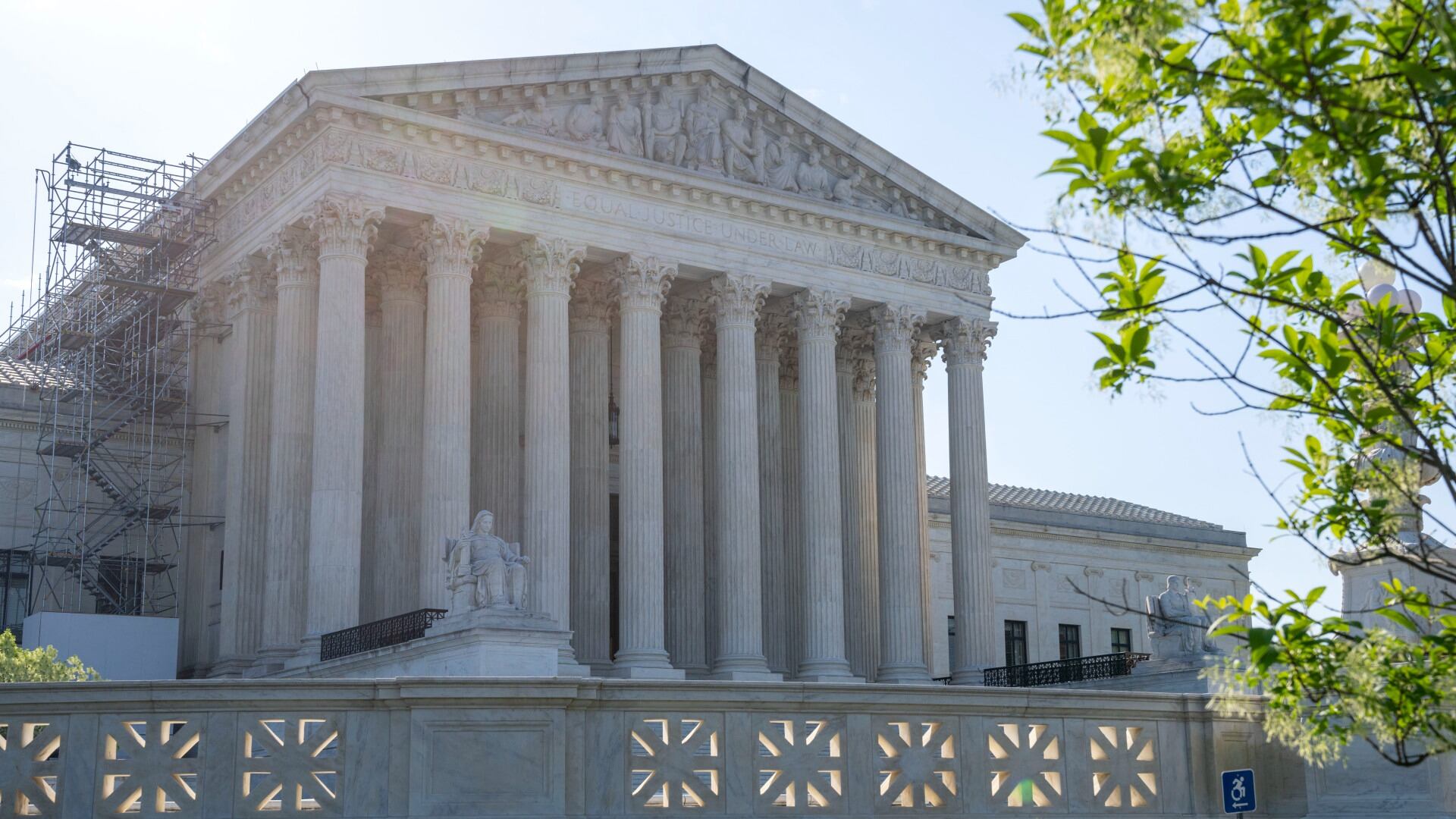
The Supreme Court on Wednesday said it will hear an appeal that could upend hundreds of charges stemming from the Capitol riot, including against former President Donald Trump.
The justices will review a charge of obstruction of an official proceeding that has been brought against more than 300 people. The charge refers to the disruption of Congress' certification of Joe Biden's 2020 presidential election victory over Trump.
That's among four counts brought against Trump in special counsel Jack Smith's case that accuses the 2024 Republican presidential primary front-runner of conspiring to overturn the results of his election loss. Trump is also charged with conspiracy to obstruct an official proceeding.
The court's decision to weigh in on the obstruction charge could threaten the start of Trump's trial, currently scheduled for March 4. The justices separately are considering whether to rule quickly on Trump's claim that he can't be prosecuted for actions taken within his role as president. A federal judge already has rejected that argument.
A lawyer for Trump didn’t immediately return a message seeking comment on the Supreme Court’s decision to review the charge.
The Supreme Court will hear arguments in March or April, with a decision expected by early summer.
The obstruction charge, which carries up to 20 years behind bars, is among the most widely used felony charges brought in the massive federal prosecution following the deadly insurrection on Jan. 6, 2021, when a mob of Trump supporters stormed the Capitol in a bid to keep Biden, a Democrat, from taking the White House.
At least 152 people have been convicted at trial or pleaded guilty to obstructing an official proceeding, and at least 108 of them have been sentenced, according to an Associated Press review of court records.
A lower court judge had dismissed the charge against Joseph Fischer, a former Pennsylvania police officer, and two other defendants, ruling it didn’t cover their conduct. The justices agreed to hear the appeal filed by lawyers for Fischer, who is facing a seven-count indictment for his actions on Jan. 6, including the obstruction charge.
The other defendants are Edward Jacob Lang, of New York’s Hudson Valley, and Garret Miller, who has since pleaded guilty to other charges and was sentenced to 38 months in prison. Miller, who’s from the Dallas area, could still face prosecution on the obstruction charge.
U.S. District Judge Carl Nichols found that prosecutors stretched the law beyond its scope to inappropriately apply it in these cases. Nichols ruled that a defendant must have taken “some action with respect to a document, record or other object” to obstruct an official proceeding under the law.
The Justice Department challenged that ruling, and the appeals court in Washington agreed with prosecutors in April that Nichols’ interpretation of the law was too limited.
Other defendants, including Trump, are separately challenging the use of the charge.
Defense attorney Kira Anne West, who has represented several Jan. 6 defendants charged with obstruction of an official proceeding, said the courts will have to “undo a whole bunch of cases” and adjust many sentences if the Supreme Court rules in their favor.
“This is a watershed day,” she said. “In our world — defense lawyer world — this is huge.”
West represents a man scheduled to be tried in early January on charges including the obstruction count. She doesn’t yet know if she will seek a delay until the Supreme Court resolves the challenge.
More than 1,200 people have been charged with federal crimes stemming from the riot, and more than 700 defendants have pleaded guilty.
Associated Press writers Alanna Durkin Richer in Boston and Michael Kunzelman in Silver Spring, Maryland, contributed to this report.