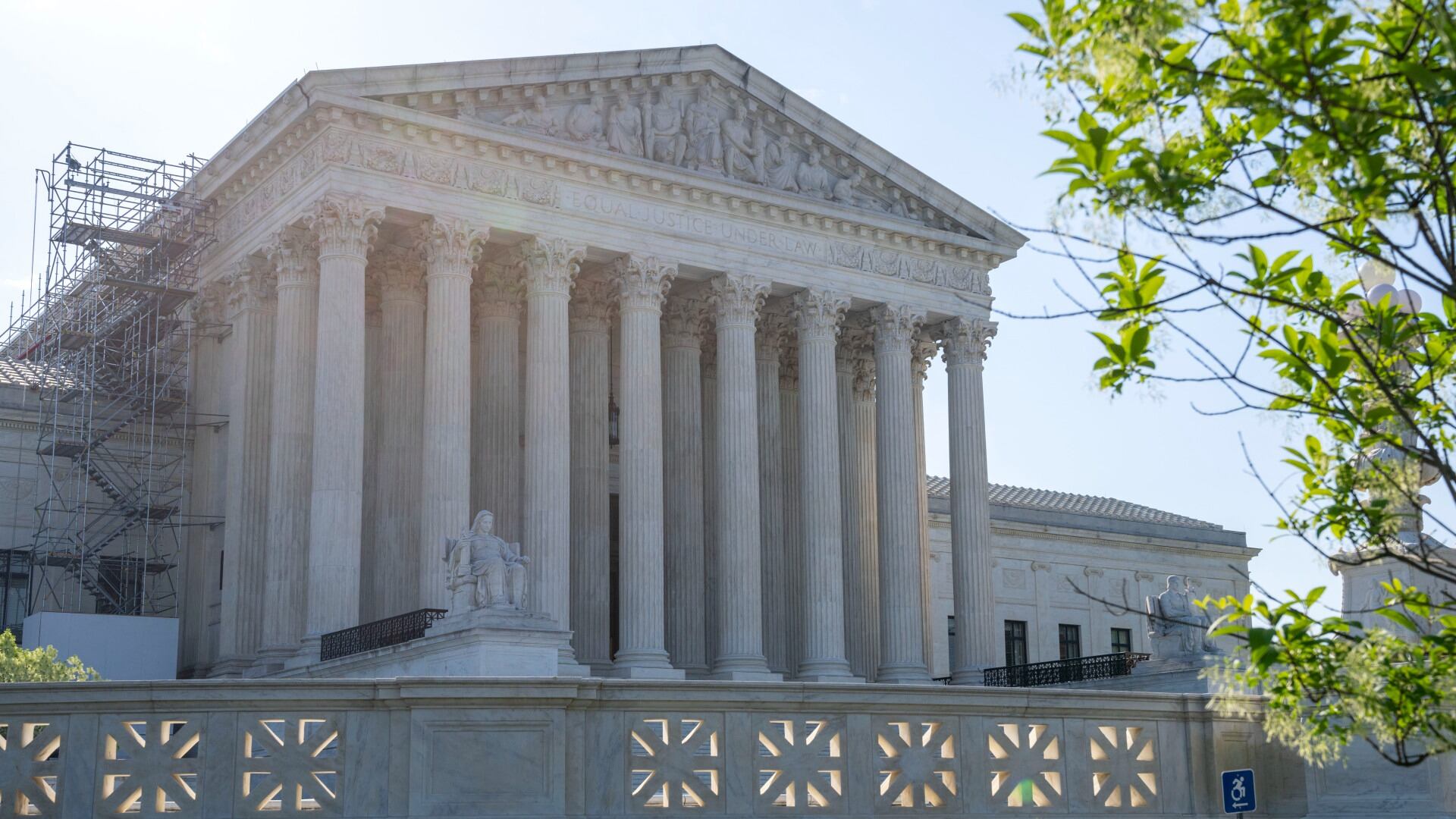
The Supreme Court is seen, Friday, April 21, 2023, ahead of an abortion pill decision in Washington. (AP Photo/Jacquelyn Martin)
The Supreme Court on Tuesday dismissed a case surrounding a Maine hotel that could have made it harder for people with disabilities to learn in advance whether a hotel's accommodations meet their needs.
Hotels and other business interests had urged the justices to limit the ability of so-called testers to file lawsuits against hotels that fail to disclose accessibility information on their websites and through other reservation services.
The information is required by a 2010 Justice Department rule. People who suffer discrimination can sue under the landmark Americans With Disabilities Act, signed into law in 1990.
The justices did not issue a decision on the substance of the case. Instead, they dismissed the case and threw out a lower court ruling in favor of tester lawsuits. The outcome leaves the issue unresolved nationally.
Federal courts in some parts of the country allow such lawsuits. In others, those suits are barred.
The case in front of the court involved whether Deborah Laufer, a woman with disabilities, has the right to sue a hotel in Maine that lacked the accessibility information on its website, despite having no plans to visit it.
In an effort to forestall an unfavorable ruling, Laufer withdrew her lawsuit against the hotel.
As commercial options tighten, more travelers are turning to private aviation. Wheels Up CEO George Mattson breaks down capacity and demand challenges.
Layoffs, hiring slowdowns, and shifting skill demands dominate this year’s job talk. LinkedIn’s Kory Kantenga explains what workers should watch for next.
Retailers face tariffs and cost challenges this holiday season. Wells Fargo's Lauren Murphy shares insights on pricing, promotions, and shopping trends.
Dateability, founded by sisters Jacqueline and Alexa Child, is the only dating app for disabled and chronically ill communities, fostering love without limits.
Some small grocery stores and neighborhood convenience stores are eager for the U.S. government shutdown to end and for their customers to start receiving federal food aid again. Late last month, the Trump administration froze funding for the SNAP benefits that about 42 million Americans use to buy groceries. The U.S. Department of Agriculture says about 74% of the assistance was spent last year at superstores like Walmart and supermarkets like Kroger. Around 14% went to smaller stores that are more accessible to SNAP beneficiaries. A former director of the United Nations World Food Program says SNAP is not only a social safety net for families but a local economic engine that supports neighborhood businesses.
Andy Baehr, Head of Product at CoinDesk Indices, breaks down crypto’s Black Friday crash, Bitcoin dipping under $100K, and what’s driving the market rout.