San Francisco woman gives birth in a Waymo self-driving taxi
By Janie Har
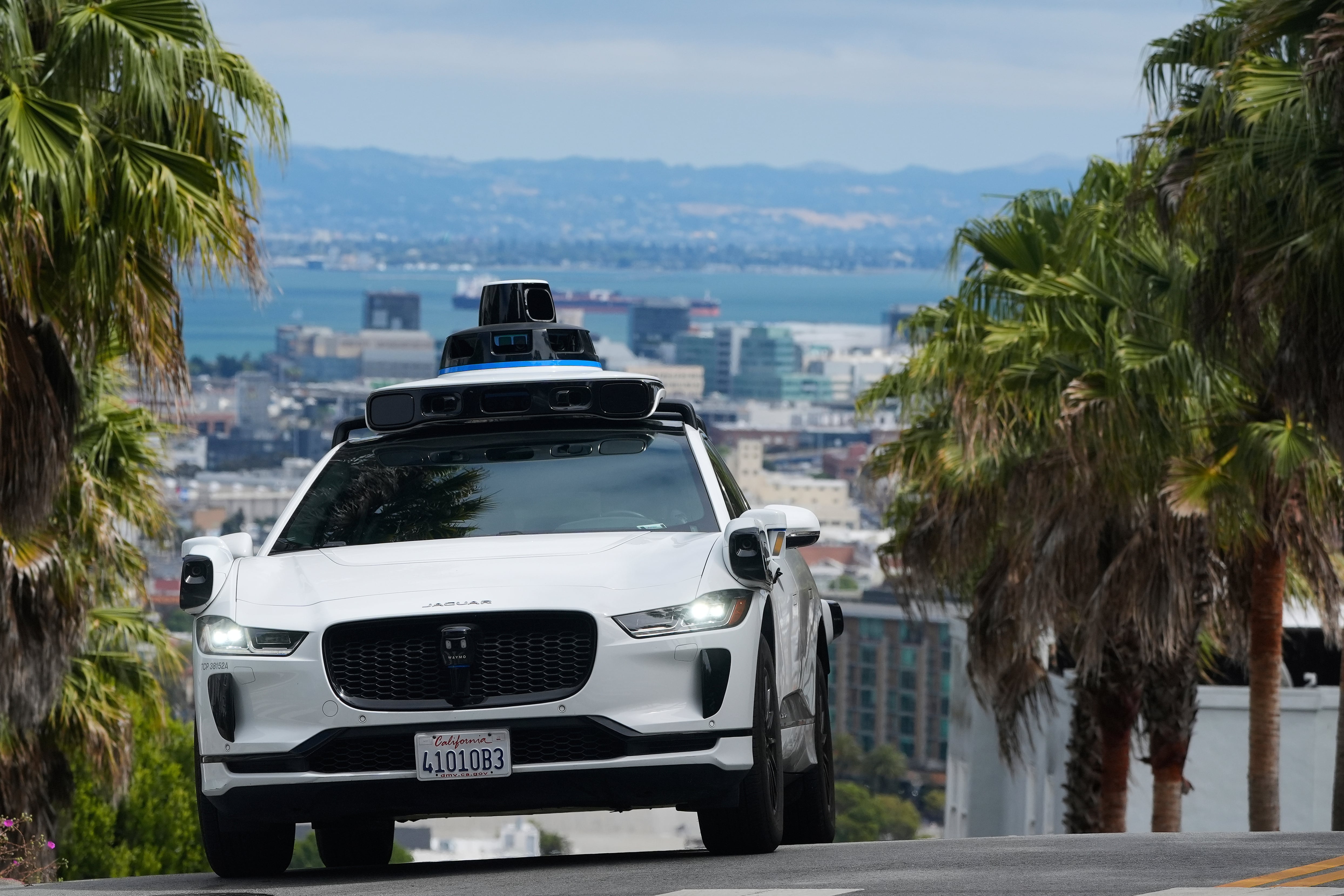
FILE - A Waymo car drives up a hill in San Francisco, Sept. 4, 2025. (AP Photo/Jeff Chiu, File)
SAN FRANCISCO (AP) — Self-driving Waymo taxis have gone viral for negative reasons involving the death of a beloved San Francisco bodega cat and pulling an illegal U-turn in front of police who were unable to issue a ticket to a nonexistent driver.
But this week, the self-driving taxis are the bearer of happier news after a San Francisco woman gave birth in a Waymo.
The mother was on her way to the University of California, San Francisco medical center Monday when she delivered inside the robotaxi, said a Waymo spokesperson in a statement Wednesday. The company said its rider support team detected “unusual activity” inside the vehicle and called to check on the rider as well as alert 911.
Waymo, which is owned by Google’s parent company, Alphabet, declined to elaborate on how the vehicle knew something was amiss.
The company has said it has cameras and microphones inside as well as outside the cars.
The taxi and its passengers arrived safely at the hospital ahead of emergency services. Jess Berthold, a UCSF spokesperson, confirmed the mother and child were brought to the hospital. She said the mother was not available for interviews.
Waymo said the vehicle was taken out of service for cleaning after the ride. While still rare, this was not the first baby delivered in one of its taxis, the company said.
“We’re proud to be a trusted ride for moments big and small, serving riders from just seconds old to many years young,” the company said.
The driverless taxis have surged in popularity even as they court higher scrutiny. Riders can take them on freeways and interstates around San Francisco, Silicon Valley, Los Angeles and Phoenix.
In September, a Waymo pulled a U-turn in front of a sign telling drivers not to do that, and social media users dumped on the San Bruno Police because state law prohibited officers from ticketing the car. In October, a popular tabby cat named Kit Kat known to pad around its Mission District neighborhood was crushed to death by a Waymo.
Holiday shopping heats up as Tom’s Guide editor Kate Kozuch reveals the tech gifts everyone wants, from wellness gadgets to gaming buzz—and how to score deals!
Spain's government has fined Airbnb 64 million euros or $75 million for advertising unlicensed tourist rentals. The consumer rights ministry announced the fine on Monday. The ministry stated that many listings lacked proper license numbers or included incorrect information. The move is part of Spain's ongoing efforts to regulate short-term rental companies amid a housing affordability crisis especially in popular urban areas. The ministry ordered Airbnb in May to remove around 65,000 listings for similar violations. The government's consumer rights minister emphasized the impact on families struggling with housing. Airbnb said it plans to challenge the fine in court.
The Islamic State group and other militant organizations are experimenting with artificial intelligence as a tool to boost recruitment and refine their operations. National security experts say that just as businesses, governments and individuals have embraced AI, extremist groups also will look to harness the power of AI. That means aiming to improve their cyberattacks, breaking into sensitive networks and creating deepfakes that spread confusion and fear. Leaders in Washington have responded with calls to investigate how militant groups are using AI and seek ways to encourage tech companies to share more about how their products are being potentially misused.
President Donald Trump has signed an executive order to block states from regulating artificial intelligence. He argues that heavy regulations could stifle the industry, especially given competition from China. Trump says the U.S. needs a unified approach to AI regulation to avoid complications from state-by-state rules. The order directs the administration to draw up a list of problematic regulations for the Attorney General to challenge. States with laws could lose access to broadband funding, according to the text of the order. Some states have already passed AI laws focusing on transparency and limiting data collection.
OpenAI has appointed Slack CEO Denise Dresser as its first chief of revenue. Dresser will oversee global revenue strategy and help businesses integrate AI into daily operations. OpenAI CEO Sam Altman recently emphasized improving ChatGPT, which now has over 800 million weekly users. Despite its success, OpenAI faces competition from companies like Google and concerns about profitability. The company earns money from premium ChatGPT subscriptions but hasn't ventured into advertising. Altman had recently announced delays in developing new products like AI agents and a personal assistant.