Reignited Trump-Musk feud burns Tesla investors with shares down 7%
By Matt Ott
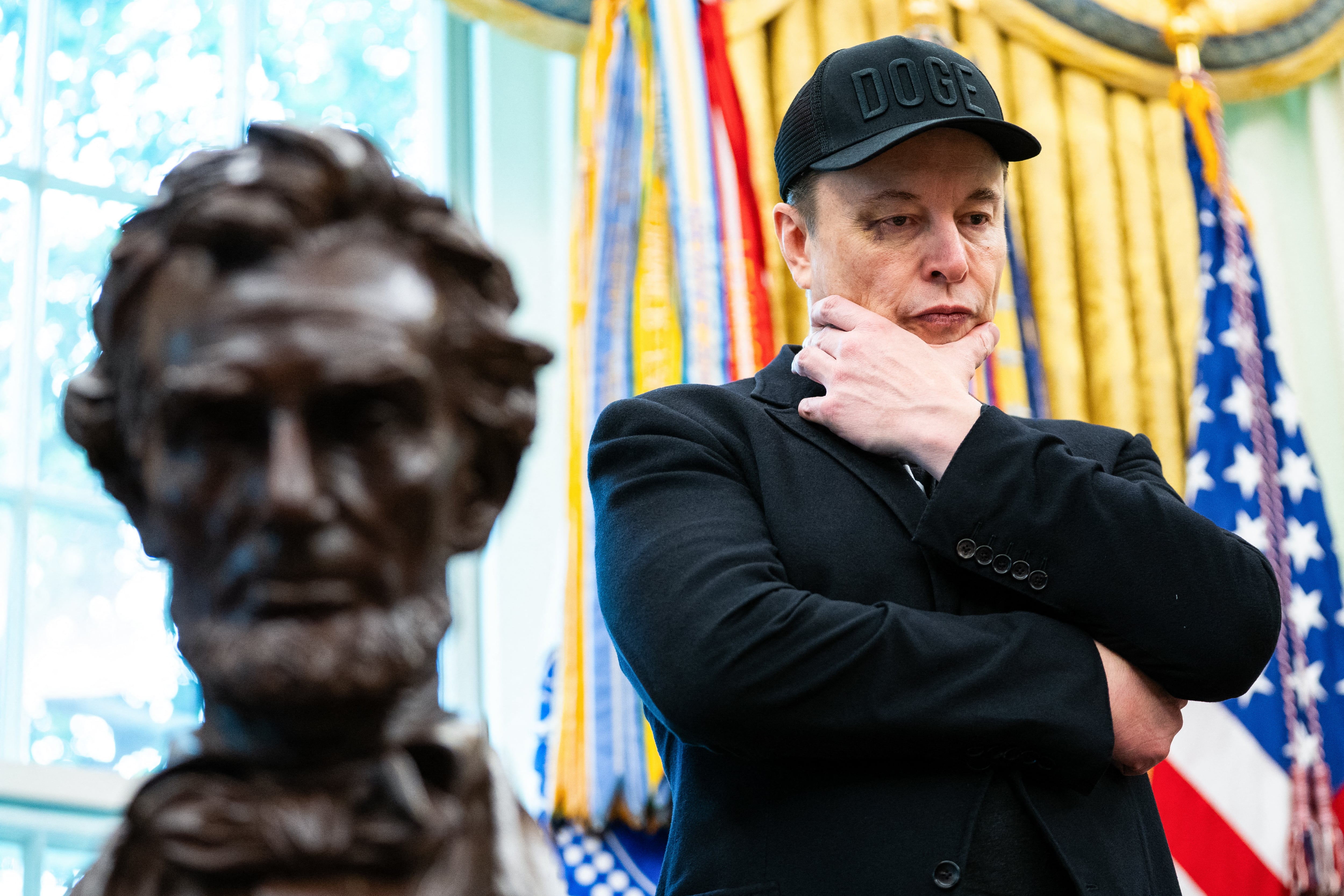
Elon Musk looks on during a news conference with US President Donald Trump in the Oval Office of the White House in Washington, DC, on May 30, 2025. Musk, who stormed into US politics as President Trump's chainsaw-brandishing sidekick, announced on May 28 that he is leaving his role in US government, intended to reduce federal spending, shortly after his first major break with the President over Trump's signature spending bill. (Photo by Allison ROBBERT / AFP) (Photo by ALLISON ROBBERT/AFP via Getty Images)
Musk, once a top donor and ally of Trump, announced that he was forming a third political party in protest over the Republican spending bill that passed late last week. Musk has been highly critical of the bill, which he said would kill jobs and bog down burgeoning industries.
In a social media post on Sunday, Trump said that the billionaire owner of SpaceX, Tesla and X had gone “off the rails” in recent weeks.
Investors fear that Musk’s companies, which receive significant subsidies from the federal government, could suffer further if his feud with Trump continues to fester.
“With the autonomous future ahead and the AI Revolution in full force Musk/Tesla do not need to keep poking the bear as Trump can create more hurdles for Musk/Tesla/SpaceX over the coming years if this political battle gets nastier heading into mid-terms in 2026,” Wedbush Securities analyst Dan Ives wrote in a note to clients late Sunday.
Tesla shares have been extremely volatile since Musk went all-in for Trump in the run-up to last year’s election with the company facing a growing backlash as a result of Musk’s embrace of right-wing politics and his role in the Trump administration.
Tesla sales plunged 13% in the first quarter, and then repeated that performance in the second quarter, even though EV sales continue to rise for competitors, including big Detroit automakers. Industry analysts believe a large part of that tail off is being driven by Musk’s affiliation with Trump and far-right parties like Germany AfD.
Tesla is also facing rising competition globally, particularly from Chinese automakers such as BYD and Great Wall, which are quickly expanding globally, offering relatively affordable electric vehicles with ultra-fast battery charging systems.
Since hitting an all-time high of $479.76 on Dec. 17, Tesla shares have lost about 40% of their value. Tesla shares are down about $26 each since Thursday’s close, to $289.75.
OpenAI has appointed Slack CEO Denise Dresser as its first chief of revenue. Dresser will oversee global revenue strategy and help businesses integrate AI into daily operations. OpenAI CEO Sam Altman recently emphasized improving ChatGPT, which now has over 800 million weekly users. Despite its success, OpenAI faces competition from companies like Google and concerns about profitability. The company earns money from premium ChatGPT subscriptions but hasn't ventured into advertising. Altman had recently announced delays in developing new products like AI agents and a personal assistant.
President Donald Trump says he will allow Nvidia to sell its H200 computer chip used in the development of artificial intelligence to “approved customers” in China. Trump said Monday on his social media site that he had informed China’s leader Xi Jinping and “President Xi responded positively!” There had been concerns about allowing advanced computer chips into China as it could help them to compete against the U.S. in building out AI capabilities. But there has also been a desire to develop the AI ecosystem with American companies such as chipmaker Nvidia.
U.S. sports betting is booming as NFL and college football fuel massive activity. BetMGM CEO Adam Greenblatt breaks down trends, growth, and what’s next.
President Donald Trump says a deal struck by Netflix last week to buy Warner Bros. Discovery “could be a problem” because of the size of the combined market share. The Republican president says he will be involved in the decision about whether federal regulators should approve the deal. Trump commented Sunday when he was asked about the deal as he walked the red carpet at the Kennedy Center Honors. The $72 billion deal would bring together two of the biggest players in television and film and potentially reshape the entertainment industry.
Disney's changes to a program for disabled visitors are facing challenges in federal court and through a shareholder proposal. The Disability Access Service program, which allows disabled visitors to skip long lines, was overhauled last year. Disney now mostly limits the program to those with developmental disabilities like autism who have difficulty waiting in lines. The changes have sparked criticism from some disability advocates. A shareholder proposal submitted by disability advocates calls for an independent review of Disney's disability policies. Disney plans to block this proposal, claiming it's misleading. It's the latest struggle by Disney to accommodate disabled visitors while stopping past abuses by some theme park guests.