By Jonel Aleccia
When Cora Dibert went for a routine blood test in October, the toddler brought along her favorite new snack: a squeeze pouch of WanaBana cinnamon-flavored apple puree.
“She sucked them dry,” recalls her 26-year-old mother, Morgan Shurtleff, of Elgin, Oklahoma.
Within a week, the family got an alarming call. The test showed that the 1-year-old had lead poisoning, with nearly four times as much lead as the level that raises concern. Only later did Shurtleff learn that that the fruit puree Cora’s grandmother bought at a Dollar Tree store may have been the cause.
“That was the scariest thing that ever happened to me,” Shurtleff says.
Cora is among dozens of young kids across the U.S. poisoned by lead linked to tainted pouches of the cinnamon-and-fruit puree.
The exact number of affected children is unclear. The Centers for Disease Control and Prevention reports at least 205 confirmed, probable or suspected cases from 33 states. Using a different reporting method, the Food and Drug Administration counts at least 69 kids ages 6 and younger sickened in 28 states as of Dec. 14.
Tests show victims had blood lead readings up to eight times higher than the federal reference level of concern, health officials said. Samples of the puree showed lead contamination more than 200 times higher than the FDA allows.
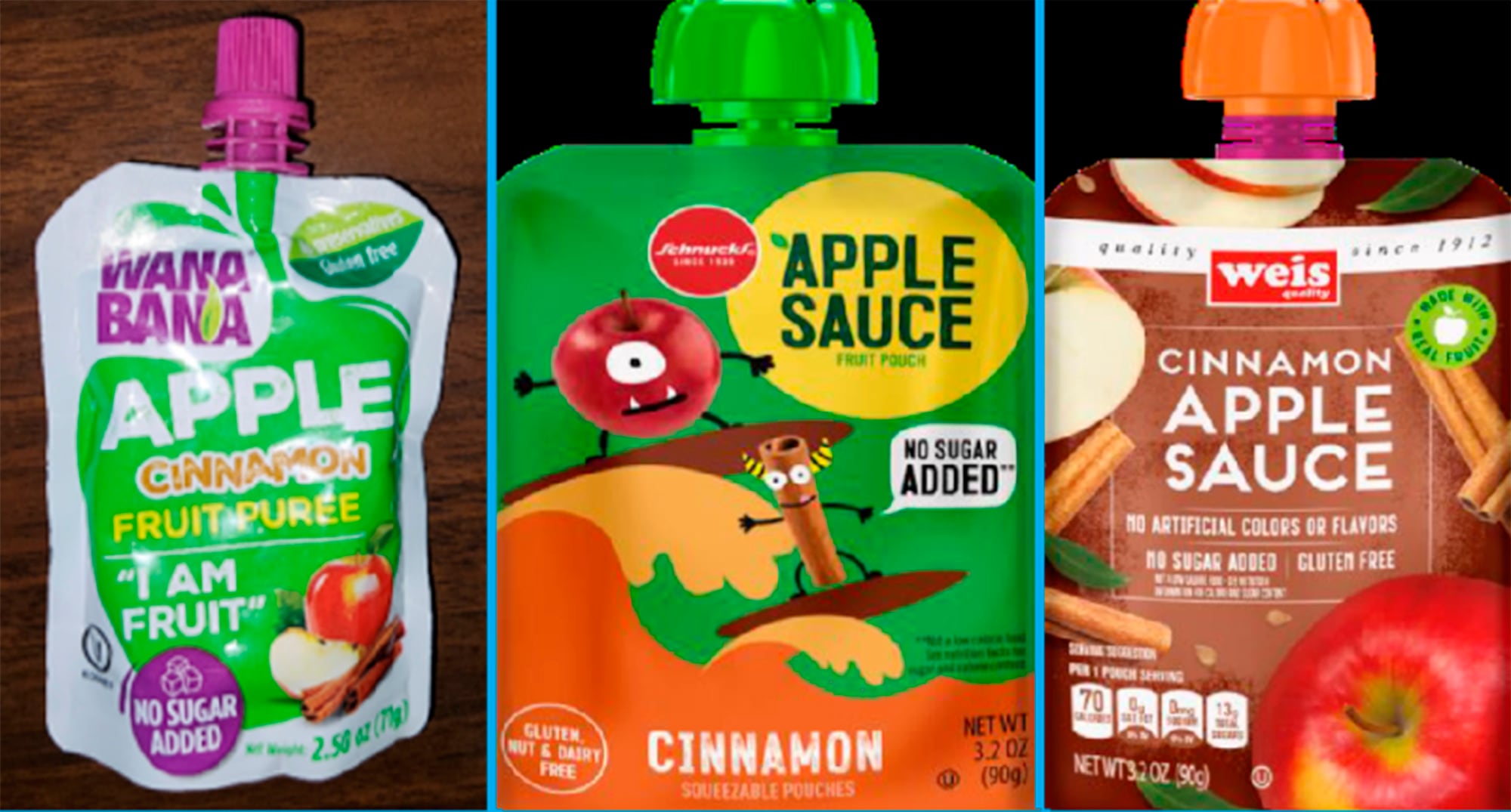
The pouches were sold under three brands — WanaBana, Schnucks and Weis. The products were produced at a plant in Ecuador and first imported to the U.S. in November 2022, the officials said.
Testing of cinnamon samples supplied to the factory showed “extremely high” levels of lead — more than 2,000 times higher than a proposed FDA maximum, the agency said.
FDA officials have raised the prospect that the contamination was intentional. One possibility is that the cinnamon was contaminated for economic reasons, the agency said. That could mean an ingredient such as lead may have been added to boost the value of the cinnamon.
Spices such as turmeric, cinnamon and paprika have been known to be mixed with lead chromate or lead oxide, compounds that mirror the spices' colors, said Karen Everstine, technical director for FoodchainID, a company that tracks food supply chains.
“The intent is not to make people sick. Nobody wants to do that because then they get caught,” Everstine said. “What they want to do is make money.”
That angers Shurtleff.
If it's true, “they made my child sick for a dime,” she said. “The more I think about it, the angrier I get.”
At the same time, she and other parents are most concerned about the lasting effects on their kids.
“I’m pretty worried, considering the effects are irreversible,” said Shurtleff, who works as a nurse.
No amount of lead exposure is safe for children and the effects on brain development can show up years later, said Dr. Jennifer Sample, a pediatric toxicologist who consults for industry and academics.
“It’s irritability. It’s behavioral concerns. It’s learning difficulties,” she said.
When kids ingest lead, the heavy metal travels through the bloodstream and spreads to organs, including the brain, Sample explained. Once there, the lead substitutes inside cells for vital nutrients such as calcium and iron, causing permanent damage.
Because kids’ brains are flexible and still growing, early detection and changes in diet may offset the harm, experts said. The children nevertheless will likely need years of monitoring and intervention.
“The effects in the brain at the cellular level are irreversible, but the downstream effects don’t have to be,” Sample said.
Lead poisoning can be treated with chelation, a therapy that uses drugs that bind to metals in blood to remove them from the body. But it’s only used with higher lead levels and it's usually difficult to administer to the very young.
Instead, affected kids should eat a diet high in vitamin D, calcium and iron and be given a stimulating environment that encourages brain development.
The prognosis is sobering for families whose children were sickened.
Mustafa Al-Khaled, a Norfolk, Nebraska, civil engineer, sued WanaBana LLC because his 17-month-old son, Arian, was diagnosed with acute lead poisoning after eating the pouches regularly since August.
“As a parent, it’s really hurtful to be in this situation,” said Al-Khaled, who is among about a dozen parents of affected kids who contacted Ron Simon, a Houston food-safety lawyer who filed the case. “Why I'm here is to protect this child.”
Al-Khaled and his wife, Dania, rushed Arian for testing in early November after learning that the WanaBana products had been recalled. The were already worried because Arian had been crying uncontrollably, losing weight and passing white-colored stool.
A test showed the boy’s blood lead level was 15.3 micrograms of lead per deciliter of blood. That’s more than four times higher than the 3.5 micrograms per deciliter that the CDC uses to identify children with elevated lead levels.
Health officials in Nebraska retrieved samples of the WanaBana pouches from Al-Khaled's home. Test results are still pending.
“We’re really worrying about the future," Al-Khaled said. "Is this going to harm him later?”
That fear is shared by Talia Hurdle, 29, of Mount Vernon, New York. Her 18-month-old son, Jamari, ate WanaBana apple cinnamon pouches two or three times a day for months, she said.
He’s a picky eater, she explained, and the pouches that sold at the Dollar Tree for $1.25 for a pack of three were an inexpensive way to give him food he liked. Jamari’s blood level was 17.5 micrograms when he was first tested in September.
“It's sad because you give your baby stuff to help them continue to be healthy, but look what happened,” Hurdle said.
A few weeks after Jamari stopped eating the puree, his lead level was down to 10.5 micrograms per deciliter. Levels dropped for Cora Shurtleff and Arian Al-Khaled, too, once they quit eating the pouches.
That’s a good sign, said Sample, the toxicologist.
“These parents can breathe a sigh of relief that they’re not going to be as harmed as they could have been with a longer exposure,” she said.
Shurtleff worries that not all families know about the danger. The FDA said some Dollar Tree stores still have the fruit pouches on their shelves, weeks after they were recalled. Dollar Tree Inc. officials said in a statement they have added register locks to prevent sales of the products, instructed stores to destroy the affected packages and are working with a third party to confirm they're removed from shelves.
After Cora's diagnosis, Shurtleff was at work, preparing to give a vaccination, when she noticed her young patient was eating a WanaBana apple cinnamon pouch. She immediately told the parent about the recall.
“They were just in shock. They hadn't heard anything about it,” Shurtleff said. “Then they were like, ‘We still have some in our pantry. I guess we should throw it out.’”
The Associated Press Health and Science Department receives support from the Howard Hughes Medical Institute’s Science and Educational Media Group. The AP is solely responsible for all content.