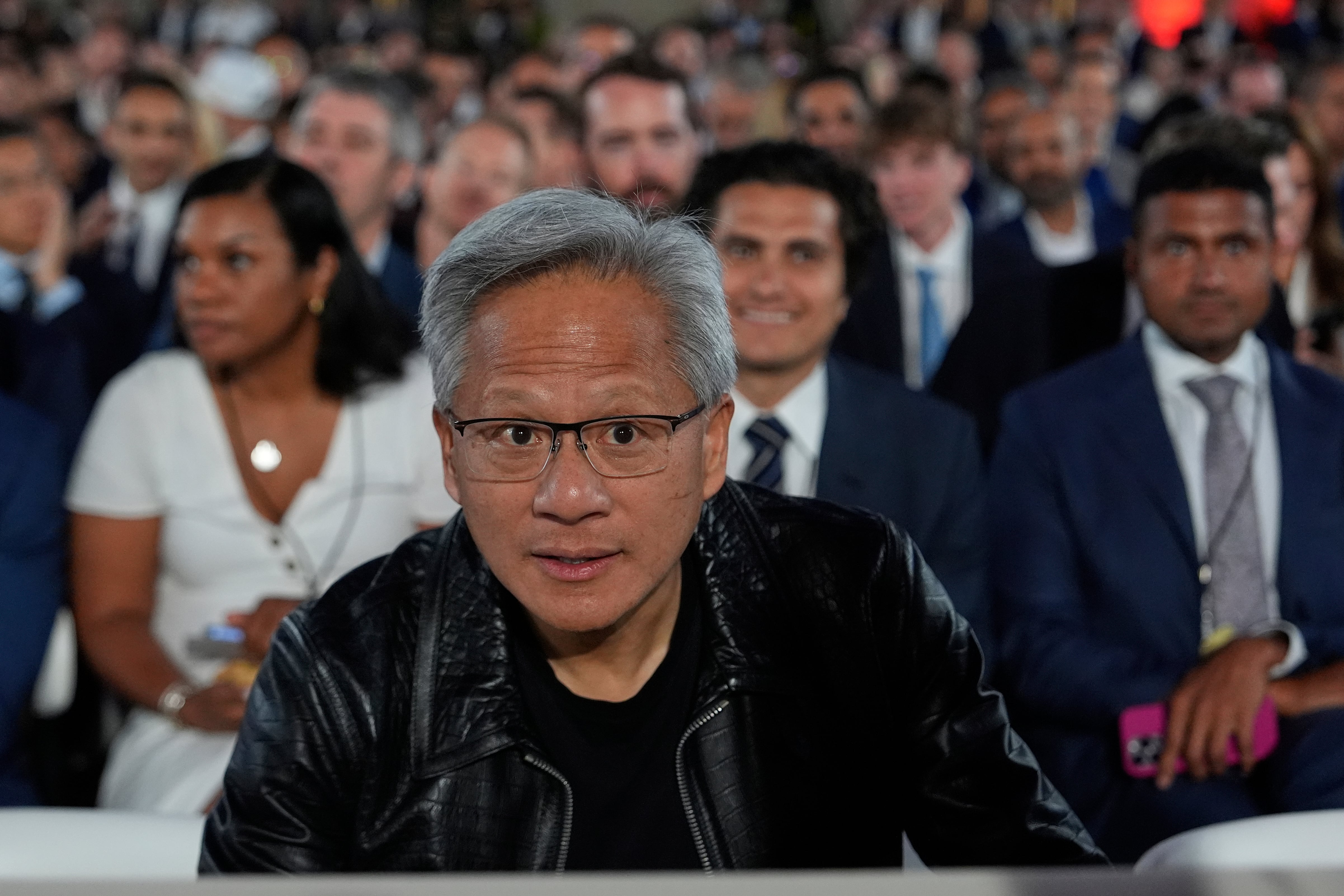
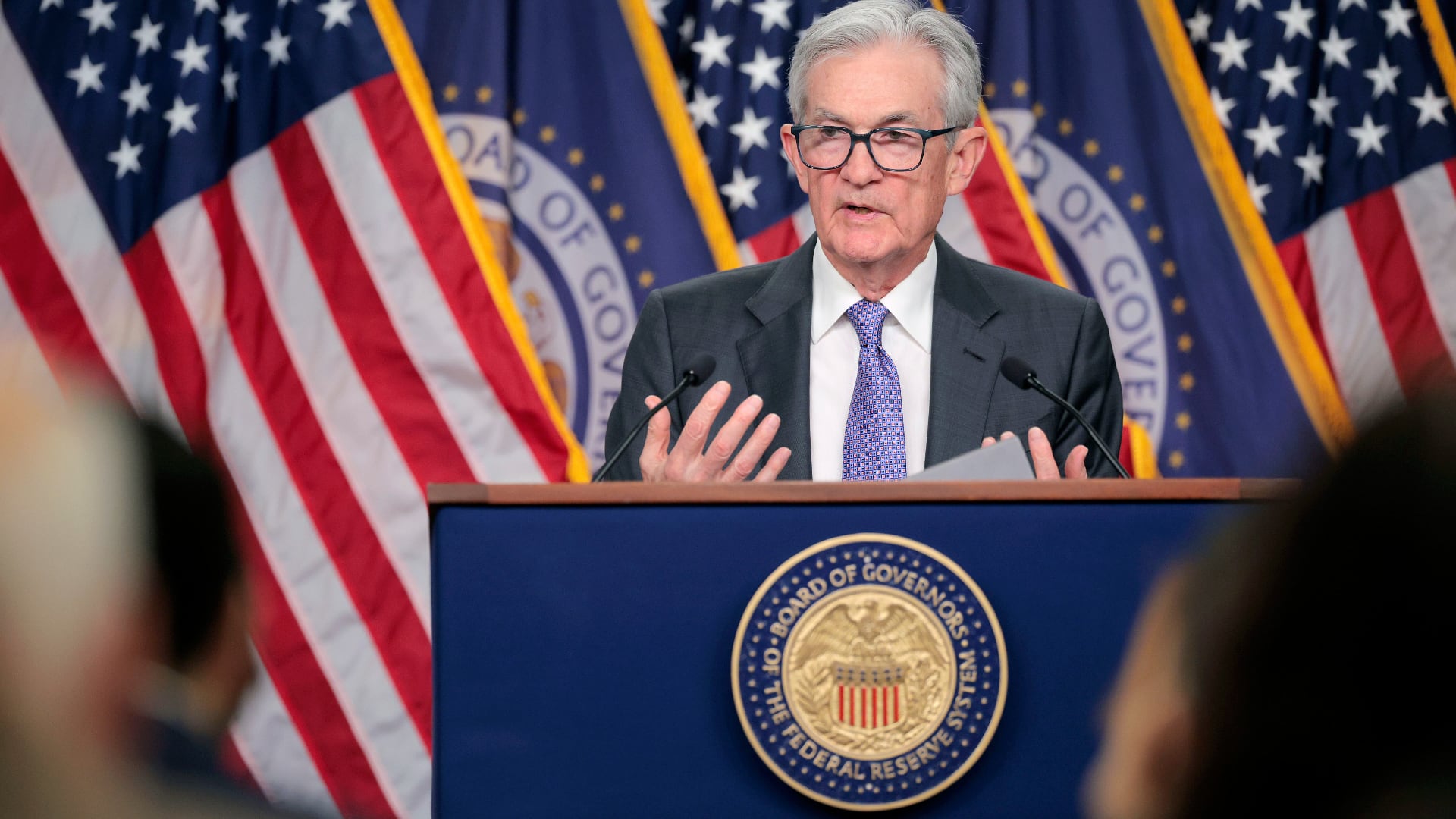
BANGKOK (AP) — Nvidia CEO Jensen Huang said Friday that the company is discussing a potential new computer chip designed for China with the Trump administration.
Huang was asked about a possible “B30A” semiconductor for artificial intelligence data centers for China while on a visit to Taiwan, where he was meeting Nvidia’s key manufacturing partner, Taiwan Semiconductor Manufacturing Corp., the world’s largest chip maker.
“I’m offering a new product to China for ... AI data centers, the follow-on to H20,” Huang said. But he added that “That’s not our decision to make. It’s up to, of course, the United States government. And we’re in dialogue with them, but it’s too soon to know.”
Such chips are graphics processing units, or GPUs, a type of device used to build and update a range of AI systems. But they are less powerful than Nvidia’s top semiconductors today, which cannot be sold to China due to U.S. national security restrictions.
The B30A, based on California-based Nvidia’s specialized Blackwell technology, is reported to operate at about half the speed of Nvidia’s main B300 chips.
Huang praised the the Trump administration for recently approving sales of Nvidia’s H20 chips to China after such business was suspended in April, with the proviso that the company must pay a 15% tax to the U.S. government on those sales. Chip maker Advanced Micro Devices, or AMD, was told to pay the same tax on its sales of its MI380 chips to China.
As part of broader trade talks, Beijing and Washington recently agreed to pull back some non-tariff restrictions. China approved more permits for rare earth magnets to be exported to the U.S., while Washington lifted curbs on chip design software and jet engines. After lobbying by Huang, it also allowed sales of the H20 chips to go through.
Huang did not comment directly on the tax when asked but said Nvidia appreciated being able to sell H20s to China.
He said such sales pose no security risk for the United States. Nvidia is also speaking with Beijing to reassure Chinese authorities that those chips do not pose a “backdoor” security risk, Huang said.
“We have made very clear and put to rest that H20 has no security backdoors. There are no such things. There never has. And so hopefully the response that we’ve given to the Chinese government will be sufficient,” he said.
The Cyberspace Administration of China, the country’s internet watchdog, recently posted a notice on its website referring to alleged “serious security issues” with Nvidia’s computer chips.
It said U.S. experts on AI had said such chips have “mature tracking and location and remote shutdown technologies” and Nvidia had been asked to explain any such risks and provide documentation about the issue.
Huang said Nvidia was surprised by the accusation and was discussing the issue with Beijing.
“As you know, they requested and urged us to secure licenses for the H20s for some time. And I’ve worked quite hard to help them secure the licenses. And so hopefully this will be resolved,” Huang said.
Unconfirmed reports said Chinese authorities were also unhappy over comments by U.S. Commerce Secretary Howard Lutnick suggesting the U.S. was only selling outdated chips to China.
Speaking on CNBC, Lutnick said the U.S. strategy was to keep China reliant on American chip technology.
“We don’t sell them our best stuff,” he said. “Not our second best stuff. Not even our third best, but I think fourth best is where we’ve come out that we’re cool,” he said.
China’s ruling Communist Party has made self-reliance in advanced technology a strategic priority, though it still relies on foreign semiconductor knowhow for much of what it produces.
___
AP Videojournalist Taijing Wu in Taipei contributed to this report.
Spain's government has fined Airbnb 64 million euros or $75 million for advertising unlicensed tourist rentals. The consumer rights ministry announced the fine on Monday. The ministry stated that many listings lacked proper license numbers or included incorrect information. The move is part of Spain's ongoing efforts to regulate short-term rental companies amid a housing affordability crisis especially in popular urban areas. The ministry ordered Airbnb in May to remove around 65,000 listings for similar violations. The government's consumer rights minister emphasized the impact on families struggling with housing. Airbnb said it plans to challenge the fine in court.
The Islamic State group and other militant organizations are experimenting with artificial intelligence as a tool to boost recruitment and refine their operations. National security experts say that just as businesses, governments and individuals have embraced AI, extremist groups also will look to harness the power of AI. That means aiming to improve their cyberattacks, breaking into sensitive networks and creating deepfakes that spread confusion and fear. Leaders in Washington have responded with calls to investigate how militant groups are using AI and seek ways to encourage tech companies to share more about how their products are being potentially misused.
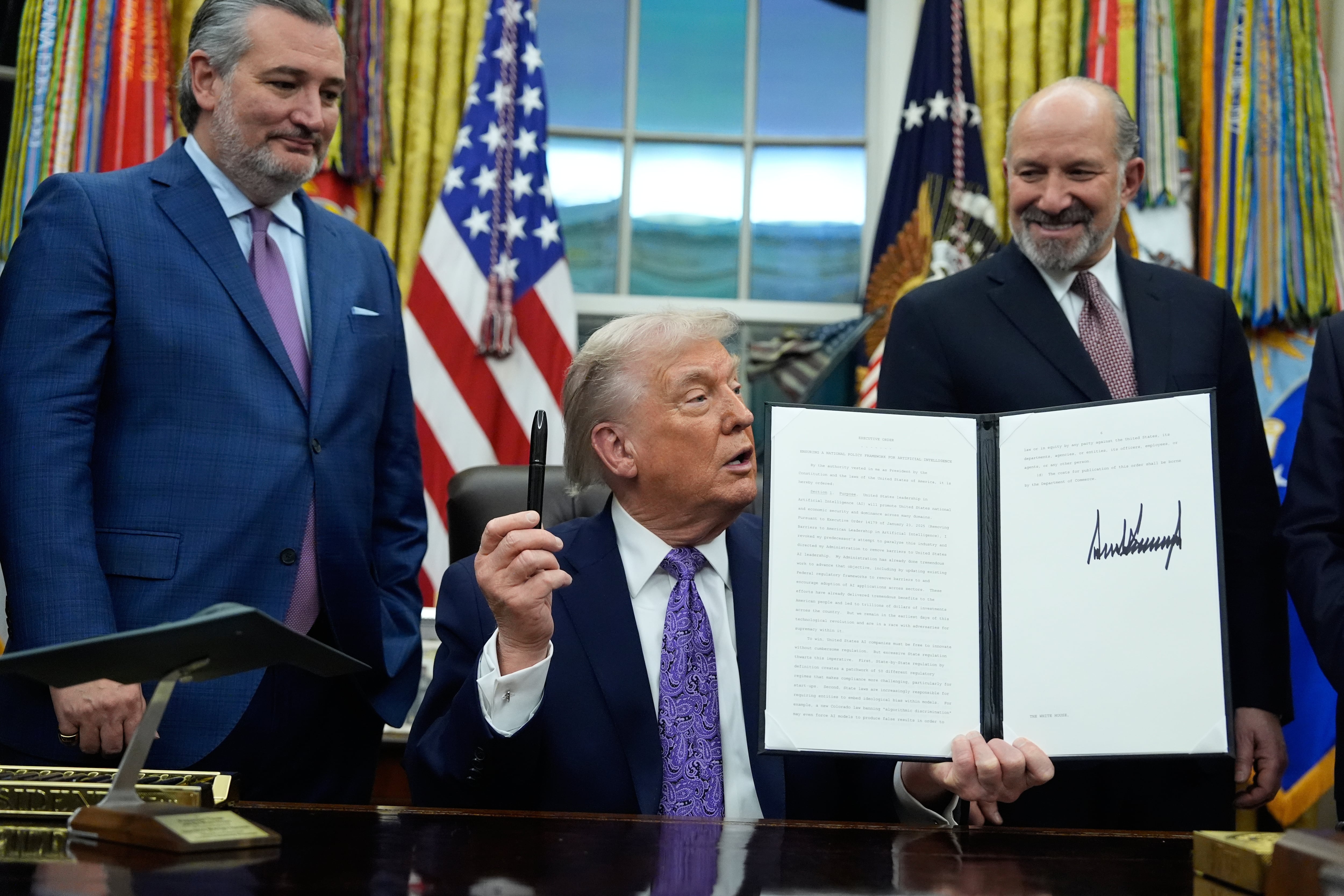
President Donald Trump has signed an executive order to block states from regulating artificial intelligence. He argues that heavy regulations could stifle the industry, especially given competition from China. Trump says the U.S. needs a unified approach to AI regulation to avoid complications from state-by-state rules. The order directs the administration to draw up a list of problematic regulations for the Attorney General to challenge. States with laws could lose access to broadband funding, according to the text of the order. Some states have already passed AI laws focusing on transparency and limiting data collection.
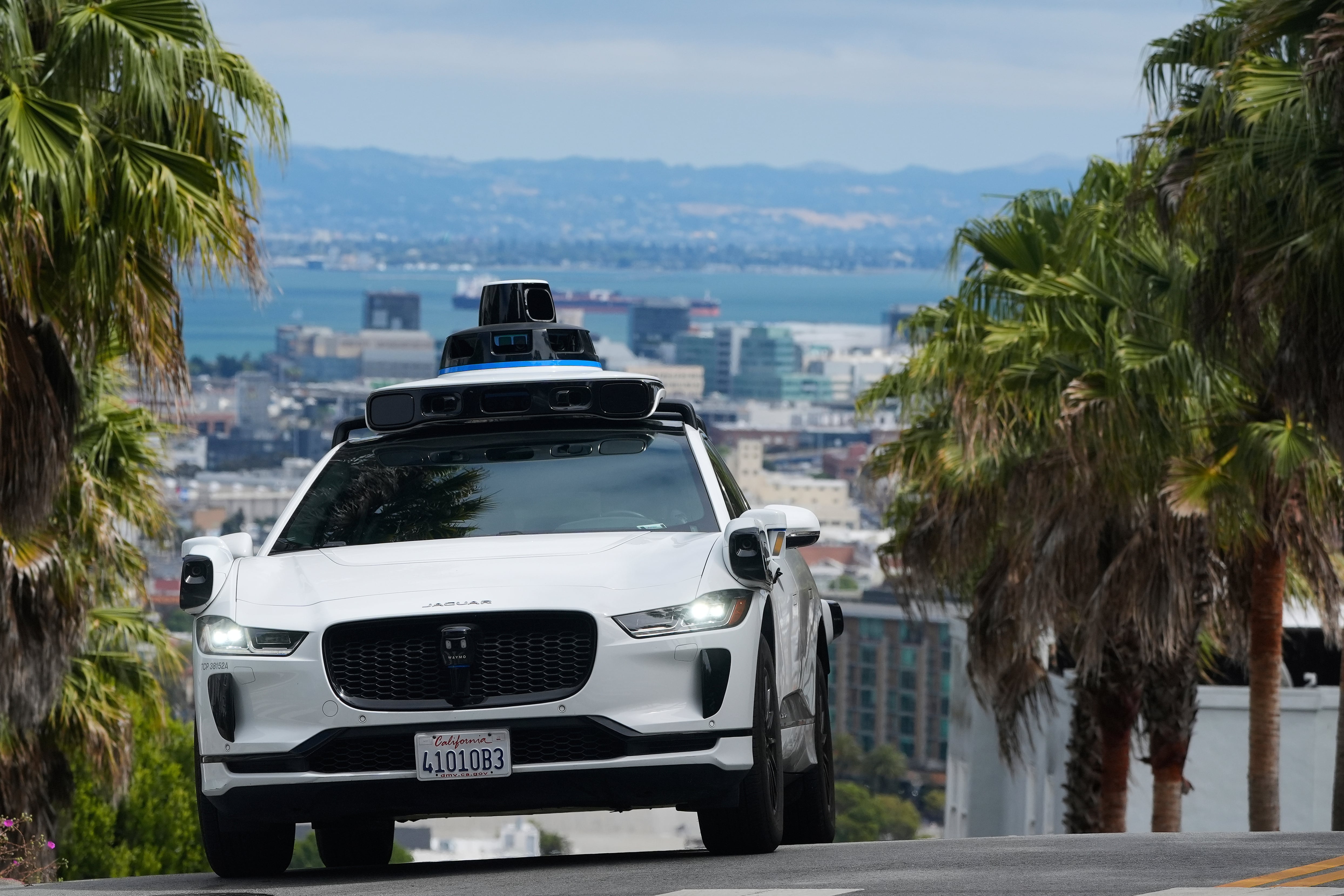
Waymo's self-driving taxis have been in the spotlight for both negative and positive reasons. This week, the automated ride-hailing taxis went viral after a San Francisco woman gave birth inside a Waymo taxi while on her way to the hospital. A Waymo spokesperson on Wednesday confirmed the unusual delivery. It said the company's rider support team detected unusual activity inside the vehicle and alerted 911. The taxi arrived safely at the hospital before emergency services. Waymo's popularity is growing despite heightened scrutiny following an illegal U-turn and the death of a San Francisco cat. The company, owned by Alphabet, says it is proud to serve riders of all ages.
OpenAI has appointed Slack CEO Denise Dresser as its first chief of revenue. Dresser will oversee global revenue strategy and help businesses integrate AI into daily operations. OpenAI CEO Sam Altman recently emphasized improving ChatGPT, which now has over 800 million weekly users. Despite its success, OpenAI faces competition from companies like Google and concerns about profitability. The company earns money from premium ChatGPT subscriptions but hasn't ventured into advertising. Altman had recently announced delays in developing new products like AI agents and a personal assistant.
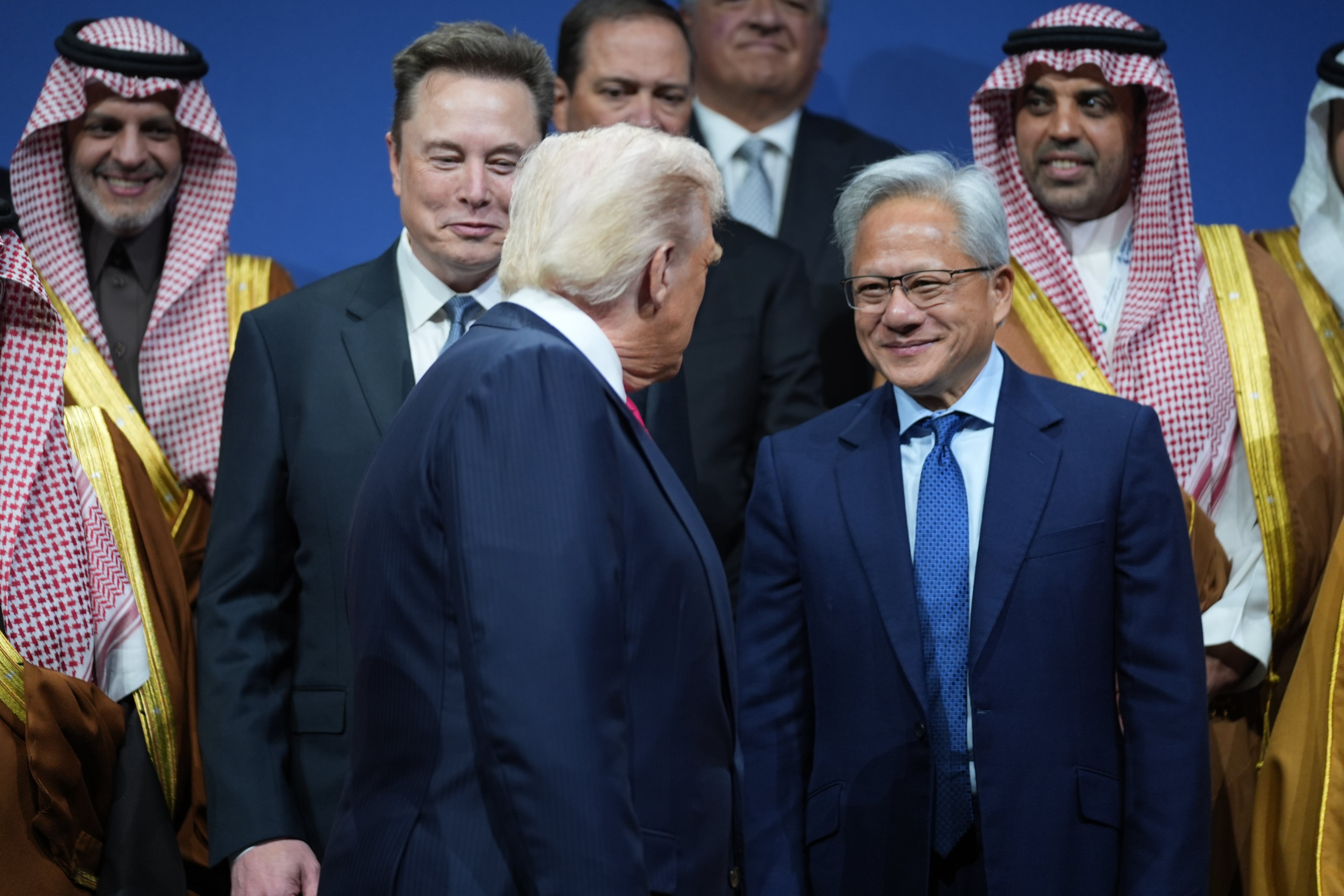
President Donald Trump says he will allow Nvidia to sell its H200 computer chip used in the development of artificial intelligence to “approved customers” in China. Trump said Monday on his social media site that he had informed China’s leader Xi Jinping and “President Xi responded positively!” There had been concerns about allowing advanced computer chips into China as it could help them to compete against the U.S. in building out AI capabilities. But there has also been a desire to develop the AI ecosystem with American companies such as chipmaker Nvidia.