By Meg Kinnard
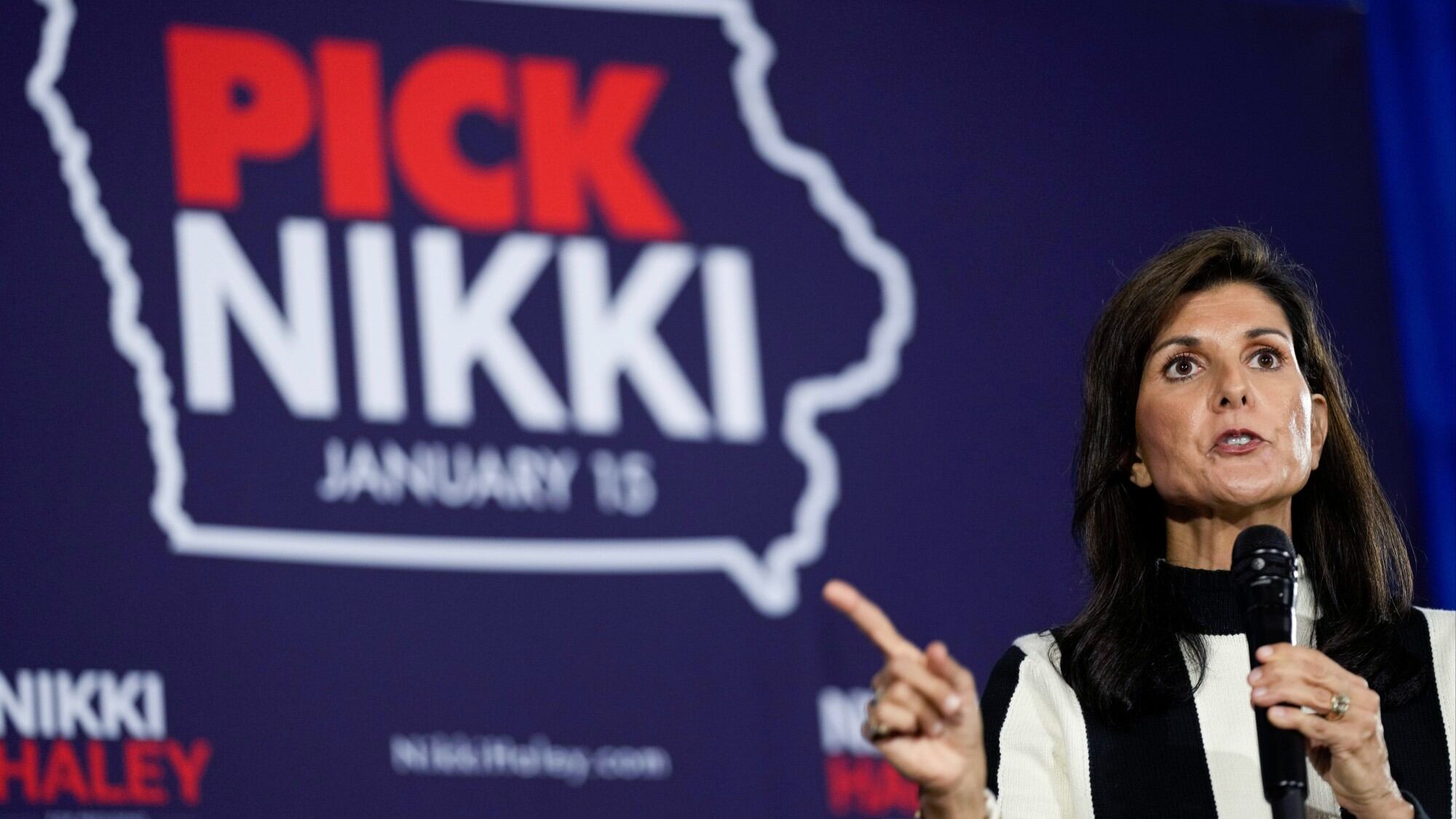
Republican presidential candidate Nikki Haley was asked at a New Hampshire town hall about the reason for the Civil War, and she didn’t mention slavery in her response. She walked back her comments hours later.
Asked during Wednesday night's town hall in Berlin what she believed had caused the war — the first shots of which were fired in her home state of South Carolina — Haley talked about the role of government, replying that it involved “the freedoms of what people could and couldn’t do.”
She then turned the question back to the man who had asked it. He replied that he was not the one running for president and wished instead to know her answer.
After Haley went into a lengthier explanation about the role of government, individual freedom and capitalism, the questioner seemed to admonish Haley, saying, “In the year 2023, it’s astonishing to me that you answer that question without mentioning the word ‘slavery.’”
“What do you want me to say about slavery?” Haley retorted before abruptly moving on to the next question.
Haley, the former United Nations ambassador and South Carolina governor, has been working to become the leading alternative to Donald Trump for the 2024 Republican presidential nomination. It's unclear whether her comments will have a long-term political impact, particularly among the independent voters who are crucial to her campaign.
She backpedaled on her Civil War comments 12 hours later, with her campaign disseminating a Thursday morning radio interview in which she said, “Of course the Civil War was about slavery,” something she called “a stain on America.” She went on to reiterate that “freedom matters. And individual rights and liberties matter for all people.”
Her GOP rivals quickly jumped on her original comments, even though most of them have been accused of downplaying the effects of slavery themselves.
Florida Gov. Ron DeSantis' campaign recirculated video of the original exchange on social media, adding the comment, “Yikes.” Campaigning in Iowa on Thursday, DeSantis said that Haley “has had some problems with some basic American history” and that it's “not that difficult to identify and acknowledge the role slavery played in the Civil War.”
DeSantis faced criticism over slavery earlier in the year when Florida enacted new education standards requiring teachers to instruct middle school students that slaves developed skills that “could be applied for their personal benefit.” U.S. Sen. Tim Scott of South Carolina, the only Black Republican in the Senate and DeSantis’ then-rival for the GOP presidential nomination, rejected that characterization, saying instead that slavery was about “separating families, about mutilating humans and even raping their wives.”
Make America Great Again Inc., a super PAC supporting Trump’s campaign, sent out a release saying Haley's response shows she “is clearly not ready for primetime.” The group also included an X post from Florida Rep. Byron Donalds, a Black Republican who supports Trump, reading “1. Psst Nikki... the answer is slavery PERIOD. 2. This really doesn’t matter because Trump is going to be the nominee. Trump 2024!”
Trump did not mention the two centuries of slavery in America at a 2020 event marking the 223rd anniversary of the signing of the Constitution. He instead focused on America’s founding having “set in motion the unstoppable chain of events that abolished slavery, secured civil rights, defeated communism and fascism and built the most fair, equal and prosperous nation in human history.”
Issues surrounding the origins of the Civil War and its heritage are still much of the fabric of Haley’s home state, and she has been pressed on the war’s origins before. As she ran for governor in 2010, Haley, in an interview with a now-defunct activist group then known as The Palmetto Patriots, described the war as between two disparate sides fighting for “tradition” and “change” and said the Confederate flag was “not something that is racist.”
During that same campaign, she dismissed the need for the flag to come down from the Statehouse grounds, portraying her Democratic rival’s push for its removal as a desperate political stunt.
Five years later, Haley urged lawmakers to remove the flag from its perch near a Confederate soldier monument following a mass shooting in Charleston, South Carolina, in which a white gunman killed nine Black church members who were attending Bible study. At the time, Haley said the flag had been “hijacked” by the shooter from those who saw the flag as symbolizing “sacrifice and heritage.”
South Carolina’s Ordinance of Secession — the 1860 proclamation by the state government outlining its reasons for seceding from the Union — mentions slavery in its opening sentence and points to the “increasing hostility on the part of the non-slaveholding States to the institution of slavery” as a reason for the state removing itself from the Union.
On Wednesday night, Christale Spain — elected this year as the first Black woman to chair South Carolina’s Democratic Party — said Haley’s response was “vile, but unsurprising.”
“The same person who refused to take down the Confederate Flag until the tragedy in Charleston, and tried to justify a Confederate History Month,” Spain said in a post on X, of Haley. “She’s just as MAGA as Trump,” Spain added, referring to Trump’s ”Make America Great Again” slogan.
Jaime Harrison, current chairman of the Democratic National Committee and South Carolina’s party chairman during part of Haley’s tenure as governor, said her response was “not stunning if you were a Black resident in SC when she was Governor.”
“Same person who said the confederate flag was about tradition & heritage and as a minority woman she was the right person to defend keeping it on state house grounds,” Harrison posted Wednesday night on X. “Some may have forgotten but I haven’t. Time to take off the rose colored Nikki Haley glasses folks.”
Associated Press writer Hannah Fingerhut in Ankeny, Iowa, contributed to this report.