An architect charged in a string of slayings known as the Gilgo Beach killings was accused Tuesday in the death of a fourth woman, a Connecticut mother of two who vanished in 2007 and whose remains were found more than three years later along a New York coastal highway.
Rex Heuermann was formally charged in the killing of Maureen Brainard-Barnes, months after having been labeled the prime suspect in her death when he was arrested in July in the deaths of three other women.
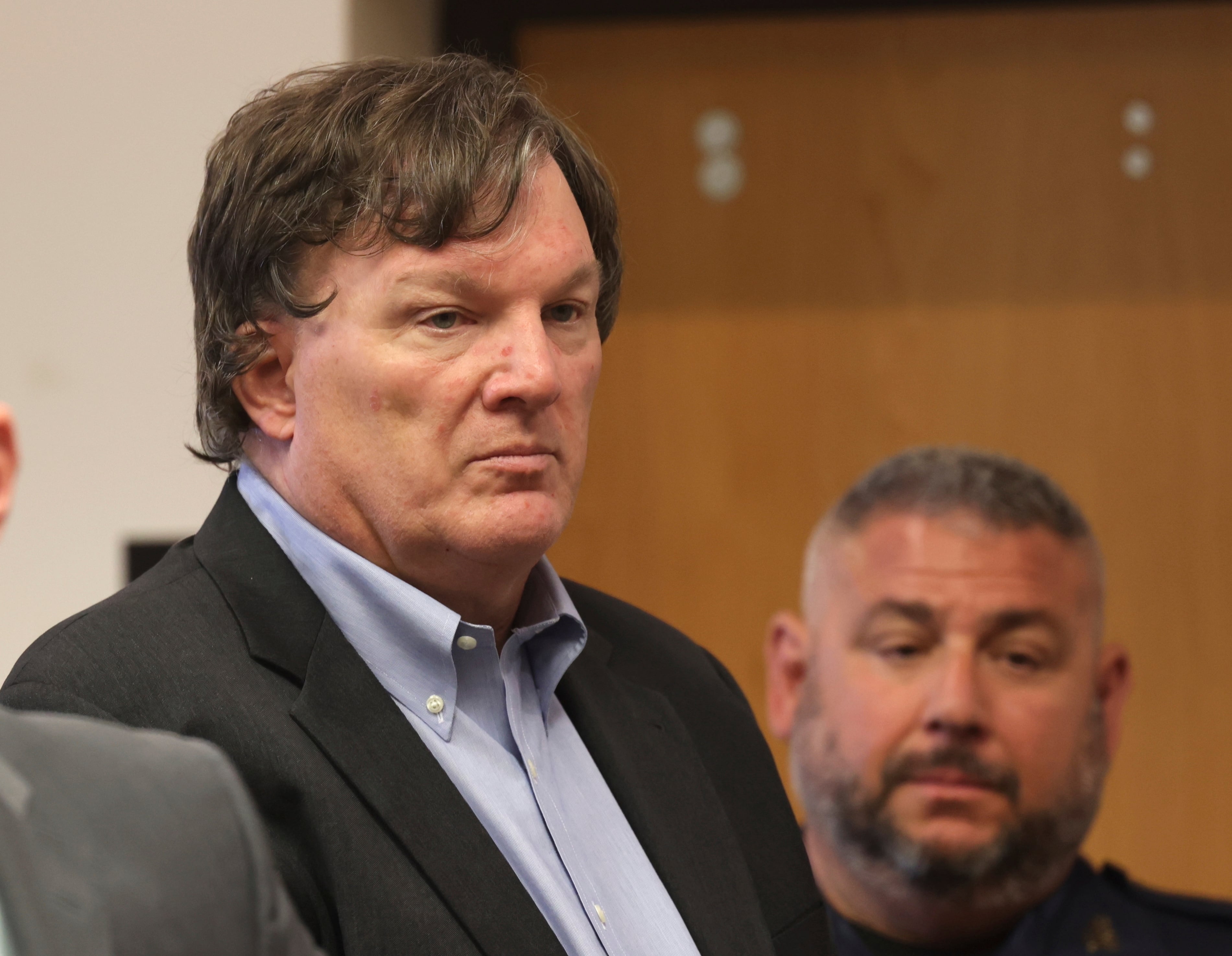
In court, Heuermann wore a dark suit and did not say anything during the proceedings. He will continue to be held without bail. The judge set the next court date for Feb. 6.
Police say the breakthrough came from DNA extracted from hair at the scene. A hair found with Brainard-Barnes’ remains is genetically similar to a DNA sample taken from Heurmann’s ex-wife. During the period when Barinard-Barnes disappeared in 2007, Heuermann’s ex-wife and his daughter were staying out of town at a hotel in Atlantic City, the indictment and her attorney confirmed.
Prosecutors said Heuermann also searched the internet for phrases that suggested he was afraid of getting caught including “How does cell site analysis work,” “Gilgo news,” "How cell phone tracking is increasingly being used to solve crimes,” and phrases with the term “Long Island Serial Killer.”
Heuermann has maintained his innocence from “day one” and looks forward to defending himself in court, attorney Mike Brown said. He entered a not guilty plea on the latest charges. Brown said he is still reviewing new information presented by prosecutors in court documents Tuesday morning.
At the news conference Tuesday, Suffolk County District Attorney Raymond Tierney said the indictment provides “some small measure of closure” for families.
It marks the end of the investigation into the so-called “Gilgo four,” Tierney said.
Prosecutors now turn their attention to prosecuting those cases and investigating other bodies found nearby.
Brainard-Barnes, 25, who was once employed as a dealer at the Foxwoods Resort Casino, left her hometown of Norwich, Connecticut, on July 9, 2007, and headed to Manhattan for sex work, with plans to return the following day, according to friends who became concerned when she uncharacteristically stopped using her phone.
She never came back.
“I was only 7 years old when my mom was murdered,” Nicolette Brainard-Barnes, 24, said at the Tuesday news conference. “I remember she read to me every night. Now I can no longer remember the sound of her voice.”
Heuermann was arrested July 14 and charged with killing Melissa Barthelemy, Megan Waterman and Amber Lynn Costello, three women who authorities say also were sex workers. Heuermann’s lawyer said he has denied committing the crimes. He previously pleaded not guilty to killing Barthelemy, Waterman and Costello.
Brainard-Barnes was the first of the four women to disappear. Their remains were found along the same quarter-mile (400-meter) stretch of parkway in the Gilgo Beach area of Jones Beach Island in 2010. Additional searching turned up the remains of six more adults and a toddler who was the child of one of the victims.
Investigators also found electronic evidence that Heuermann had accessed Costello’s prostitution advertisement Sept. 1, 2010, according to court documents.
Police concluded that an 11th person found dead in a tidal marsh on the same barrier island accidentally drowned.
Investigators have said Heuermann, who lived in Massapequa Park across the bay from where the bodies were found, was probably not responsible for all the deaths. Some of the victims disappeared in the mid 1990s.
Investigators zeroed in on Heuermann when a new task force ran an old tip about a Chevy Avalanche pickup through a vehicle records database. A hit came back identifying one of those make and models belonging to Heuermann, who lived in a neighborhood police had been focusing on because of cellphone location data and call records, authorities said.
With the tip breathing new life into the investigation, authorities charted the calls and travels of multiple cellphones, picked apart email aliases, delved into search histories and collected discarded bottles — and even a pizza crust — for advanced DNA testing, according to court papers. Detectives said Heuermann’s DNA on the pizza crust matched a hair found on a restraint used in the killings.
Last summer, Heuermann’s ex-wife, stepson and daughter agreed to give DNA samples to prosecutors, according to court documents. Investigators compared them against DNA collected from bottles sipped by Heuermann and tossed into trashcans near his home.
Police said other evidence linked Heuermann to the victims, including burner cellphones used to arrange meetings with the slain women.
After the arrest, investigators spent nearly two weeks combing through Heuermann’s home, including digging up the yard, dismantling a porch and a greenhouse and removing many contents of the house for testing. Investigators found hundreds of electronic devices during their lengthy search of Heuermann’s home, according to court documents released Tuesday. Prosecutors say the devices contained a collection of bondage and torture pornography.