More than 1,000 Starbucks baristas go on strike to protest new dress code
By Dee-ann Durbin
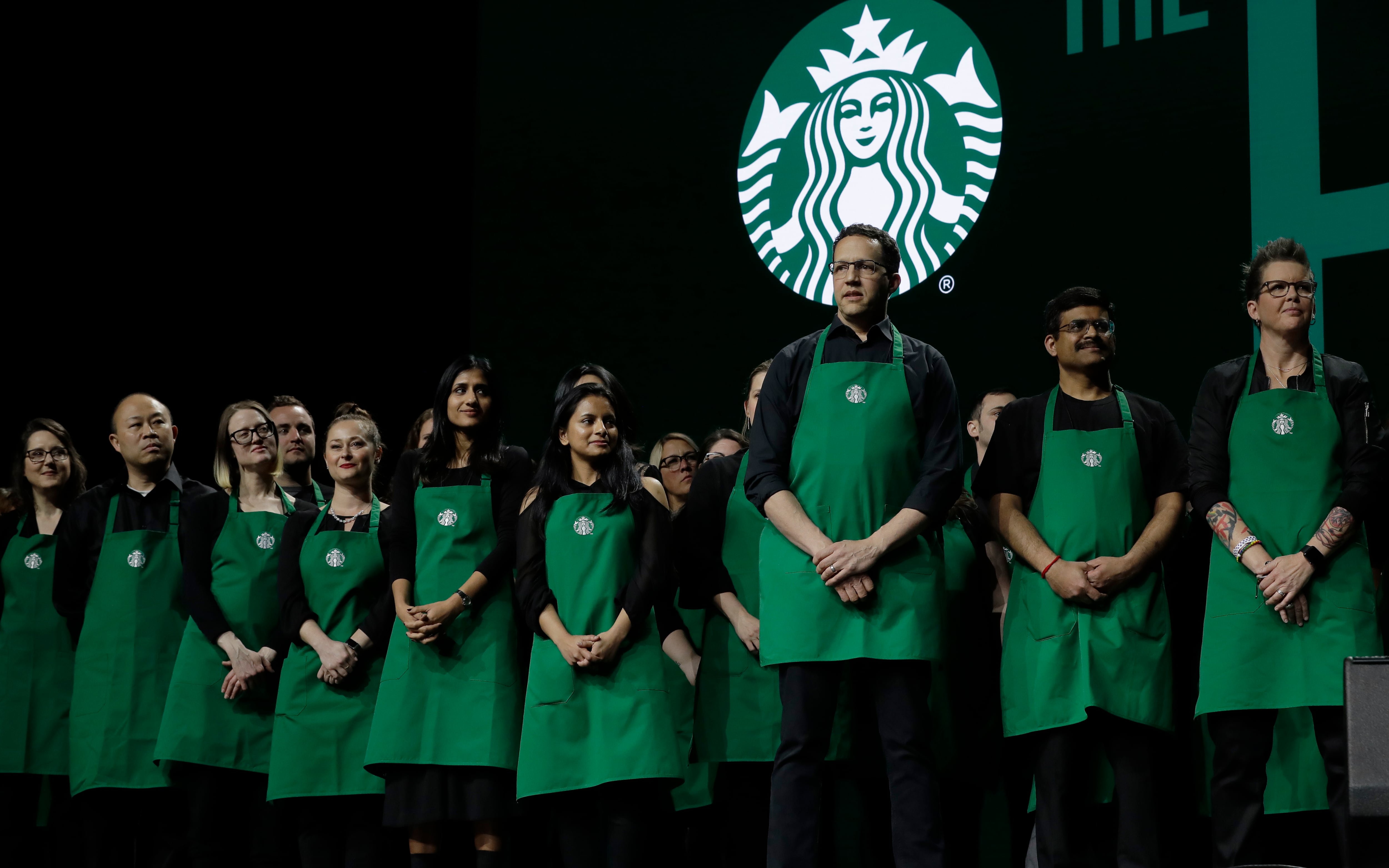
FILE - Starbucks baristas stand on stage, March 20, 2019, during an annual shareholders meeting in Seattle. (AP Photo/Ted S. Warren, file)
More than 1,000 Starbucks baristas at 75 U.S. stores have gone on strike since Sunday to protest a new company dress code, a union representing the coffee giant’s workers said Wednesday.
Starbucks put new limits starting Monday on what its baristas can wear under their green aprons. The dress code requires employees at company-operated and licensed stores in the U.S. and Canada to wear a solid black shirt and khaki, black or blue denim bottoms.
Under the previous dress code, baristas could wear a broader range of dark colors and patterned shirts. Starbucks said the new rules would make its green aprons stand out and create a sense of familiarity for customers as it tries to establish a warmer, more welcoming feeling in its stores.
But Starbucks Workers United, the union that represents workers at 570 of Starbucks’ 10,000 company-owned U.S. stores, said the dress code should be subject to collective bargaining.
“Starbucks has lost its way. Instead of listening to baristas who make the Starbucks experience what it is, they are focused on all the wrong things, like implementing a restrictive new dress code,” said Paige Summers, a Starbucks shift supervisor from Hanover, Maryland. “Customers don’t care what color our clothes are when they’re waiting 30 minutes for a latte.”
Summers and others also criticized the company for selling styles of Starbucks-branded clothing that employees no longer are allowed to wear to work on an internal website. Starbucks said it would give two free black T-shirts to each employee when it announced the new dress code.
Starbucks said Wednesday that the strike was having a limited impact on its 10,000 company-operated U.S. stores.
“Thousands of Starbucks partners came to work this week ready to serve their customers and communities,” the company said in a statement. “It would be more productive if the union would put the same effort into coming back to the table to finalize a reasonable contract.”
Starbucks Workers United has been unionizing U.S. stores since 2021. Starbucks and the union have yet to reach a contract agreement, despite agreeing to return to the bargaining table in February 2024.
The union said this week that it filed a complaint with the National Labor Relations Board alleging Starbucks’ failure to bargain over the new dress code.
President Donald Trump says a deal struck by Netflix last week to buy Warner Bros. Discovery “could be a problem” because of the size of the combined market share. The Republican president says he will be involved in the decision about whether federal regulators should approve the deal. Trump commented Sunday when he was asked about the deal as he walked the red carpet at the Kennedy Center Honors. The $72 billion deal would bring together two of the biggest players in television and film and potentially reshape the entertainment industry.
Disney's changes to a program for disabled visitors are facing challenges in federal court and through a shareholder proposal. The Disability Access Service program, which allows disabled visitors to skip long lines, was overhauled last year. Disney now mostly limits the program to those with developmental disabilities like autism who have difficulty waiting in lines. The changes have sparked criticism from some disability advocates. A shareholder proposal submitted by disability advocates calls for an independent review of Disney's disability policies. Disney plans to block this proposal, claiming it's misleading. It's the latest struggle by Disney to accommodate disabled visitors while stopping past abuses by some theme park guests.
With a merger this big, creators, studios, and theaters all face uncertain futures. Here’s what experts are worried about and what good could come from it.
With disengagement rising and hybrid work shifting, 'Everybody Matters' author Bob Chapman explains why treating people well could define the future of work.
We sat down with Ali Furman, U.S. Consumer Markets Industry Leader at consulting firm PwC to ask what trends she garnered from the initial data this year.
Seth Schachner breaks down Zootopia 2’s record-smashing debut, holiday box office trends, early 2026 Oscar contenders, and what’s next for Netflix and WBD.
Truist's Mike Skordeles unpacks earnings trends, market correction, labor force dynamics, and what a possible December rate cut could mean for all of us.