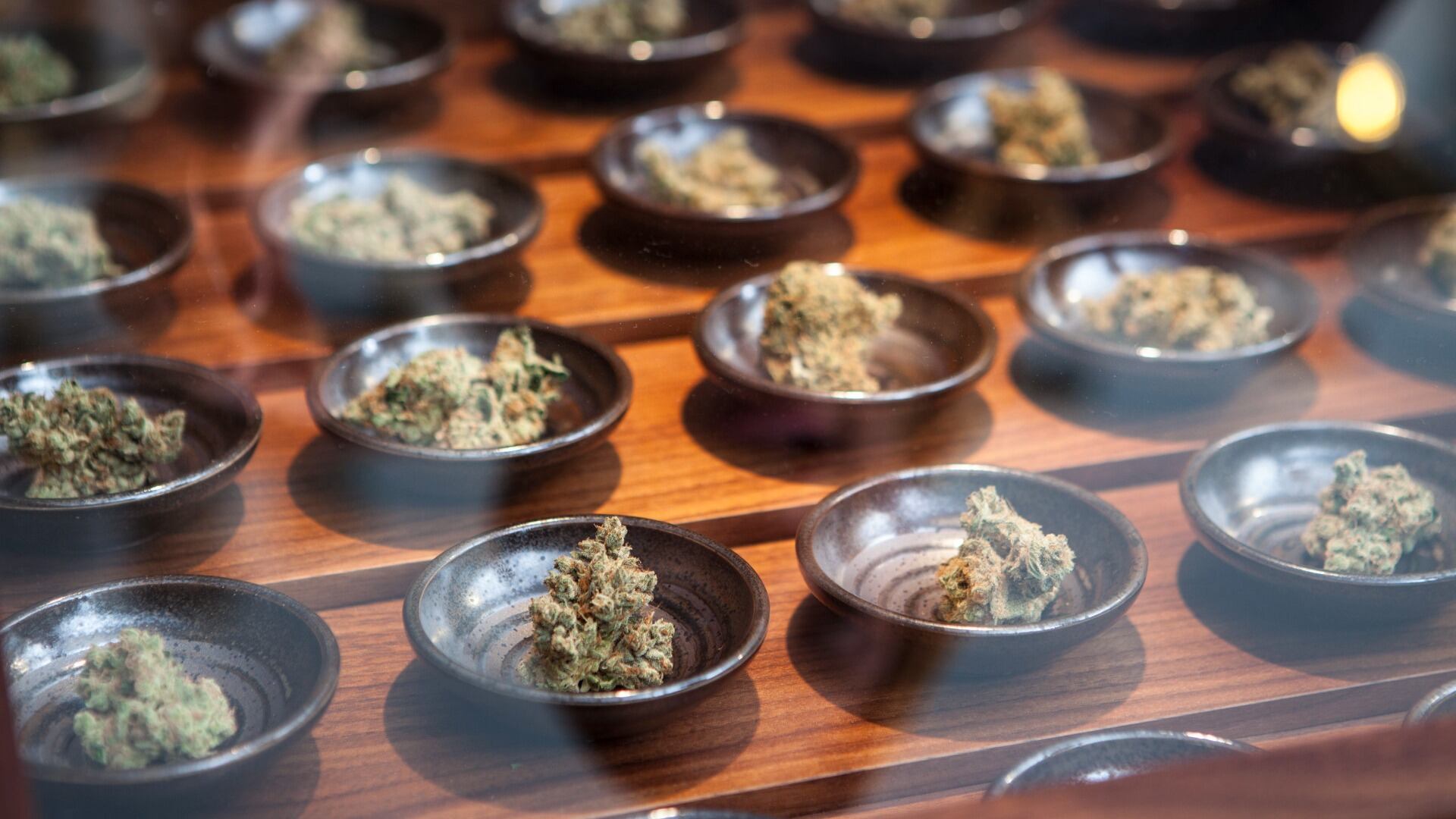
New York City officials are cracking down on unlicensed cannabis shops.
The Manhattan District Attorney’s office has asked owners and landlords to commence eviction proceedings on unlicensed shops that have popped up all over the city following cannabis legalization across New York in 2021.
“We're not going to stand idly by, and we won't stop until every illegal smoke shop is rolled up and stubbed out and know[s] that there are ways to sell legal cannabis,” New York City Mayor Eric Adams said during a Tuesday press conference.
Manhattan District Attorney Alvin Bragg said his office sent letters to about 400 “smoke shops” in the Manhattan borough, informing them that the district attorney’s office is advising landlords to commence eviction proceedings against commercial tenants that engage in illegal activity. That includes unlicensed cannabis sales, as well as sales of untaxed cigarettes or adulterated products.
Should landlords fail to take action quickly enough, the DA’s office will pursue the proceedings itself. Bragg added that the focus of the enforcement is civil, not criminal, but that the office isn’t ruling out criminal enforcement for things like money laundering, tax evasion and cannabis sales to minors. For now, the directive applies only to Manhattan, but others could follow suit if the efforts are successful.
Mayor Adams emphasized concerns over unlicensed shops selling to minors or selling contaminated products. A report, published in December, claimed 40 percent of unlicensed cannabis tested contained contaminants including E. coli, pesticides, heavy metals and salmonella. Adams also said the city is taking direct action against four unlicensed shops in New York’s 9th precinct that were caught selling cannabis to underage auxiliary NYPD officers.
“We're not going to stand by while illegal outlets sell drugs and vapes to our children while simultaneously undermining an emerging industry that can provide jobs and justice for adults,” Adams said.
Officials declined to name the shops, but New York City Corporate Counsel Hon. Sylvia O. Hinds-Radix said NYPD filed “at least four” nuisance abatement cases after members of the East Village community complained.
The action builds on a two-week pilot program, kicked off in November, during which an interagency task force seized about $4 million worth of unlicensed cannabis products from about 53 locations and issued some 566 summonses. The task force contained members of the Sheriff’s Office, NYPD, NYC Department of Consumer and Worker Protection, and Office of Cannabis Management.
“These businesses are skirting our rules, selling products attractive to minors, selling products to minors, doing so without reinvesting meaningfully in the communities in which they operate,” New York State Office of Cannabis Management Executive Director Chris Alexander said.
The action also comes shortly after New York’s first licensed, adult use cannabis dispensaries opened up shop. Regulators and the NYPD have faced intense criticism for perceived inaction against unlicensed dispensaries even as the first legal sales kick off. The first shop, which opened in late December, is run by Housing Works, a nonprofit that advocates for and provides services to people living with HIV/AIDS, the homeless population, and those dealing with substance abuse. The second licensed dispensary to open, Smacked Village, is the first Black-owned shop, and, crucially, the first shop owned by an individual harmed by punitive cannabis laws.
“Those legitimate businesses face stiff competition from shops that are not following the rules. It is time for the operation of unlicensed cannabis dispensaries to end,” Bragg said.
Another major area of concern, particularly among advocates, is that there’s a pathway for “legacy” operators -- or those selling cannabis outside of the law -- to get into the licensed market. Regulators capped the initial batch of licenses at 150 for justice-involved individuals like Smacked Village owner Roland Conner and 25 for nonprofits like Housing Works, and regulations are in the works for additional licensing to come.
"We've been rolling out our licenses, but we're doing so in a way that the law dictates, making sure that those who've been impacted have an opportunity to go first,” Alexander said on Tuesday.
Mayor Adams said cannabis in New York is projected to be a $1.3 billion industry in its first year that supports as many as 24,000 jobs.
“We have a moral obligation as well as a legal obligation to ensure that it is done correctly,” Adams said.