By Corey Williams and Joey Cappelletti
Women who were sexually assaulted by former Michigan State University sports doctor Larry Nassar filed a lawsuit Thursday saying school officials made “secret decisions” about releasing documents in the case.
The group of survivors and parents says the lawsuit seeks accountability — not money — from the university. They say the school refused to give the state attorney general’s office more than 6,000 documents for an investigation into how Nassar was allowed to get away with his behavior, and later wouldn't turn over emails about the board of trustees' decision-making. The school has said the documents are protected by attorney-client privilege.
“It’s really, really hard to heal when you know there’s still answers to a lot of your questions out there,” Nassar survivor Elizabeth Maurer said at a press conference Thursday in East Lansing.
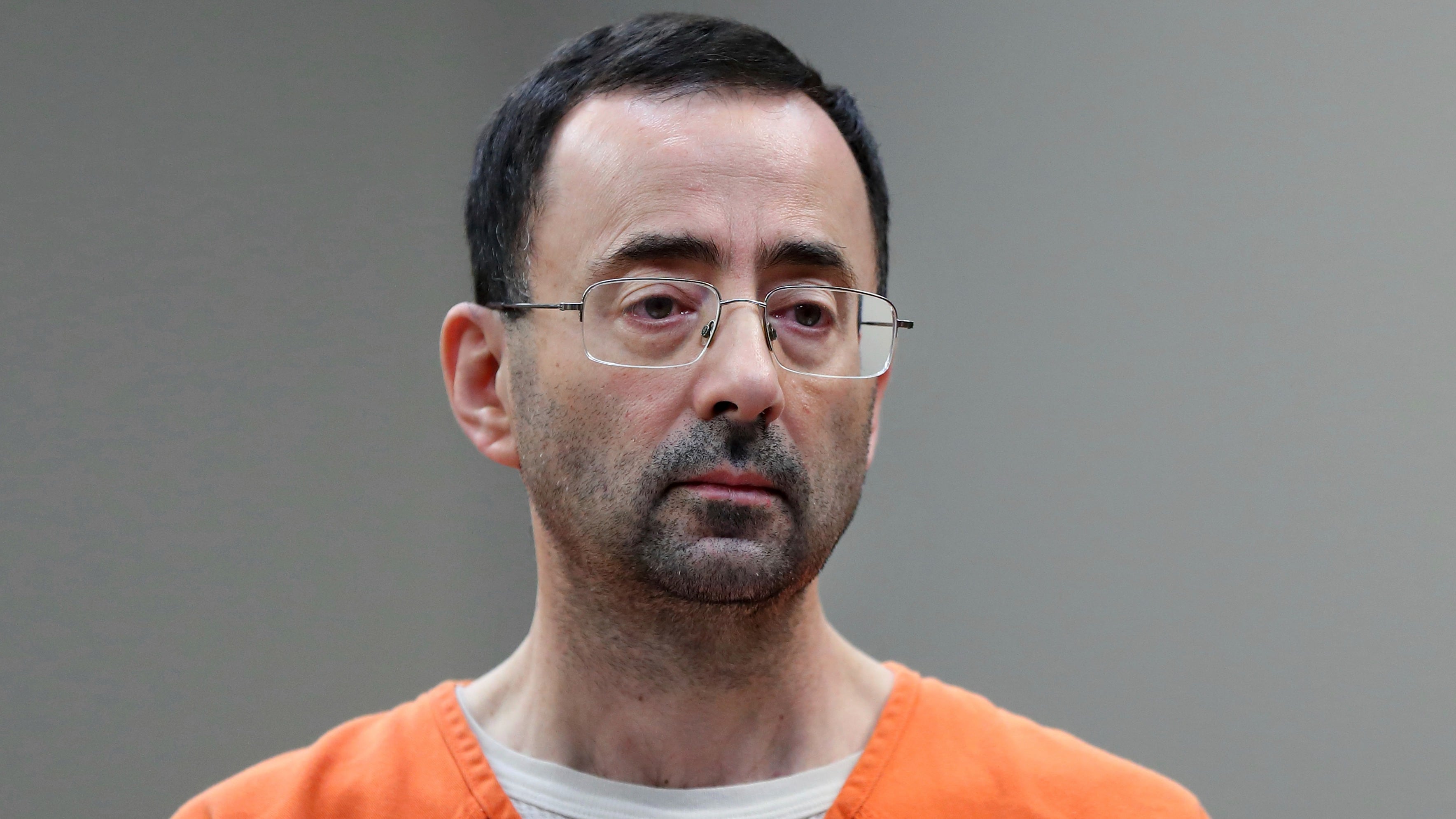
Nassar was sentenced in 2018 to 40 to 175 years in prison after he admitted to molesting some of the nation’s top gymnasts for years under the guise of medical treatment. He was accused of sexually assaulting hundreds of women and girls.
Michigan State has been criticized for its handling of the Nassar investigation and its dealings with survivors in the aftermath of his arrest and conviction. The school has settled lawsuits filed by Nassar victims for $500 million.
Mark Bullion, a spokesperson for Michigan State, said in an email Thursday that the school does not comment on pending litigation, and that the school has not seen or been served with the new lawsuit.
The civil suit names the school and its elected trustee board, saying the decisions and “secret votes” by a public body skirted Michigan's open meetings laws and the state Constitution.
“We contend that board members made a behind-closed-doors secret decision not to release the records in blatant violation of the Open Meetings Act,” victims' attorney Azzam Elder said in a release.
Elder said at Thursday's press conference that he has asked an Ingham County judge for a jury trial and that video deposition of the board members be allowed. “If you’re going to lie about it, at least have the guts to do it publicly,” Elder said.
The suit wants the school to turn over emails and other communications about decisions trustees may have made out of the public eye and to have a court declare that Michigan State violated the Freedom of Information Act, and to compel the university to comply with both FOIA and the Open Meetings Act going forward.
Attorney General Dana Nessel has asked the school to release the more than 6,000 documents to help shine a light on what the school knew about the abuse. She ended her investigation in 2021 of the school's handling of the Nassar case because the university refused to provide documents related to the scandal.
“This is about who knew what, when at the university,” Nassar survivor Melissa Brown Hudecz said in a statement read Thursday. “We can’t heal as a community until we know that everyone who enabled a predator is accountable. By protecting the 6,000 secret documents and anyone named in them, the board is adding to survivors’ trauma with their lack of institutional accountability.”
Earlier this month, Nassar was stabbed multiple times by another prisoner in his federal penitentiary cell in Florida. The prisoner said Nassar provoked the attack by making a lewd comment about wanting to see girls play in the Wimbledon women's tennis match while they were watching the tournament on TV, a person familiar with the matter told The Associated Press. The person was not authorized to publicly discuss details of the attack or the ongoing investigation and did so on condition anonymity.
Williams reported from West Bloomfield, Michigan.