By Eric Tucker and Alanna Durkin Richer
Donald Trump’s election interference case in Washington will be put on hold while the former president further pursues his claims that he is immune from prosecution, a judge ruled Wednesday.
The decision from U.S. District Judge Tanya Chutkan raises the likelihood that Trump's trial on charges of plotting to overturn the 2020 election, currently scheduled for March 4, will be postponed as the appeal of a legally untested argument winds through the courts.
Shortly after Chutkan's ruling, the federal appeals court in Washington granted prosecutors' request to expedite consideration of Trump's appeal. The appeals court set deadlines for briefs to be filed between Dec. 23 and Jan. 2, but has not yet scheduled a date for arguments.
The issue is of paramount significance to both sides given that a court ruling in Trump’s favor would presumably derail the case and because a protracted appeal could result in a significant postponement of the proceedings, including until potentially after next year's election, that would benefit the ex-president as he seeks to reclaim the White House.
Chutkan's three-page order is the latest volley in a simmering dispute over the scope of presidential power that has the potential to be decided by the U.S. Supreme Court for the first time in American history.
A Trump campaign spokesperson called the judge’s decision to pause the case “a big win for President Trump and our rule of law.”
“The constitution should not be suspended in a baseless prosecution against the leading candidate for President,” Trump spokesperson Steven Cheung said.
After Chutkan this month turned aside Trump's claims that he was shielded from prosecution for actions he took while fulfilling his duties as president, his lawyers asked the Washington-based appeals court to review the decision and urged the judge to freeze the case in the meantime.
But special counsel Jack Smith, in a sign of both the gravity of the issue and his determination to keep the case on schedule, sought to leapfrog the appeals court by asking the U.S. Supreme Court on Monday to fast-track an opinion on the immunity question that would permit the prosecution to proceed. The court indicated that it would decide quickly whether to take the case up, ordering Trump’s lawyers to respond by Dec. 20. But it did not signal what it would ultimately do.
The Supreme Court dealt further uncertainty to the timing and overall fate of the case Wednesday as it said it would review a charge of obstruction of an official proceeding that has been brought against more than 300 participants in the Jan. 6, 2021, riot at the U.S. Capitol. The charge is among the four brought by Smith against Trump, so a ruling in favor of the accused rioters could upend not only those cases but also affect the prosecution of the ex-president.
The argument that Trump is immune from prosecution has for months been seen as perhaps the most weighty and legally consequential objection made by the Trump lawyers ahead of trial. No former president has ever been prosecuted before, a lack of historical precedent Trump’s team has seized on in trying to get the indictment tossed out.
But Chutkan, who was appointed by former President Barack Obama, flatly rejected Trump's arguments, saying the office of the president “does not confer a lifelong ‘get-out-of-jail-free’ pass.”
Her latest order Wednesday pauses any “further proceedings that would move this case towards trial or impose additional burdens of litigation on Defendant." But she left open the possibility of preserving the current trial date if the case returns to her court, saying that date and other deadlines were being paused rather than canceled. She also said her ruling had no bearing on the enforcement of a gag order placing restrictions on Trump's speech outside of court.
Smith’s team had told Chutkan not to pause the case, saying the judge could continue to resolve issues unrelated to the appeal while the immunity claim is pending in appeals courts. Prosecutors said they would “continue to meet every pretrial deadline the court has set for it,” so that the case could swiftly move to trial if the higher courts reject Trump’s immunity argument.
While simultaneously asking the Supreme Court to hear the case, Smith's team had also asked the D.C. appeals court to expedite its consideration of the Trump appeal. But Trump's lawyers accused prosecutors of trying to rush the case through before next year’s presidential election as they told the judges to take their time.
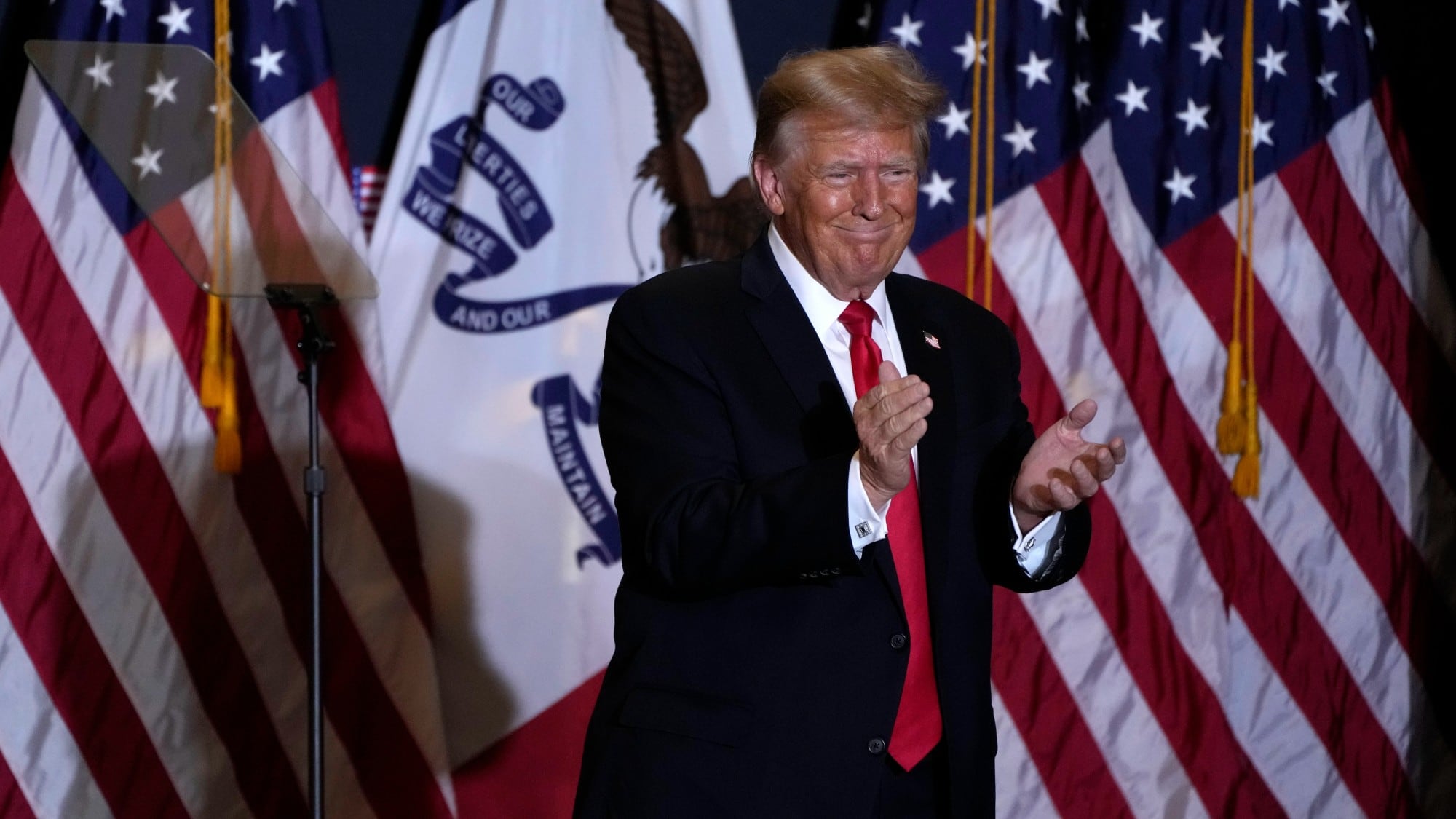
Trump, in a social media post Wednesday evening, accused Smith of trying to interfere with the election by rushing to the Supreme Court on the question of immunity — something Trump said “is so basic to America that it should be automatic.” He echoed that sentiment at a campaign event in Iowa, saying prosecutors had waited until “they saw I was hot” to bring a case.
A Supreme Court case usually lasts several months, from the time the justices agree to hear it until a final decision. Smith is asking the court to move with unusual, but not unprecedented, speed.
Nearly 50 years ago, the justices acted within two months of being asked to force President Richard Nixon to turn over Oval Office recordings in the Watergate scandal. The tapes were then used later in 1974 in the corruption prosecutions of Nixon’s former aides.
It took the high court just a few days to effectively decide the 2000 presidential election for Republican George W. Bush over Democrat Al Gore.
If the justices decline to step in now, Trump’s appeal would continue at the U.S. Court of Appeals for the D.C. Circuit. Smith said even a rapid appellate decision might not get to the Supreme Court in time for review and final word before the court’s traditional summer break.
Trump faces four criminal prosecutions. He is charged in Florida with illegally retaining classified documents at his Mar-a-Lago estate and faces a state prosecution in Georgia that accuses him of trying to subvert that state's 2020 presidential election and a New York case that accuses him of falsifying business records in connection with a hush money payment to a porn actress.