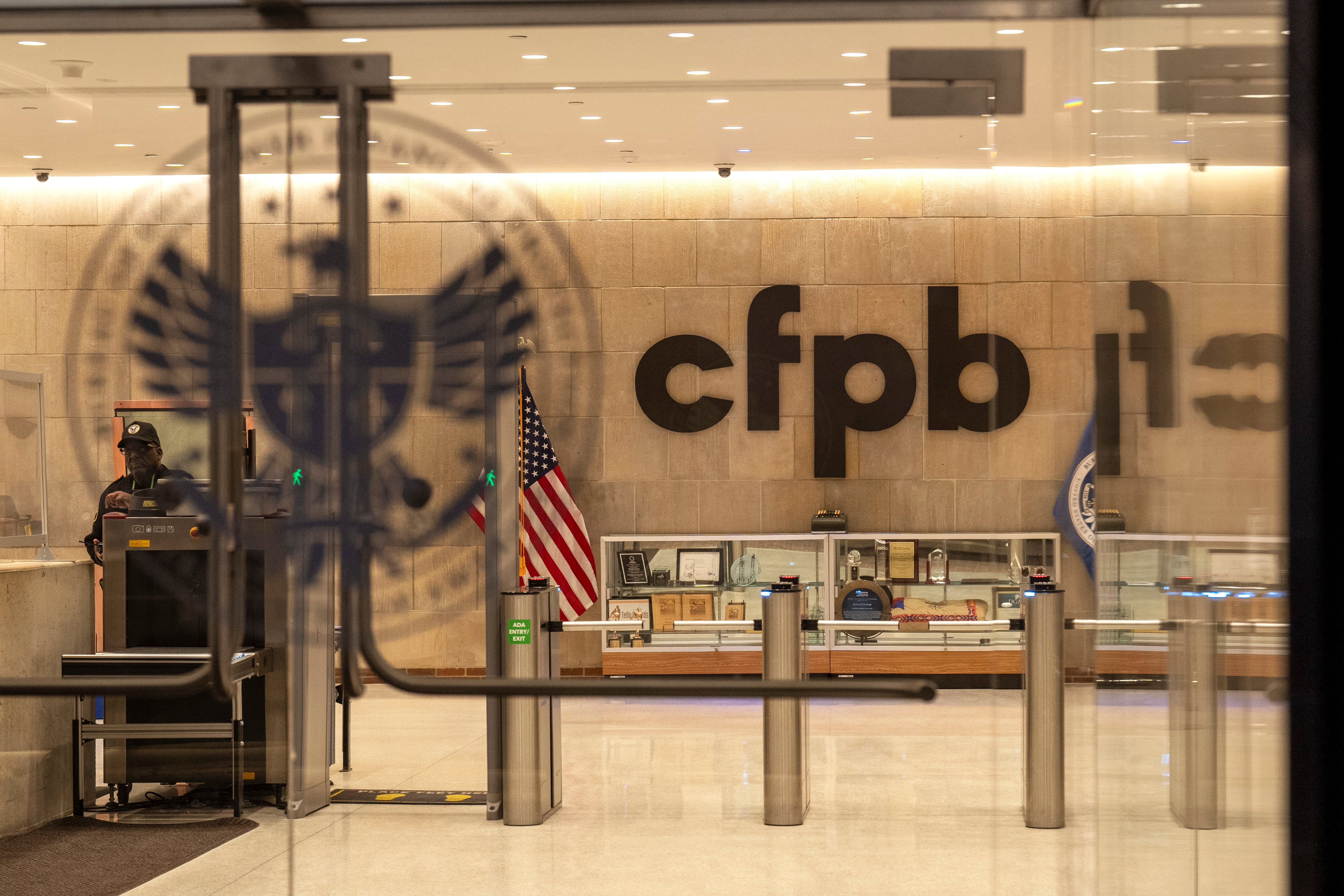
WASHINGTON (AP) — President Donald Trump’s attempt to fire nearly everyone at the Consumer Financial Protection Bureau was paused on Friday by a federal judge, who said she was “deeply concerned” about the plan.
The decision leaves in limbo a bureau created after the Great Recession to safeguard against fraud, abuse and deceptive practices. Trump administration officials argue that it has overstepped its authority and should have a more limited mission.
On Thursday, the administration officials moved to fire roughly 1,500 people, leaving around 200 employees, through a reduction in force that would dramatically downsize the bureau.
U.S. District Judge Amy Berman Jackson said she was worried the layoffs would violate her earlier order stopping the Republican administration from shutting down the CFPB. She's been considering a lawsuit filed by an employee union that wants to preserve the bureau.
Jackson scheduled a hearing on April 28 to hear testimony from officials who worked on the reduction in force, or RIF.
“I’m willing to resolve it quickly, but I’m not going to let this RIF go forward until I have,” she said.
It's the latest example of how Trump's plans have faced legal hurdles as he works to reshape the federal government, saying it’s rife with fraud, waste and abuse. Other layoffs and policies have been subjected to stop-and-go litigation and court orders.
The CFPB has long frustrated businesses with its oversight and investigations, and Trump adviser Elon Musk made it a top target of his Department of Government Efficiency.
Mark Paoletta, the CFPB's chief legal officer, wrote in a court declaration that "the bureau's activities have pushed well beyond the limits of the law," including what he described as “intrusive and wasteful fishing expeditions.”
He said officials have spent weeks developing “a much more limited vision for enforcement and supervision activities” with a “smaller, more efficient operation.”
Some of the CFPB's responsibilities are required by law but would have only one person assigned to them under the Trump administration's plan.
The enforcement division is slated to be cut from 248 to 50 employees. The supervision division faces an even deeper reduction, from 487 to 50, plus a relocation from Washington to the Southeastern region.
Before Friday’s hearing, attorneys for the National Treasury Employees Union filed a sworn statement from a CFPB employee identified only by the pseudonym Alex Doe. The employee said Gavin Kliger, a member of DOGE, was managing the agency’s RIF team charged with sending layoff notices.
“He kept the team up for 36 hours straight to ensure that the notices would go out yesterday,” the employee said. “Gavin was screaming at people he did not believe were working fast enough to ensure they could go out on this compressed timeline, calling them incompetent.”
The bureau’s chief operating officer, Adam Martinez, told the judge that he believes Kliger is an Office of Personnel Management employee detailed to the CFPB and doesn’t work directly for DOGE.
Jackson said she will require Kliger to attend and possibly testify at the April 28 hearing. She said she wants to know why he was there “and what we was doing.”
“We’re not going to decide what happened until we know what happened,” Jackson said.
The pseudonymous employee said team members raised concerns that the bureau had to conduct a “particularized assessment” before it could implement an RIF. Paoletta told them to ignore those concerns and move forward with mass firings, adding that “leadership would assume the risk,” the employee stated.
White House officials did not immediately respond to questions about the judge’s decision or the employee’s court declaration.