TOKYO (AP) — The former chief executive of Japanese beverage giant Suntory acknowledged he was investigated on suspicion of possessing an illegal drug but asserted his innocence despite resigning from his position.
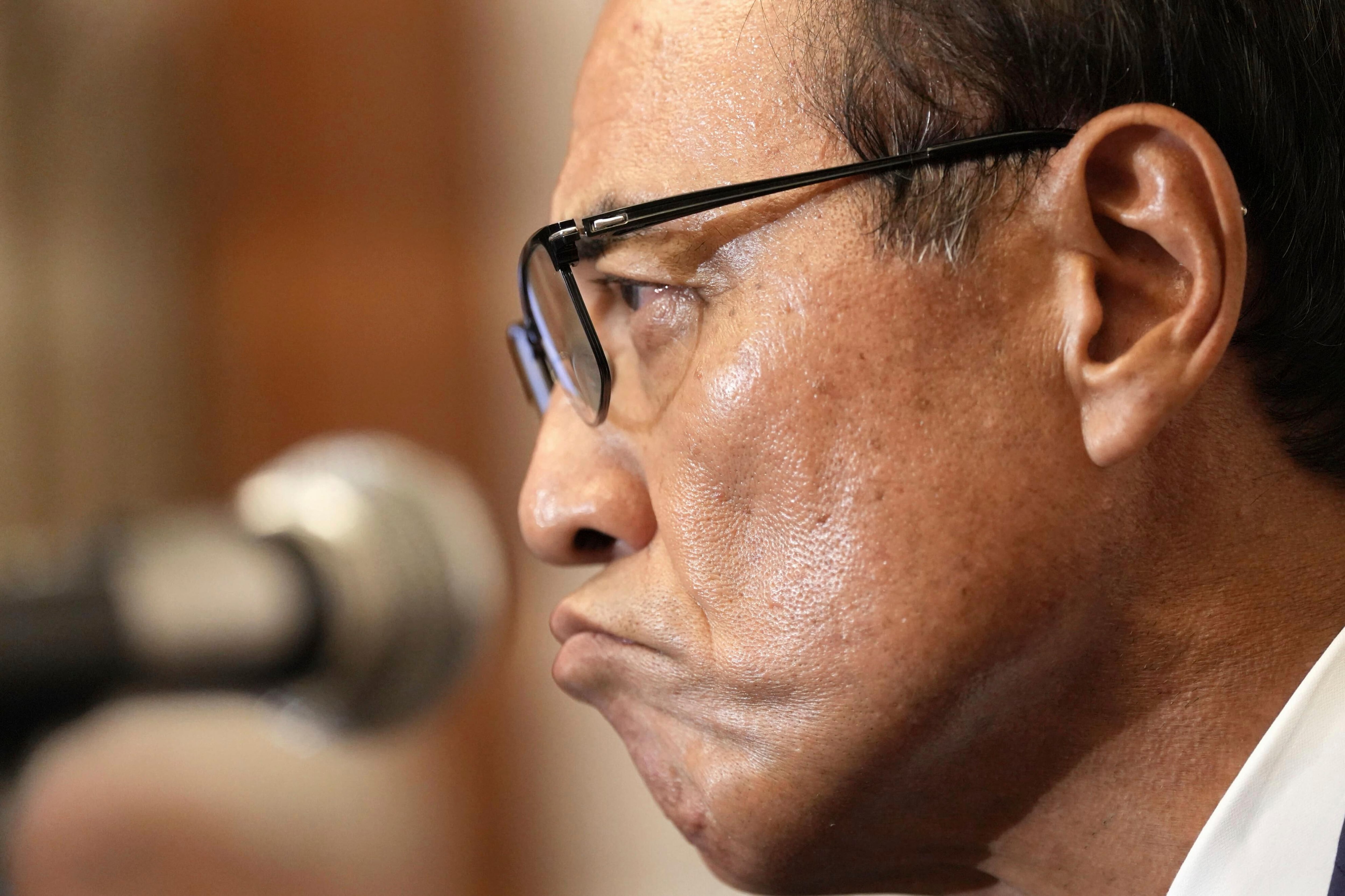
“I have not broken the law. I believe I am innocent,” Takeshi Niinami told reporters Wednesday.
Suntory Holdings President Nobuhiro Torii, a member of the company’s founding family, held a news conference Tuesday to announce Niinami had resigned. Torii declined to give many details, saying the case was still under investigation. Police in Fukuoka, southwestern Japan, confirmed Niinami was being investigated in a possible drug case without giving further details.
Niinami said Wednesday the case involved a health supplement he called “a CBD supplement” that was made in the U.S. and recommended by a friend who sent it to him by mail. CBD stands for “cannabidiol” and contains a component of marijuana.
Niinami assumed the supplement was “legal 100%” and he wanted to try the product, which was cheaper than versions sold in Japan, to help relieve jet lag from overseas trips. He was traveling when the package arrived and he did not receive it, he said.
“I want to apologize to society,” Niinami, 66, said after bowing deeply. He noted Suntory makes supplements in addition to whisky, beer and non-alcoholic beverages, so his actions showed carelessness.
Niinami is credited with guiding strong growth at Suntory, founded in 1899, including its overseas expansion such as the acquisition of Beam Inc. for $16 billion a decade ago. That deal included iconic brands such as Jim Beam Bourbon, Sauza Tequila and Canadian Club Whisky and helped make Suntory a well-known alcoholic brand in the U.S.
Niinami’s successor at Suntory has not yet been named. Japan has a culture of shame and group accountability and it is common for people who cause embarrassment to give up their posts.
Niinami also has held a leadership position at Keizai Doyukai, or the Japan Association of Corporate Executives, a high-profile business lobby. He made his comments Wednesday at the Keizai Doyukai office in Tokyo.
___
Yuri Kageyama is on Threads: https://www.threads.com/@yurikageyama