In August 2022, I did something crazy—at least crazy for someone who typically walks a very safe path in life.
I quit my dream job in videojournalism, nearly emptied my savings and, over the next 18 months, traveled to 18 countries across South America and Asia. I wanted to see how far my dollar could stretch in countries that would allow me to live much more luxuriously than Los Angeles ever could.
And stretch it did! I ate at restaurants for every meal, indulged in an iced latte almost every morning, ordered custom-made silk clothing and embarked on guided excursions for far less than what I’d pay in any major U.S. city.
Where in the United States could I stay at a mid-range hotel one block from a gorgeous beach for $9 a night? In Da Nang, Vietnam, I could.
In L.A. I certainly couldn’t sip $1 red wine at Nobu then take a full-day glacier tour for $10. In Argentine Patagonia I could (though not technically at Nobu).
This experience was not mine alone. I’m just one of many millennials looking abroad in search of a more comfortable, less stressful lifestyle — the kind that American dream once seemed to promise, and a life that feels increasingly out of reach to the middle class.
An analysis of government data by the nonprofit Americans Helping Americans Abroad found that the number of Americans living overseas increased approximately 13% in six years, from about 4.8 million in 2018 to about 5.4 million in 2023. And those living abroad are enticing others to join them with the explosion in social media content documenting the seemingly glamorous #expatlife and #digitalnomadlife.
Of all the places I visited, there was only one that really tempted me to leave the familiarity of my lifelong home in the U.S.: Bali, Indonesia. For almost four months, I lived on the predominantly Hindu island like a Zenned-out queen on about $400 a week, a quarter of what the same lifestyle would cost me back home.
But Bali’s appeal is about far more than just affordability. Life felt easy, laid-back, free-spirited and luxurious, in a way I hadn't experienced elsewhere.
Here’s why I think Bali offers the best bang for your buck when it comes to cost of living for quality of life.
1. I think Bali offers the best cost of living for quality of life
While Bali isn't the absolute cheapest place I visited (that would be Da Nang, Vietnam), it offered the best amenities for what I paid. For $20 to $25 per night, I stayed in modern mid-range hotels or elegant Balinese guest houses close to the city center, complete with daily cleaning and breakfast.
I ate every meal at trendy, contemporary and tropical-chic cafes and restaurants that are so abundant across the island—that, more often than not, came with views of rice fields, jungle treetops, or the ocean. A main dish and drink cost me on average about $8.
I partied occasionally, paying about $10 for a cocktail at the most high-end day clubs and bars. I sometimes enjoyed shopping and pampering myself. A casual bohemian-style outfit cost about $7 from the local market, with some negotiation. A gel manicure cost me about $10.
Adventures are cheap too. A 10-hour solo guided excursion on a motorbike cost me about $20. With a car, you’ll pay roughly $50. Using the Uber of Southeast Asia, Grab, costs about $1 for 10 to 15 minutes on a motorbike.
The local Balinese, however, expressed shock when I told them how much I was spending per week. They live on as little as $100 per month. They were flabbergasted to hear how much life costs in major U.S. cities like Los Angeles.
2. You’re surrounded by natural beauty
There are other benefits of being in Bali that money can’t buy. Much of the island is so lush that it feels like one big botanical garden. Being immersed in nature all the time was, quite literally, a breath of fresh air!
Many tourists stick to the strip of shoreline close to the airport that is known for its parties and beach clubs. It’s a hectic urban area, and I considered the beaches mediocre.
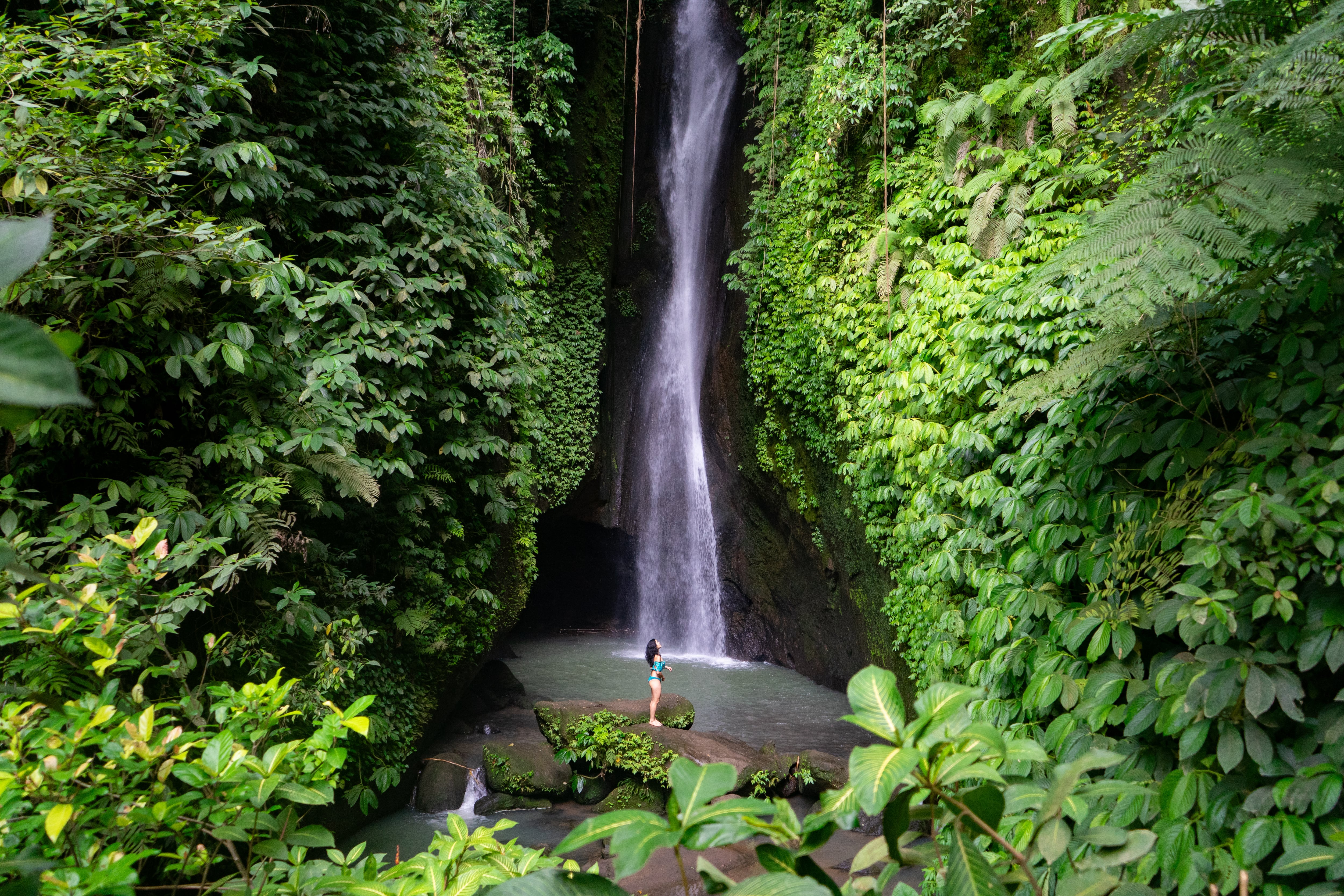
After a couple weeks on the crowded coast, I felt much more blissful moving an hour inland to Ubud, a touristy but more peaceful town surrounded by jungle. From there, I embarked on many outdoor adventures, whizzing on motorbikes through vivid green forests and rice fields while hopping from one stunning waterfall to another. I also soothed my burned-out nerves with yoga and meditation surrounded by lush foliage.
3. Making friends is easy
It’s easy to make friends in Bali, because the island draws so many tourists, expats and digital nomads from around the world. I bonded with a lot of fellow millennials also disillusioned with the big-city rat race, who wanted a more free-spirited life on their own terms. I even met the person I now consider one of my best friends there!
Americans can easily visit Bali by paying about $30 for a visa-on-arrival that allows 30 days on the island. You can extend your visa once for another 30 days. Many digital nomads live in Bali by doing regular visa runs. That’s when you leave the island once your tourist visa expires and return for another 60 days with a new visa-on-arrival.
The downside is people in Bali tend to come and go, and saying good-bye over and over can be emotionally challenging.
The locals I met mostly all spoke English and were incredibly kind and helpful, since tourism is Bali’s largest industry.
4. My mental health improved by leaps and bounds
In Bali, I was thriving physically and emotionally. However, my first two weeks on the island, I struggled with loneliness, insecurity and mild depression. But that led to many life-changing revelations that helped me heal past trauma and build stronger relationships.
Many people say there’s an energy in Bali that makes you confront and heal all your inner demons. The way I see it, when all your needs are so readily taken care of, it allows you to relax, slow down and focus on personal development.
Bali has its downsides, too, compared to back home. It’s hot and humid year-round. There could be more sidewalks. Some of the roads are dilapidated. I had to be more careful with my belongings and food hygiene. It’s harder to build a stable community here. But Bali feels like home and an adventure like I haven’t felt anywhere else.
In February 2024, however, it was time to return home to Los Angeles to reunite with family and restart my career again after my sabbatical. I’m very aware that my lifestyle in Bali was made possible by the career I had in the United States. And while I’m pining for life in Bali, I’m grateful for the place I call home.