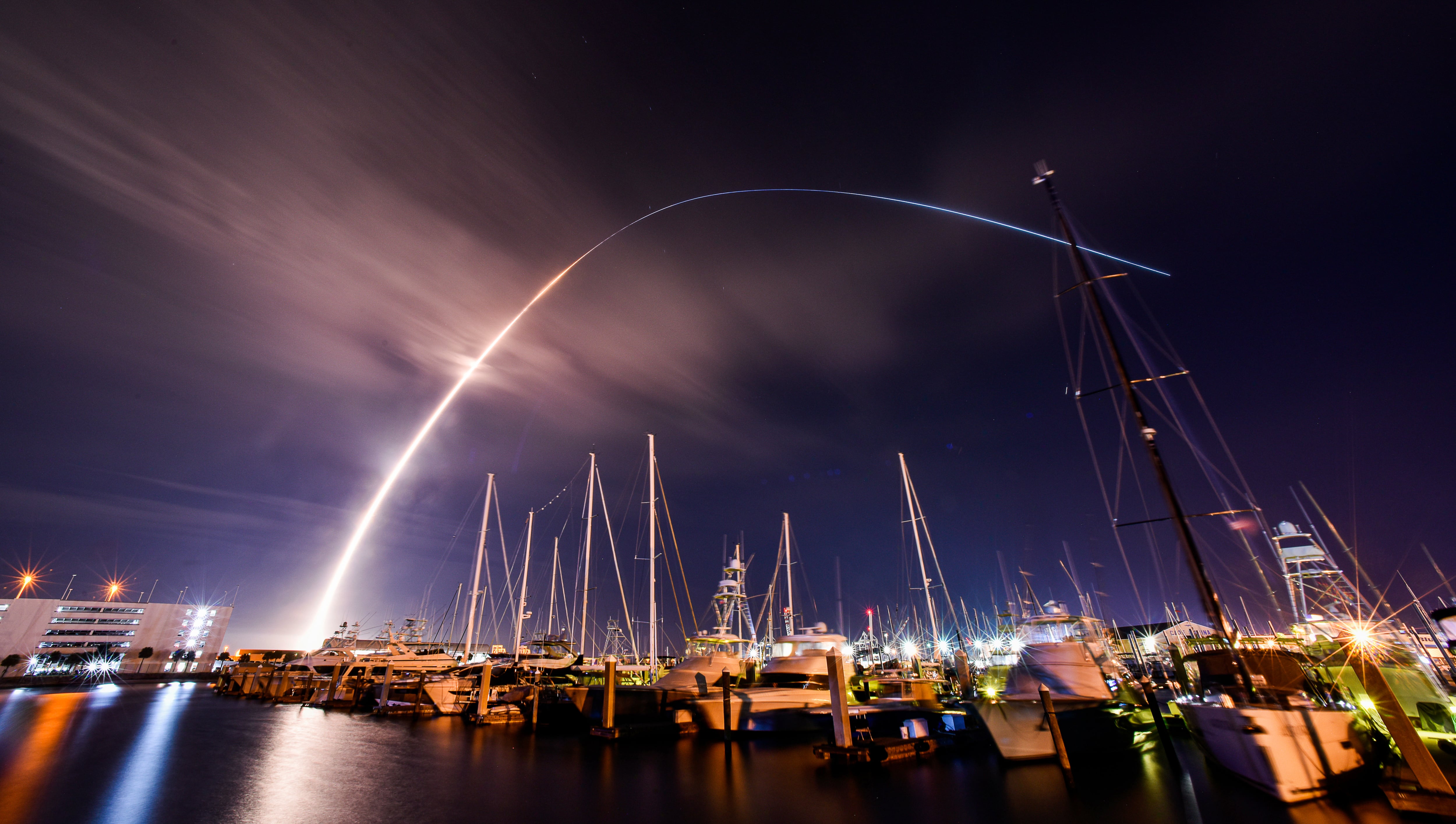
The first U.S. lunar lander in more than 50 years rocketed to space Monday, launching a race for private companies to deliver experiments and other items to the moon.
But about seven hours after liftoff, Astrobotic Technology reported the solar panel on the lander wasn’t properly pointed toward the sun to generate and store power and it was investigating the issue.
The Pittsburgh company's lander caught a ride on a brand new rocket, United Launch Alliance’s Vulcan. The Vulcan streaked through the Florida predawn sky, putting the spacecraft on a roundabout route to the moon for a landing attempt on Feb. 23.
The company aims to be the first private business to successfully land on the moon, something only four countries have accomplished. But a Houston company also has a lander ready to fly, and could beat it to the lunar surface, taking a more direct path.
NASA gave the two companies millions to build and fly their own lunar landers. The space agency wants the privately owned landers to scope out the place before astronauts arrive while delivering NASA tech and science experiments as well as odds and ends for other customers. Astrobotic's contract for the Peregrine lander: $108 million.
The last time the U.S. launched a moon-landing mission was in December 1972. Apollo 17’s Gene Cernan and Harrison Schmitt became the 11th and 12th men to walk on the moon, closing out an era that has remained NASA’s pinnacle.
The space agency’s new Artemis program — named after the twin sister of Apollo in Greek mythology — looks to return astronauts to the moon’s surface within the next few years. First will be a lunar fly-around with four astronauts, possibly before the end of the year.
Highlighting Monday's moonshot was the long-delayed initial test flight of the Vulcan rocket from Cape Canaveral Space Force Station. The 202-foot (61-meter) rocket is essentially an upgraded version of ULA’s hugely successful workhorse Atlas V, which is being phased out along with the company’s Delta IV. Jeff Bezos' rocket company, Blue Origin, provided the Vulcan's two main engines.
ULA declared success once the lander was free of the rocket's upper stage, nearly an hour into the flight. “Yee-haw!” shouted chief executive Tory Bruno. "I am so thrilled, I can’t tell you how much.”
The Soviet Union and the U.S. racked up a string of successful moon landings in the 1960s and 70s, before putting touchdowns on pause. China joined the elite club in 2013 and India in 2023. But last year also saw landers from Russia and a private Japanese company slam into the moon. An Israeli nonprofit crashed in 2019.
Next month, SpaceX will provide the lift for a lander from Intuitive Machines. The Nova-C lander's more direct one-week route could see both spacecraft attempting to land within days or even hours of one another.
The hourlong descent to the lunar surface — by far the biggest challenge — will be “exciting, nail-biting, terrifying all at once,” Thornton said.
Besides flying experiments for NASA, Astrobotic drummed up its own freight business, packing the 6-foot-tall (1.9-meter-tall) Peregrine lander with everything from a chip of rock from Mount Everest and toy-size cars from Mexico that will catapult to the lunar surface and cruise around, to the ashes and DNA of deceased space enthusiasts, including “Star Trek” creator Gene Roddenberry and science fiction writer Arthur C. Clarke.
The Navajo Nation recently sought to have the launch delayed because of the human remains. saying it would be a “profound desecration” of a celestial body revered by Native Americans. Thornton said the December objections came too late but promised to try to find “a good path forward” with the Navajo for future missions.
One of the spaceflight memorial companies that bought room on the lander, Celestis, said in a statement that no single culture or religion owns the moon and should not be able to veto a mission. More remains are on the rocket’s upper stage, which was boosted into a perpetual orbit around the sun reaching as far out as Mars.
Cargo fares for Peregrine ranged from a few hundred dollars to $1.2 million per kilogram (2.2 pounds), not nearly enough for Astrobotic to break even. But for this first flight, that's not the point, according to Thornton.
“A lot of people’s dreams and hopes are riding on this,” he said.