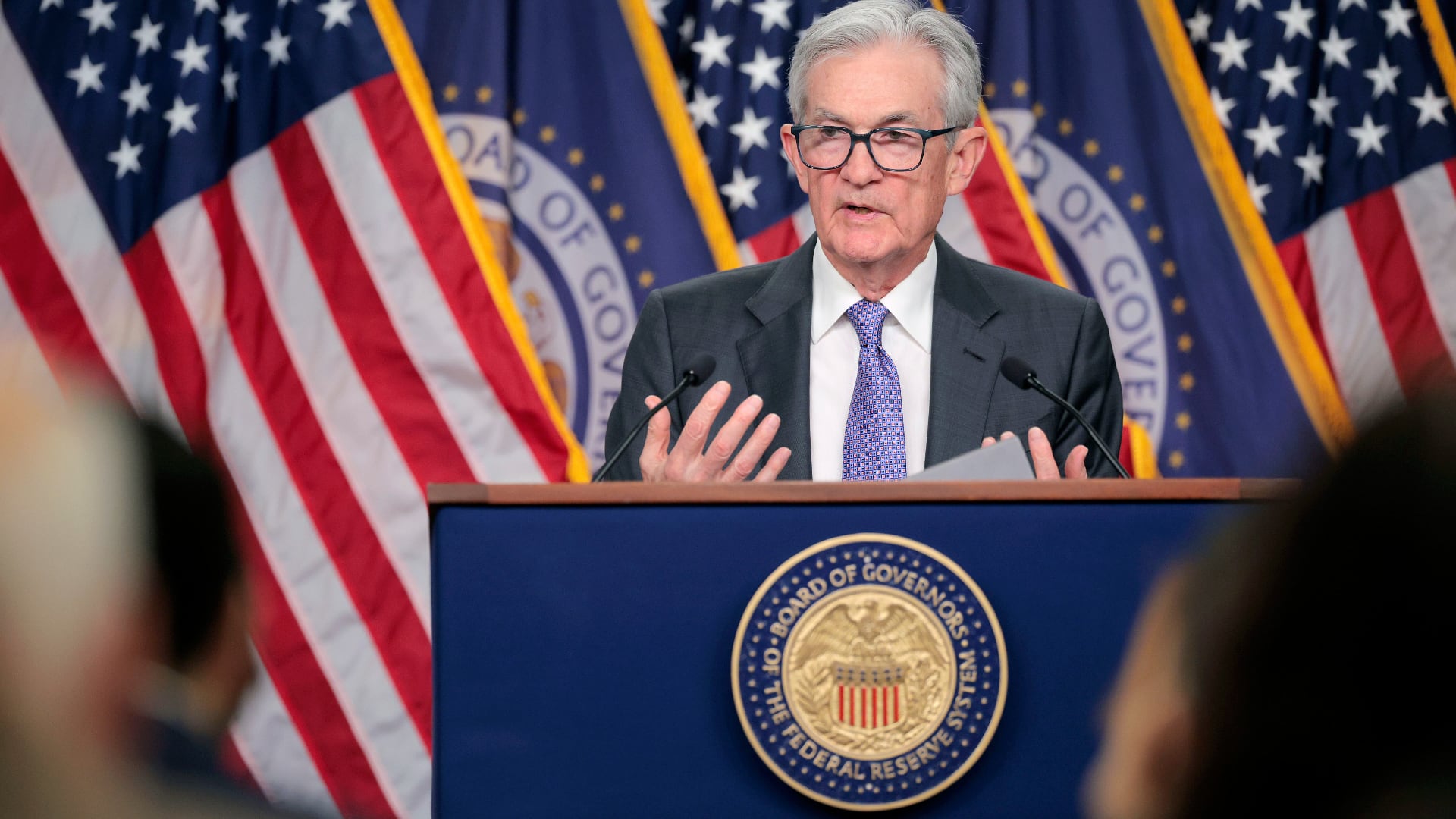
WASHINGTON (AP) — The Federal Reserve cut its key interest rate by a quarter-point Wednesday and projected it would do so twice more this year as concern grows at the central bank about the health of the nation’s labor market.
The move is the Fed’s first cut since December and lowered its short-term rate to about 4.1%, down from 4.3%. Fed officials, led by Chair Jerome Powell, had kept their rate unchanged this year as they evaluated the impact of tariffs, tighter immigration enforcement, and other Trump administration policies on inflation and the economy.
Yet the central bank’s focus has shifted quickly from inflation, which remains modestly above its 2% target, to jobs, as hiring has grounded nearly to a halt in recent months and the unemployment rate has ticked higher. Lower interest rates could reduce borrowing costs for mortgages, car loans, and business loans, and boost growth and hiring.
“In this less dynamic and somewhat softer labor market, the downside risks to employment appear to have risen,” Powell said at a press conference following the Fed’s two-day meeting.
Fed officials also signaled that they expect to reduce their key rate twice more this year, but just once in 2026, which may disappoint Wall Street. Before the meeting, investors had projected five cuts for the rest of this year and next.
Just one Fed policymaker dissented from the decision: Stephen Miran, who President Donald Trump appointed and was confirmed by the Senate in a rushed vote late Monday just hours before the meeting began. Miran preferred a larger half-point cut, but Powell told reporters there wasn’t “very much support” for the bigger-size cut among Fed officials.
Many economists had forecast there would be additional dissents, and the meeting’s outcome suggests that Powell was able to patch together a show of unity from a committee that includes Miran and two other Trump appointees from his first term, as well as a Fed governor, Lisa Cook, whom Trump is seeking to fire.
The Fed is facing both a challenging economic environment and threats to its traditional independence from day-to-day politics. At the same time that hiring has weakened, inflation remains stubbornly elevated. It rose 2.9% in August from a year ago, according to the consumer price index, up from 2.7% in July and noticeably above the Fed’s 2% target.
It’s unusual to have weaker hiring and elevated inflation, because typically a slowing economy causes consumers to pull back on spending, cooling price hikes. Powell suggested last month that sluggish growth could keep inflation in check even if tariffs lift prices further.
Separately, Trump’s attempted firing of Cook is the first time a president has tried to remove a Fed governor in the central bank’s 112-year history, and has been seen by many legal scholars as an unprecedented attack on the Fed’s independence. His administration has accused Cook of mortgage fraud, but the accusation has come in the context of Trump’s extensive criticism of Powell and the Fed for not cutting rates much faster and steeper.
An appeals court late Monday upheld an earlier ruling that the firing violated Cook’s due process rights. A lower court had also previously ruled that Trump did not provide sufficient justification to remove Cook. Also late Monday, the Senate voted to approve Miran’s nomination, and he was quickly sworn in Tuesday morning.
On Tuesday, Trump said Fed officials “have to make their own choice” but added that “they should listen to smart people like me.” Trump has said the Fed should reduce rates by three full percentage points.
The Fed’s move to cut rates puts it in a different spot from many other central banks overseas. Last week, the European Central Bank left its benchmark rate unchanged, as inflation has largely cooled and the economy has seen limited damage, so far, from U.S. tariffs. On Friday, the Bank of England is also expected to keep its rate on hold as inflation, at 3.8%, remains higher than in the United States.