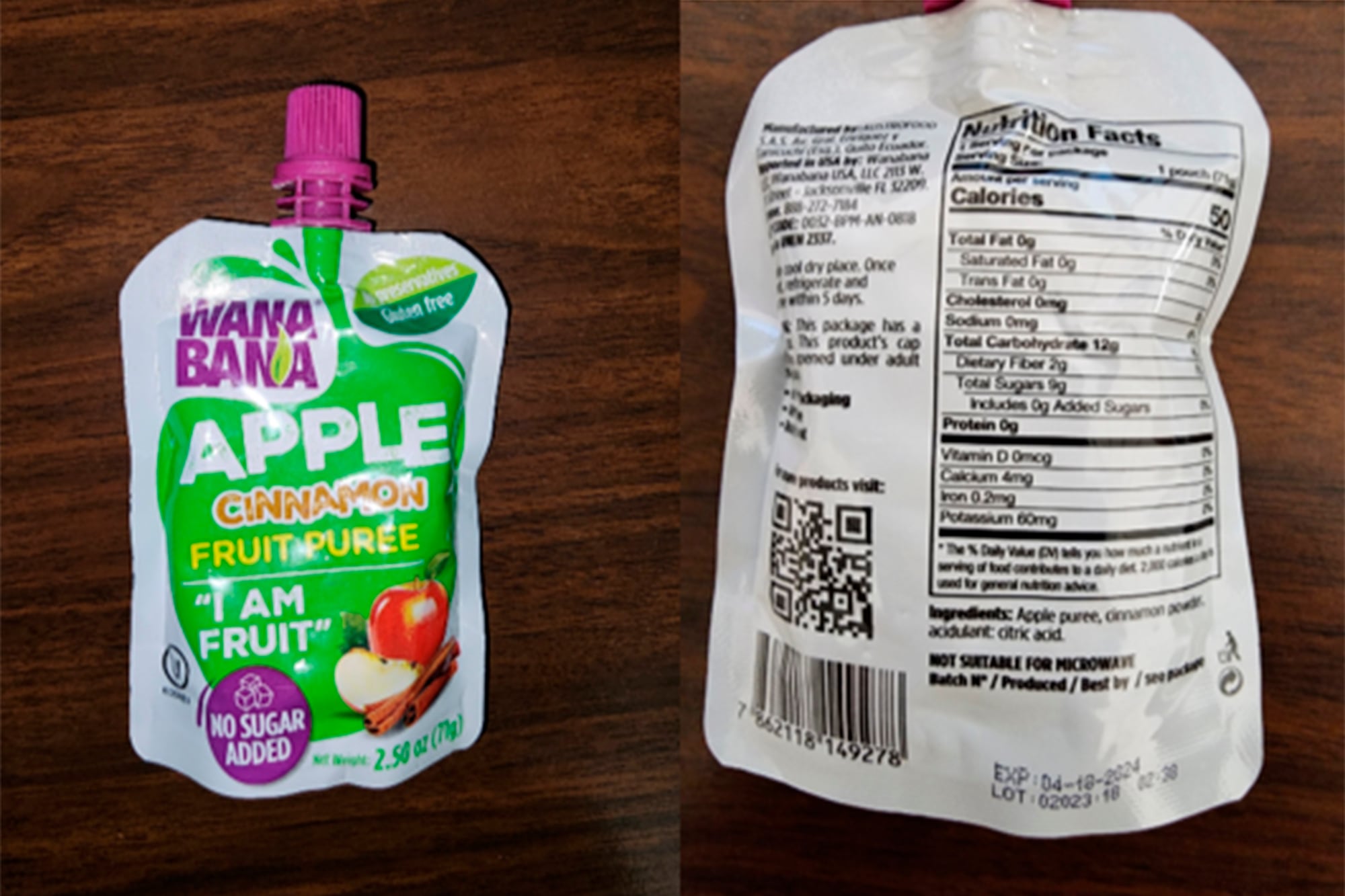
This photo provided by the U.S. Food and Drug Administration on Oct. 28, 2023, shows a WanaBana apple cinnamon fruit puree pouch. The FDA is warning parents and caregivers not to buy or serve certain pureed fruit pouches marketed to toddlers and young children because the food might contain dangerous levels of lead. Children who have eaten WanaBana apple cinnamon fruit puree pouches should be tested for possible lead poisoning, the agency said. (FDA via aP)
By Jonel Aleccia
The U.S. Food and Drug Administration is warning parents and caregivers not to buy or serve certain pureed fruit pouches marketed to toddlers and young children because the food might contain dangerous levels of lead.
Children who have eaten WanaBana apple cinnamon fruit puree pouches should be tested for possible lead poisoning, the agency said.
Four children in North Carolina were found to have high levels of lead in their blood linked to the puree products, health officials said. State health officials analyzed multiple lots of the product and detected “extremely high” concentrations of lead. The FDA confirmed the results and said they could lead to “acute toxicity.”
WanaBana, which is based in Coral Gables, Florida, has recalled all lot codes and expiration dates of the snack products, which are sold nationally, including at Sam's Club and Dollar Tree and on Amazon.
Lead is toxic to people of all ages, but can be especially harmful to children. Most children have no obvious symptoms, so it's important that kids who are exposed get tested to check levels of lead in their blood. Short-term exposure to lead can result in symptoms that include headache, abdominal pain, vomiting and anemia, the FDA said.
Heavy metals like lead can get into food products from soil, air, water or industrial processes, according to the American Academy of Pediatrics. Lead exposure can seriously harm children's health, causing damage to the brain and nervous system and slowed growth and development. There is no known safe level of lead exposure, the AAP said.
Computer chipmaker Nvidia is poised to release a quarterly earnings report that is expected to either deepen a recent downturn in the stock market or prompt an ebullient sigh of relief among investors increasingly worried the world’s most valuable company is perched upon an artificial intelligence bubble about to burst.
Emera CEO Scott Balfour discusses soaring energy demand, AI-driven grid challenges, clean-power investments, and how the company is building a resilient future.
JB Mackenzie discusses Robinhood’s new entertainment prediction markets, letting users engage with pop culture, award shows, and more through low-stakes bets.
Rhett Power shares his startup journey, lessons from his early years and insights from his book on overcoming negative self-talk to lead with confidence.
Despite inflation, Americans aren’t giving up the gym. Crunch Fitness CEO Jim Rowley discusses strong growth, value-driven expansion and what the future holds.
Home prices far outpacing incomes, low inventory, and higher living costs are reshaping the market. WSJ’s Veronica Dagher breaks down the challenges ahead.
As commercial options tighten, more travelers are turning to private aviation. Wheels Up CEO George Mattson breaks down capacity and demand challenges.
Layoffs, hiring slowdowns, and shifting skill demands dominate this year’s job talk. LinkedIn’s Kory Kantenga explains what workers should watch for next.