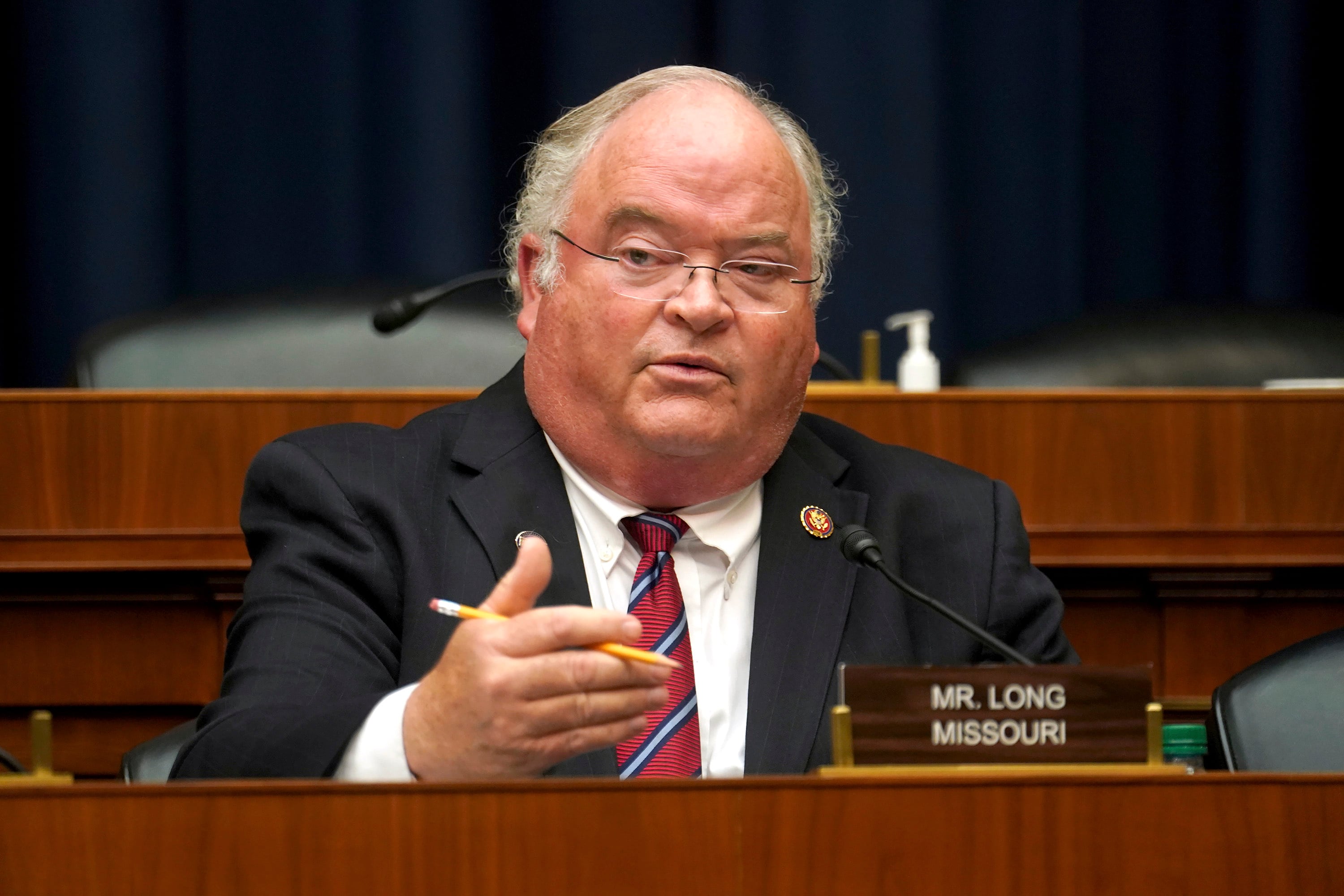
WASHINGTON (AP) — Former U.S. Rep. Billy Long of Missouri was confirmed on Thursday to lead the Internal Revenue Service, giving the beleaguered agency he once sought to abolish a permanent commissioner after months of acting leaders and massive staffing cuts that have threatened to derail next year’s tax filing season.
The Senate confirmed Long on a 53-44 vote despite Democrats’ concerns about the Republican’s past work for a firm that pitched a fraud-ridden coronavirus pandemic-era tax break and about campaign contributions he received after President Donald Trump nominated him to serve as IRS commissioner.
While in Congress, where he served from 2011 to 2023, Long sponsored legislation to get rid of the IRS, the agency he is now tasked with leading. A former auctioneer, Long has no background in tax administration.
Long will take over an IRS undergoing massive change, including layoffs and voluntary retirements of tens of thousands of workers and accusations that then-Trump adviser Elon Musk’s Department of Government Efficiency mishandled sensitive taxpayer data. Unions and advocacy organizations have sued to block DOGE’s access to the information.
The IRS was one of the highest-profile agencies still without a Senate-confirmed leader. Before Long’s confirmation, the IRS shuffled through four acting leaders, including one who resigned over a deal between the IRS and the Department of Homeland Security to share immigrants’ tax data with Immigration and Customs Enforcement and another whose appointment led to a fight between Musk and Treasury Secretary Scott Bessent.
After leaving Congress to mount an unsuccessful bid for the U.S. Senate, Long worked with a firm that distributed the pandemic-era employee retention tax credit. That tax credit program was eventually shut down after then-IRS Commissioner Daniel Werfel determined that it was fraudulent.
Democrats called for a criminal investigation into Long’s connections to other alleged tax credit loopholes. The lawmakers allege that firms connected to Long duped investors into spending millions of dollars to purchase fake tax credits.
Long appeared before the Senate Finance Committee last month and denied any wrongdoing related to his involvement in the tax credit scheme.
Ahead of the confirmation vote, Democratic Sen. Ron Wyden of Oregon, the ranking member of the Senate Finance Committee, sent a letter to White House chief of staff Susie Wiles blasting the requisite FBI background check conducted on Long as a political appointee as inadequate.
“These issues were not adequately investigated,” Wyden wrote. “In fact, the FBI’s investigation, a process dictated by the White House, seemed designed to avoid substantively addressing any of these concerning public reports. It’s almost as if the FBI is unable to read the newspaper.”
Democratic lawmakers have also written to Long and his associated firms detailing concerns with what they call unusually timed contributions made to Long’s defunct 2022 Senate campaign committee shortly after Trump nominated him.
The IRS faces an uncertain future under Long. Tax experts have voiced concerns that the 2026 filing season could be hampered by the departure of so many tax collection workers. In April, The Associated Press reported that the IRS planned to cut as many as 20,000 staffers — up to 25% of the workforce. An IRS representative on Thursday confirmed the IRS had shed about that many workers but said the cuts amounted to approximately the same number of IRS jobs added under the Biden administration.
The fate of the Direct File program, the free electronic tax return filing system developed during President Joe Biden’s Democratic administration, is also unclear. Republican lawmakers and commercial tax preparation companies had complained it was a waste of taxpayer money because free filing programs already exist, although they are hard to use. Long said during his confirmation hearing that it would be one of the first programs that come up for discussion if he were confirmed.
Long is not the only Trump appointee to support dismantling an agency he was assigned to manage.
Linda McMahon, the current education secretary, has repeatedly said she is trying to put herself out of a job by closing the federal department and transferring its work to the states. Rick Perry, Trump’s energy secretary during his first term, called for abolishing the Energy Department during his bid for the 2012 GOP presidential nomination.
___
Follow the AP’s coverage of the Internal Revenue Service at https://apnews.com/hub/internal-revenue-service.