DETROIT (AP) — While sales of electric vehicles surge in China, adoption of more environmentally friendly vehicles is stumbling in the United States and Europe as carmakers and governments struggle to meet years-old promises about affordability and charging stations.
Adding to those headwinds: an incoming new U.S. president who has disparaged government support for electric vehicles.
China is the exception. Driven by government subsidies and mandates, vehicles with electric motors, including plug-in hybrids that combine electric and fossil fuel motors, topped 50% of sales in the month of July.
Concerns about range, charging infrastructure and higher prices are sore points among both electric car enthusiasts and skeptics in Europe and the U.S.
Solar panels power charging at Detlef Mueller-Salis' home in Mainz, Germany, so he thought he was all set to go electric. But range concerns, charging times and confusing charging payment methods have proved frustrating.
So after four years, he and his wife sold their Porsche Taycan and Fiat 500 electrics and bought a BMW 5-Series and a Volkswagen Polo, both internal combustion.
The smaller Fiat could run 220 kilometers (136.70 miles) on a charge in summer and 180 in winter, he said, against the manufacturer's specification of 320 kilometers. Constantly checking the battery before quick trips to visit grandchildren and elder parents grew annoying.
So did going on vacation with payment cards from five different charging plans. The Porsche took 30 minutes to charge instead of the 22 minutes advertised, not a huge difference but “not what the company promised,” said Mueller-Salis, who is retired from a logistics company. Driving fast on the autobahn reduced range so that “you paid for it with charging time.”
Both retirees in their 70s, Ken and Roxanne Honeycutt mainly drive their used Kia Soul around their town near Oakland, California. They charge the EV, with a range of about 111 miles (179 kilometers), in their garage and don't rely much on public infrastructure. But for longer trips they have to plan fast charging stops ahead of time.
“We wanted to try it,” Roxanne said of the EV. “Sometimes we found that the charging stations don’t always work, they’re broken down, so that gives you a little bit of anxiety if you know okay, I need to charge.”
On one cold, rainy January day, the Soul’s range dropped faster than expected, so they had to stop twice to charge. Another time, they hit multiple non-functioning chargers — even in California, where EV adoption leads the rest of the country. Their range dropped to 13 miles.
“We’re used to having a gas station on every corner, 24 hours a day,” Roxanne said, adding they still like the vehicle.
Electric cars aren’t going away. They are essential for planet-warming carbon emissions reductions governments agreed to under the 2015 Paris climate agreement.
Electrified vehicle sales will reach 17 million this year, or one car in five sold globally, according to the International Energy Agency. That includes plug-in hybrids that combine electric with internal combustion motors.
But about 60% of those sales are in China.
In Europe, sales of electric-only cars fell 5.8% in January-September from a year earlier, while their market share fell to 13% from 14%.
Pure EVs accounted for 8% of overall U.S. vehicle sales in October. So, the market is growing, but sales have slowed. They're not plunging, but they're not yet growing fast enough to meet climate goals.
Aside from buyer hesitancy, barriers remain
Higher prices matter. A Volkswagen ID. 3 hatchback costs 39,995 euros (about $42,090), compared to the similar-sized Volkswagen Golf fuel engine version at 27,180 euros ($29,136), according to the ADAC auto association.
U.S. EV prices have fallen significantly since 2022, but the average price in October for a new one, $56,902, still exceeded the average $48,623 for a new vehicle. Cost remains an issue for the more mainstream American consumers EV makers hope to target, according to a recent poll by The Associated Press-NORC Center for Public Affairs Research and the Energy Policy Institute at the University of Chicago.
Uncertainty over purchase subsidies also complicates price comparisons.
EV sales plunged in Germany early this year after the government abruptly cancelled the purchase premium of 6,750 euros for cars up to 40,000 euros and 4,500 euros for cars up to 65,000 euros. ADAC says that means most internal combustion models are a better deal over a car's lifetime.
Conservative political parties and the industry are now questioning the EU’s goal of eliminating most fuel engine vehicles by 2035, a decision that’s up for review in 2026. The European Auto Manufacturers’ Association is urging that carbon dioxide limits which carmakers must meet by 2026 or face heavy fines be relaxed. Some carmakers have pushed back electrification plans.
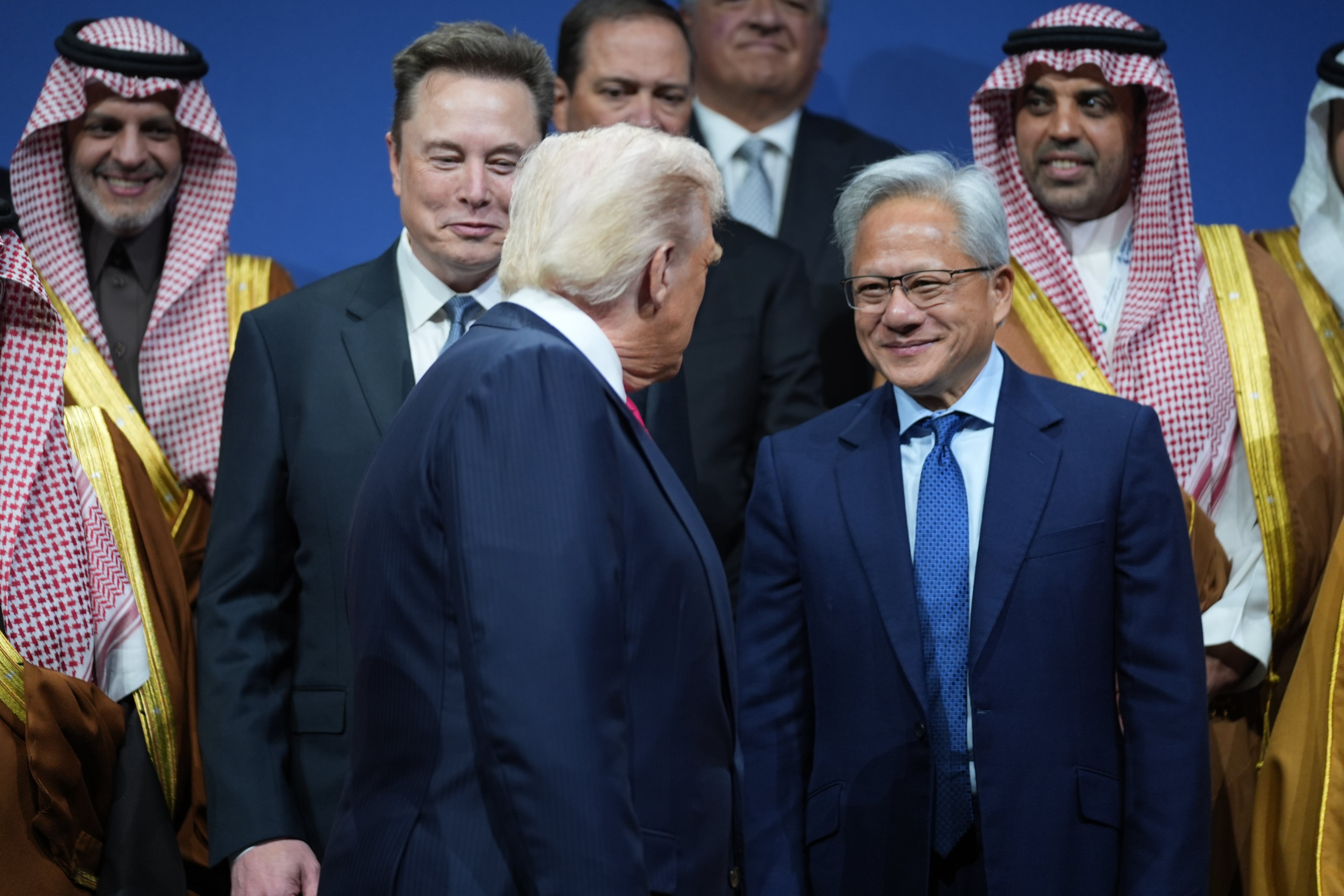
President-elect Trump has vowed to end what he called the Biden administration’s EV “mandate,” though he has softened his anti-EV stance as his ties with Tesla CEO Elon Musk grew closer. Automakers are not required to sell EVs under the Environmental Protection Agency’s greenhouse gas emissions standards regulating tailpipe pollution, though they need EV sales to be at least 56% of their total sales to meet ambitious standards for cutting emissions. Trump may also eliminate critical EV tax credits.
Even if fewer buyers choose EVs, tax credits or not, auto companies show no intention of fully retreating from the transition away from gas-burning cars and trucks.
The China difference
China's auto market, the world's largest has been transformed by billions of dollars in subsidies, with EV sales reaching 25.8% of the 13.5 million vehicles sold in January-August, according to the China Passenger Car Association. The government is encouraging car buyers to go electric, and many are buying EVs or plug-in hybrids under an economic stimulus program.
The phasing out of earlier subsidies in 2022 unleashed a fierce price war, toppling some weaker automakers. Some Chinese EVs sell for less than $20,000 in their home market.
The government push encouraged many start-ups that took the Tesla model and ran with it. They simplified car designs to cut costs and filled interiors with gadgetry appealing to a smartphone-savvy generation.
Photographer Wu Cong sat inside his $23,000 Hongqi E-QM5 as it recharged in Beijing. He travels often for work, racking up 80,000 kilometers (50,000 miles) in the last two years. The EV saves him about 50 yuan ($7) in fuel costs for every 100 kilometers, he said, which would add up to $5,600 over two years.
The sedan's navigation system reminds him to recharge after driving a distance of his choosing. “It will tell you if there are charging stations ahead and if anyone is using them,” he said.
Beijing tech worker Shang Wenting said her family hardly uses their gasoline-powered car anymore except for on long trips, preferring a sapphire Tesla Model Y they bought for about $37,000.
During a weekly trip to a charging station 10 minutes from her home, Shang said the Tesla is cheaper to drive and she loves its “smart features,” like an energy recovery system that means she can press on the accelerator less.
“It feels like switching from an old phone to a smart phone,” she said.
___
Moritsugu reported from Beijing. Associated Press video producer Caroline Chen and researcher Yu Bing contributed from Beijing.